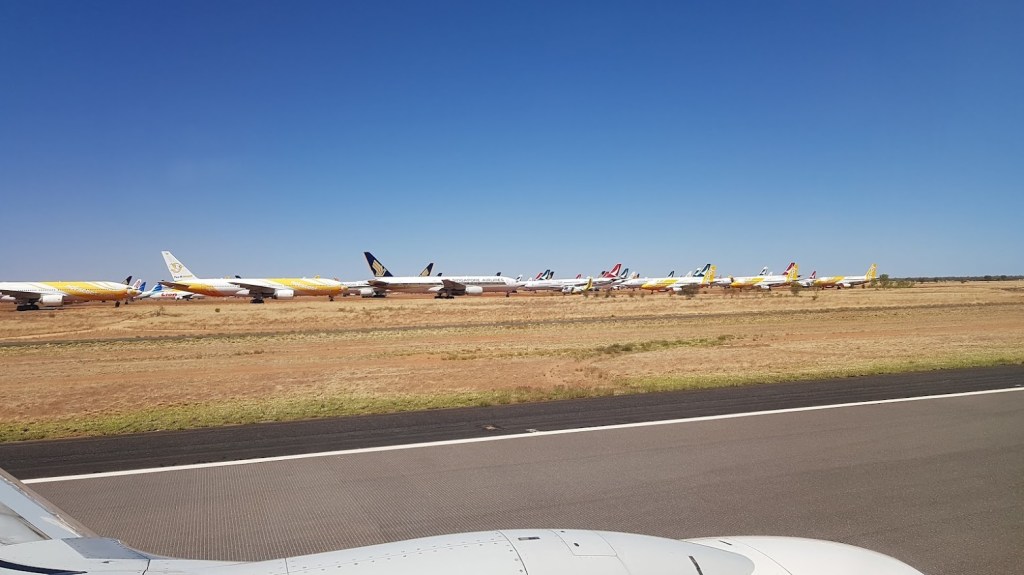
Touchdown at Alice Springs airport not only gave us the novelty of an Immigration-like State border check-in but provided an eye widening and sobering reminder of the state of travel in Covid Times with 140 aircraft from all over the globe languishing in the desert air awaiting the call back to duty.
Tail end of the parking lot from the tarmac at Alice Springs airport
October pretty much tips you past the main tourist season for a Central Australian trip. A southern hemisphere autumn or winter is the optimal timing to beat the fierce summer heat. The last-minute cancellation (snap Covid lockdown in my State) of the fully planned August trip left us with just one window of opportunity. With a very serious and painful case of travel withdrawal symptoms literally gnawing away at my insides, naturally I took the only remaining window of availability.
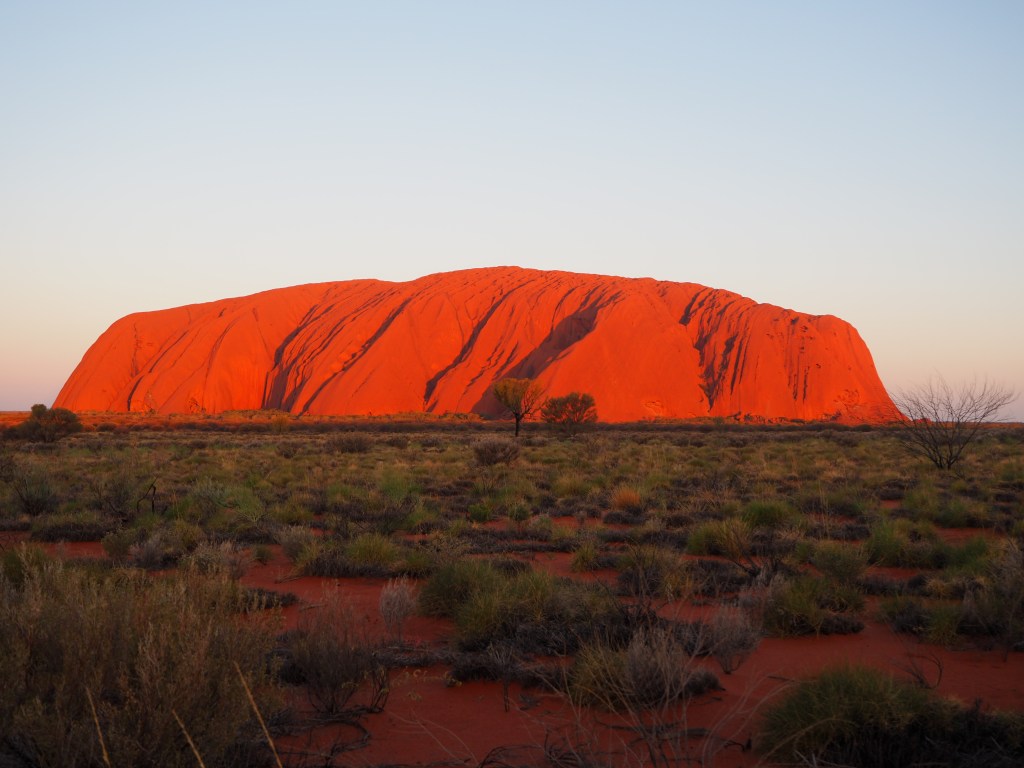
Uluru is top of the list for most people, and we were no different, but I had a few other important destinations on my agenda. And just a short couple of weeks to jam it all in. There was a lot of driving ahead of us.
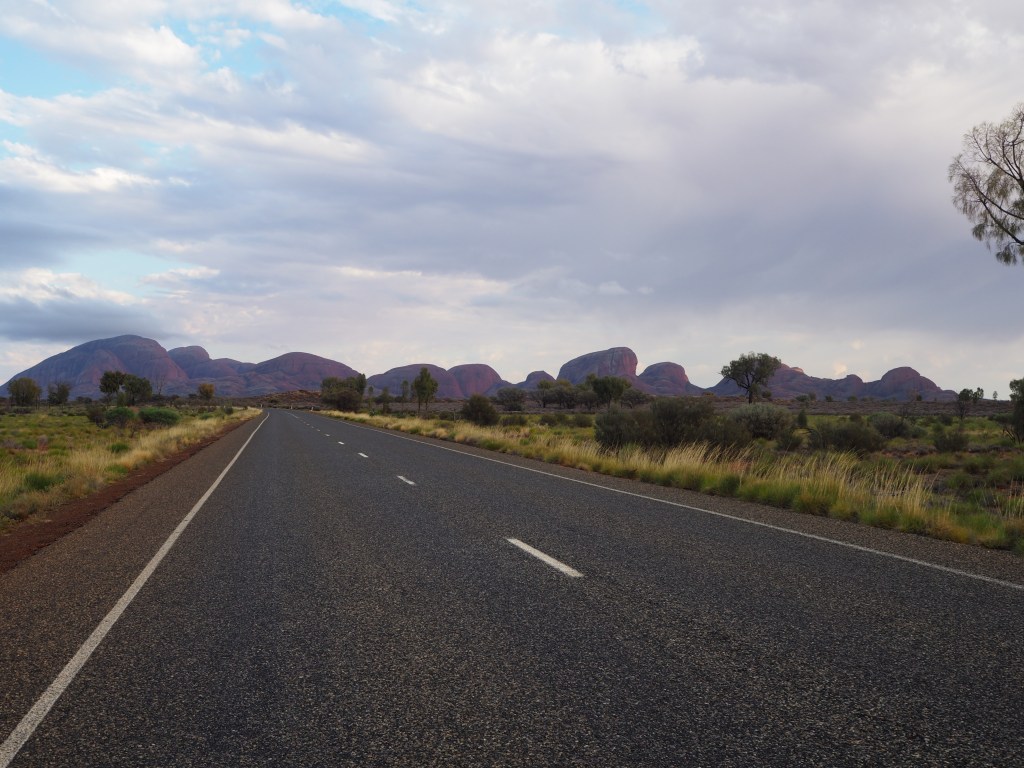
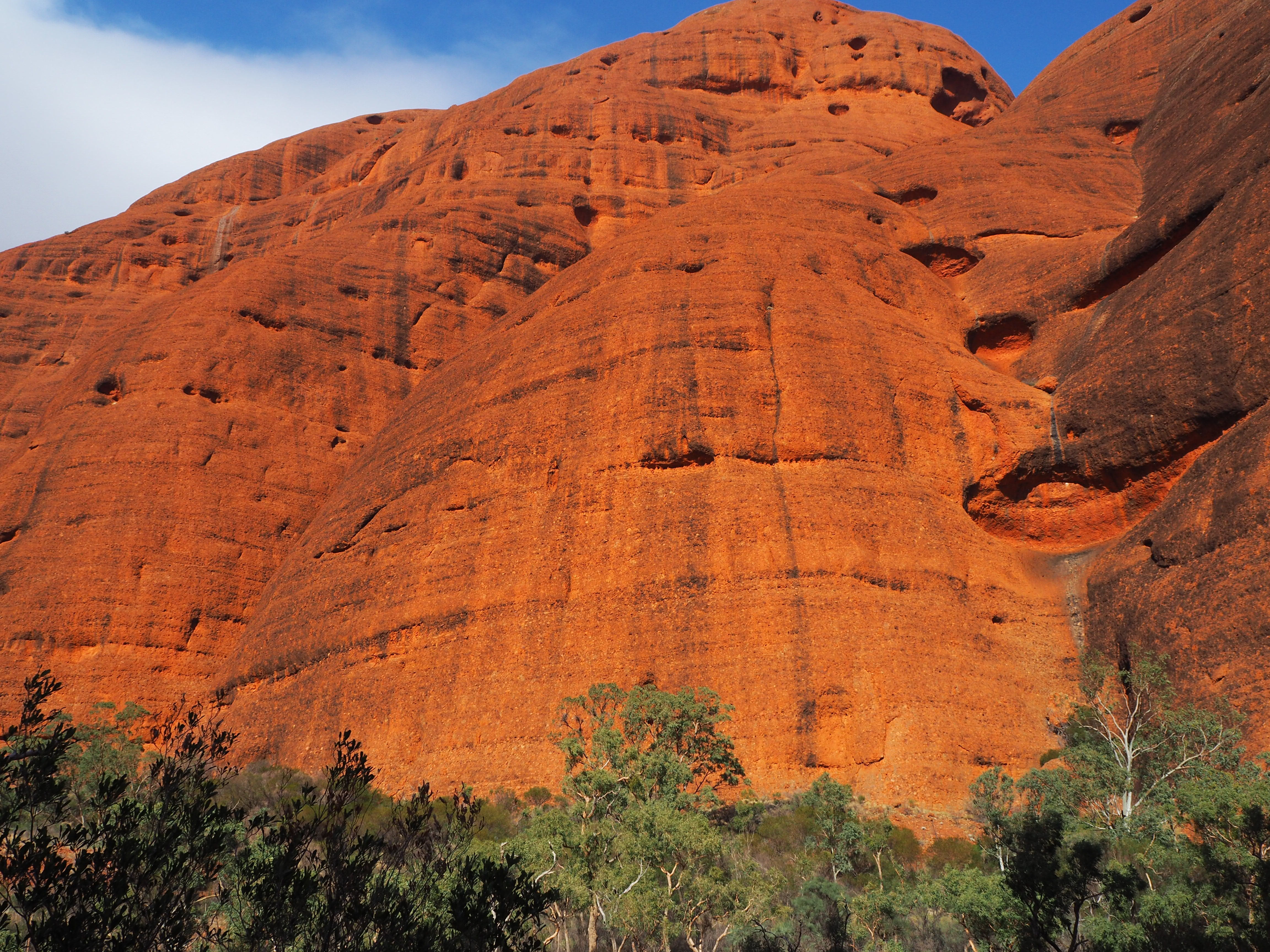
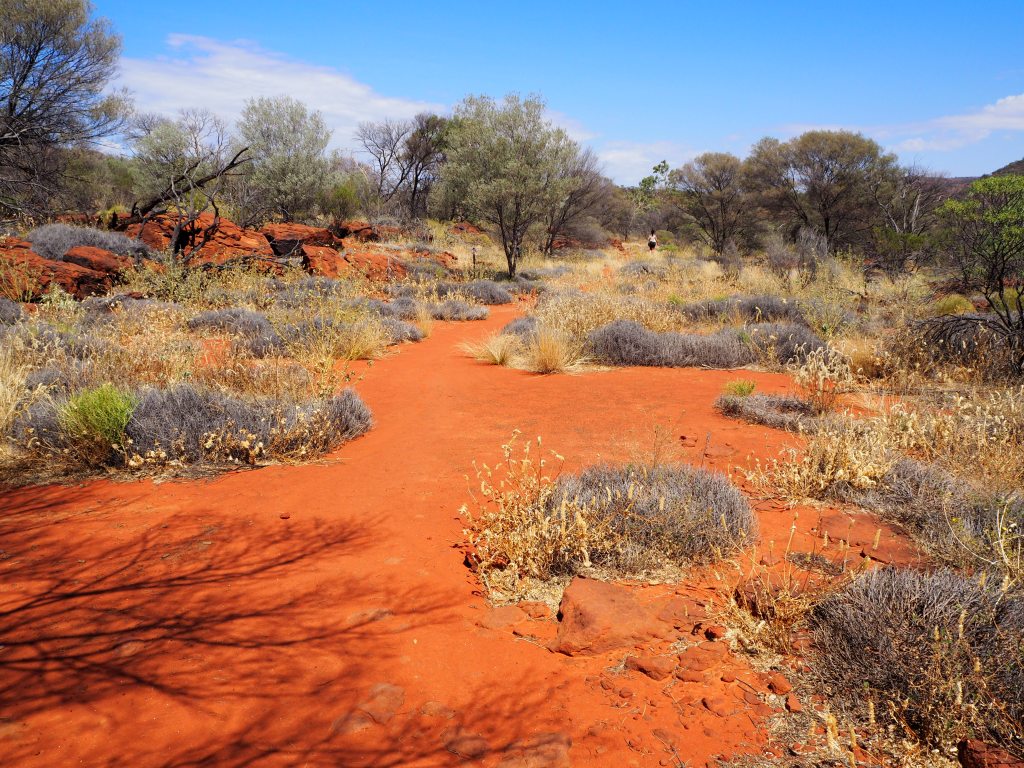
Straight. Flat. Long. That is the hallmark of Northern Territory roads. This is the road into Kata Tjuta (The Olgas) from Yulara (Ayers Rock Resort) – only 50 kms. A chilly early morning start.
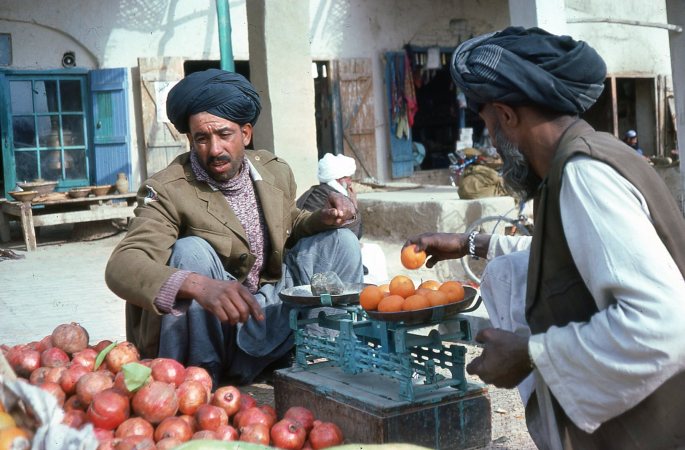
With the car and the accommodation sorted, the priority after an early flight was to get a decent brunch – Page 27 Cafe in the Fan Arcade hit the mark. Then it was time to organise an esky (cool box) for the long road trips, along with supplies. Couldn’t go past Afghan Traders as the first port of call for our fresh food and treats.
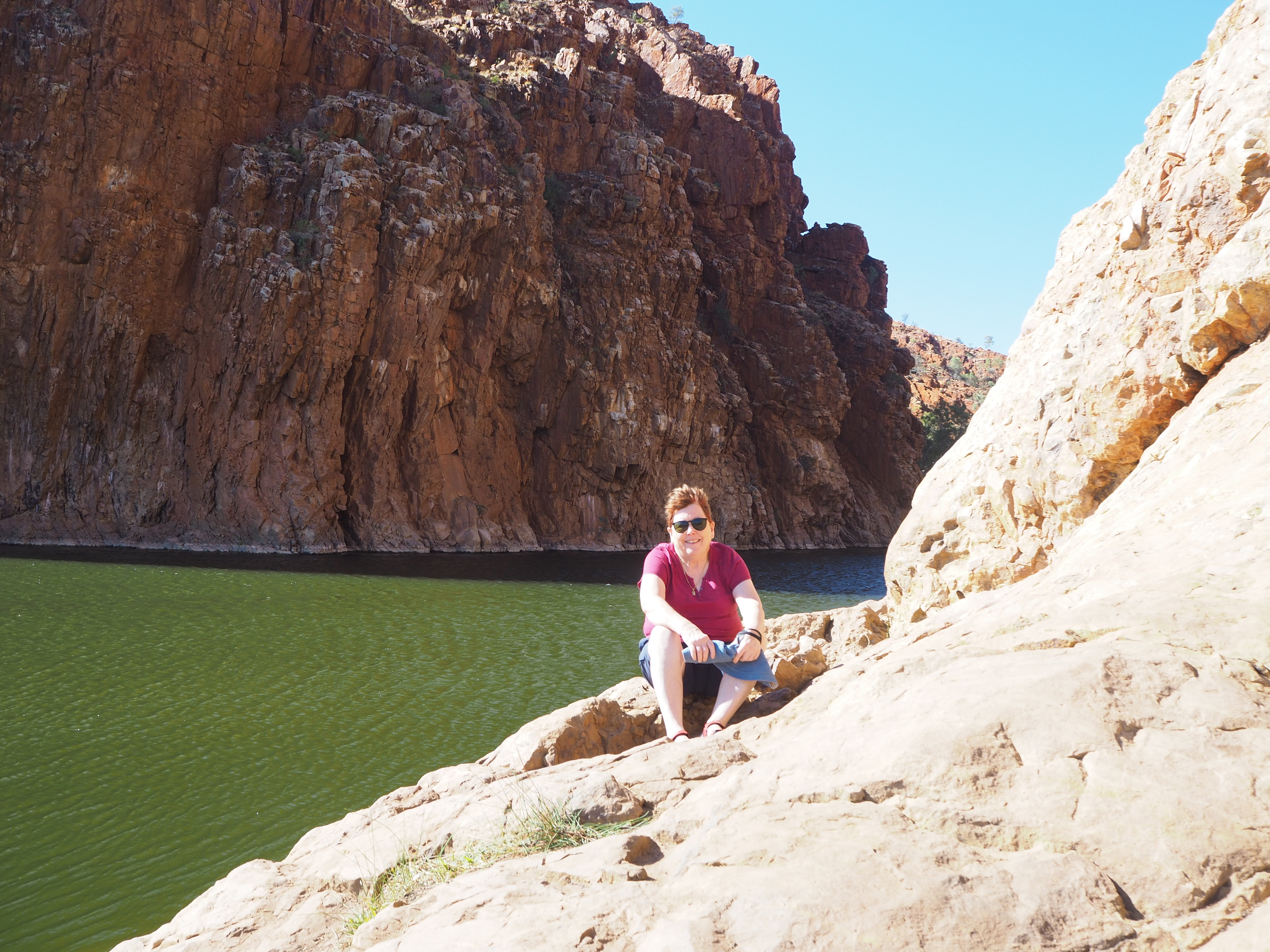
The West McDonnell Ranges road trip accessible for a 2WD vehicle is about 135 kms one way and is packed with walks, scenic spots and more things to do than is possible in just one day. The nostalgia part of this day for me was to revisit Glen Helen, just past Ormiston Gorge. Not a lot to see perhaps for the average day tripper but I enjoyed fighting my way through 2 metre high reeds on sometimes soggy ground till I got to the water. We later met the Rangers who were on their way to make it all a bit more accessible.
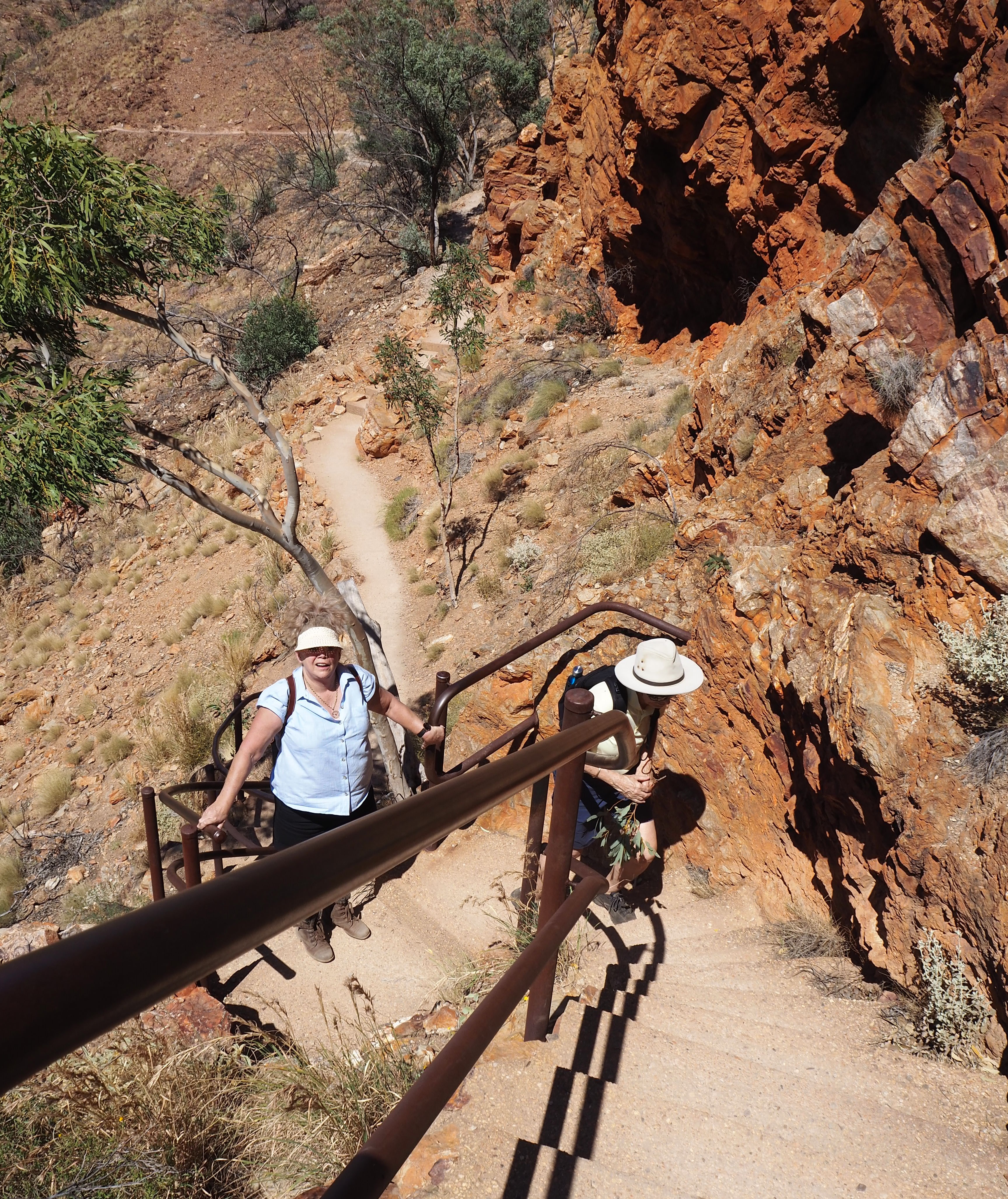
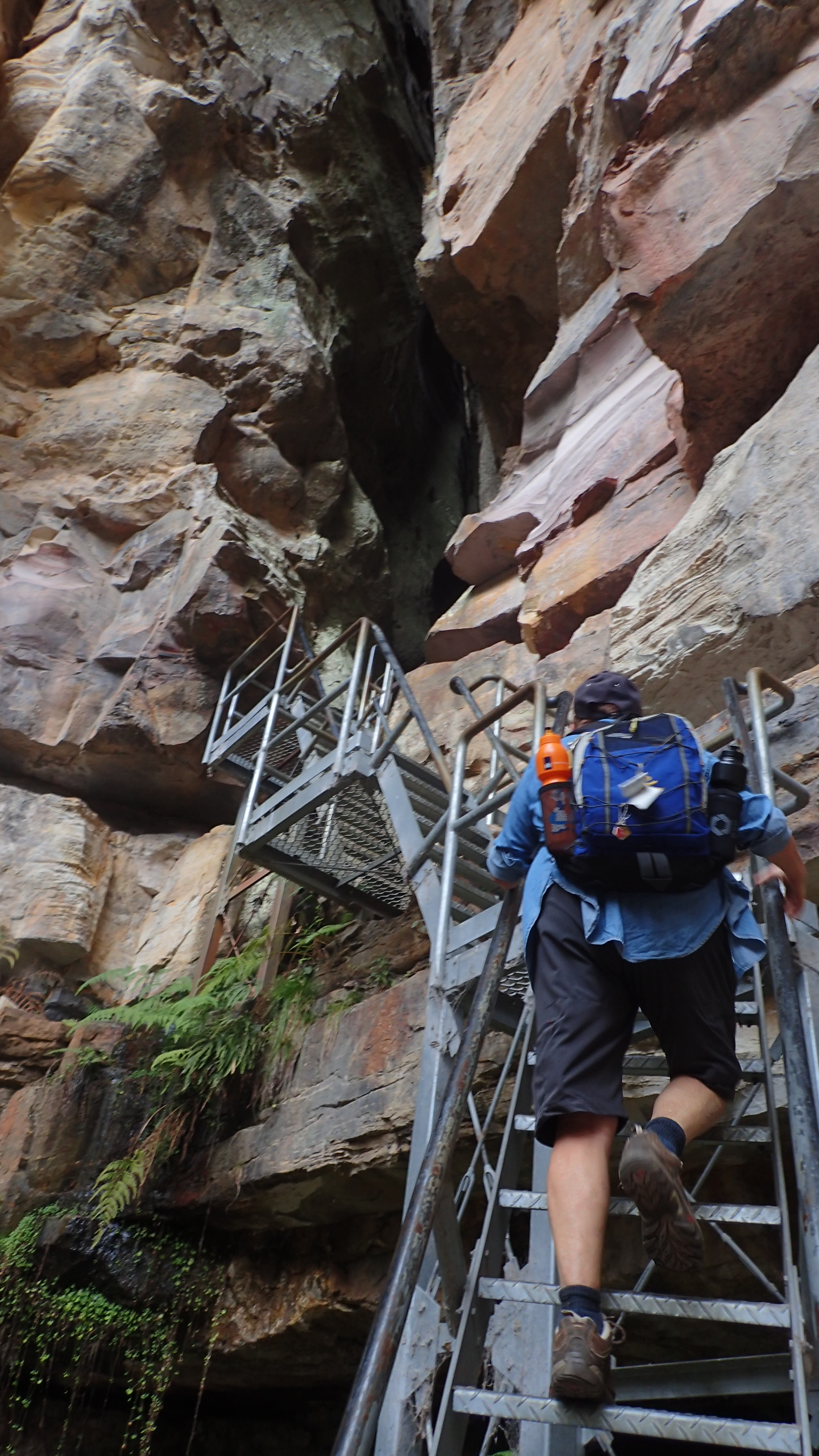
Ormiston Gorge provided the first decent walk of the trip. Or more correctly, the first decent Climb of the trip. Are we nearly there? Always another corner.
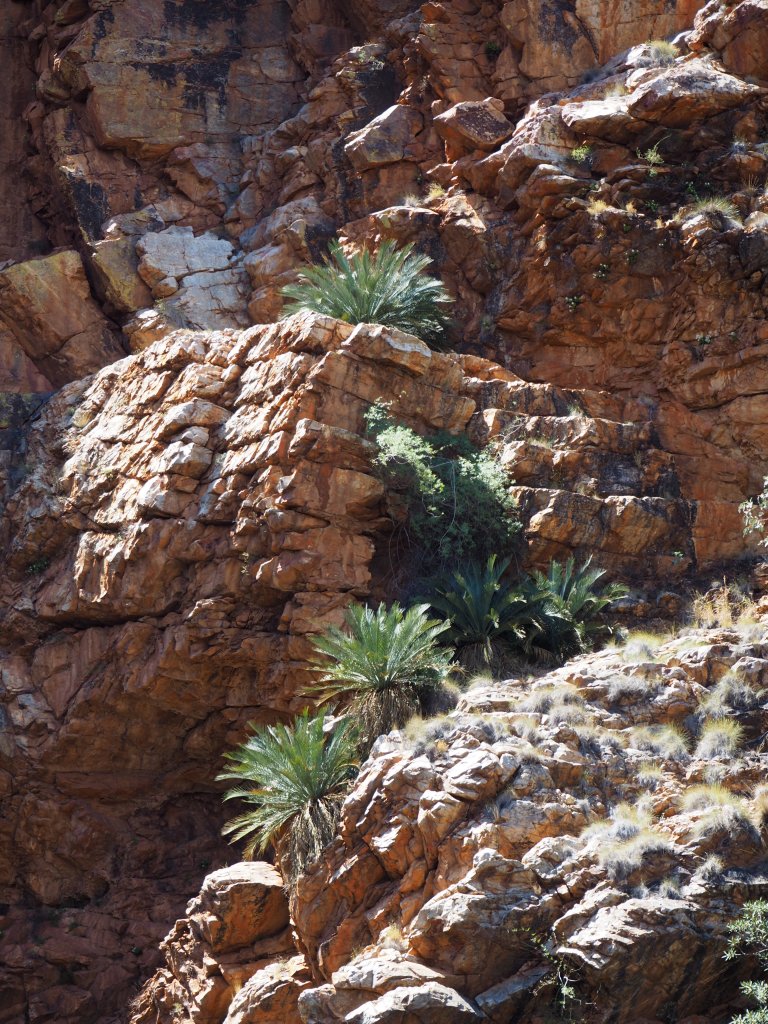
There is barely a soul aroundThe water is chilly at Big HoleCycads find their spot on the rock face
We make a stop at the Ochre pits
Plenty to see in Alice itself. Olive Pink Botanic Gardens and Desert Park are highlights but the Araluen Art Centre is the gem. We are so lucky to see Desert Mob Retrospective and the Hermannsburg pots on display are mind blowing.
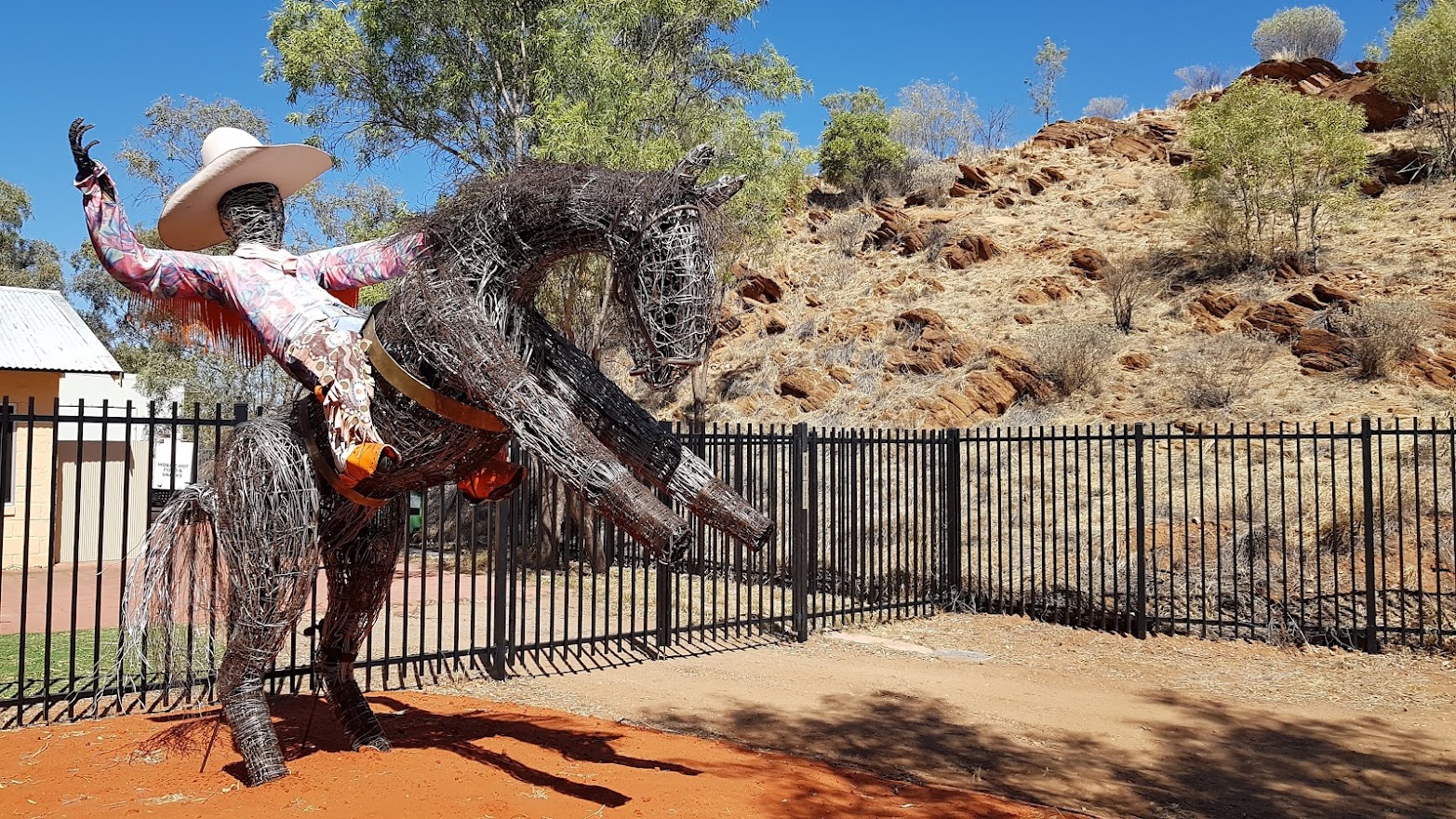
Sublime (Kulyuru by Lennard Walker). And then there is the bucking bronco.
Yulara Resort is one of the most expensive places to stay in Australia. But that’s it if you want to spend time at Uluru (Ayers Rock). There are a range of options and we have a 2 bedroom apartment. Not bad.
The long drive from Alice is broken by the conveniently located halfway stop of Erldunda Roadhouse. The tucker here exceeded the usual standard of roadhouse fare and we enjoyed it driving in and out of the Rock.
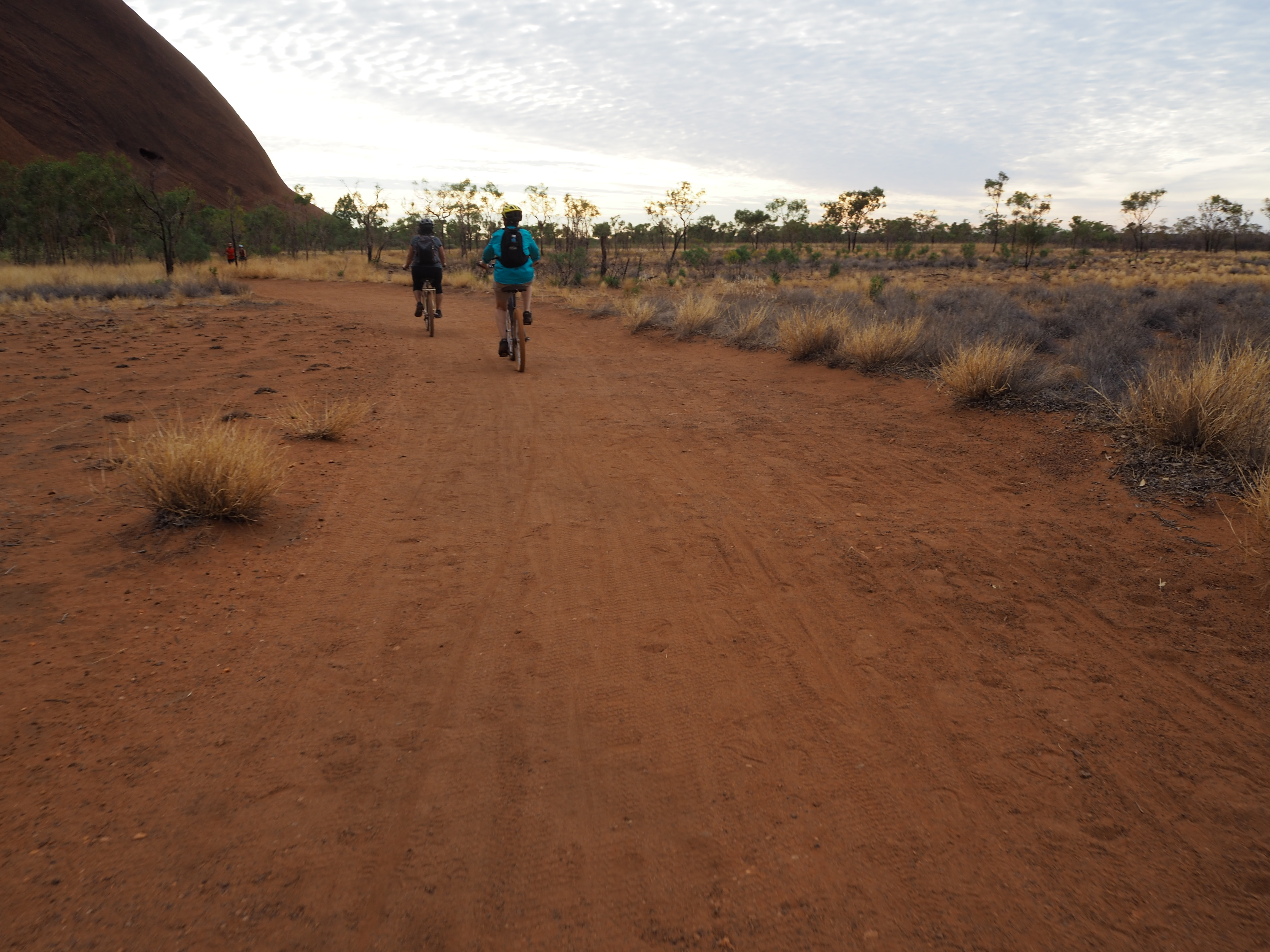
The ride around the Rock calls for a very early start to beat the heat. It’s about 15 kms all up counting the cycle in and out from the bicycle hire spot. We were the first in so got the pick of the cycles. I still seemed to get an exceptionally hard saddle and as a non cyclist I had a daily reminder of that ride for quite some time!
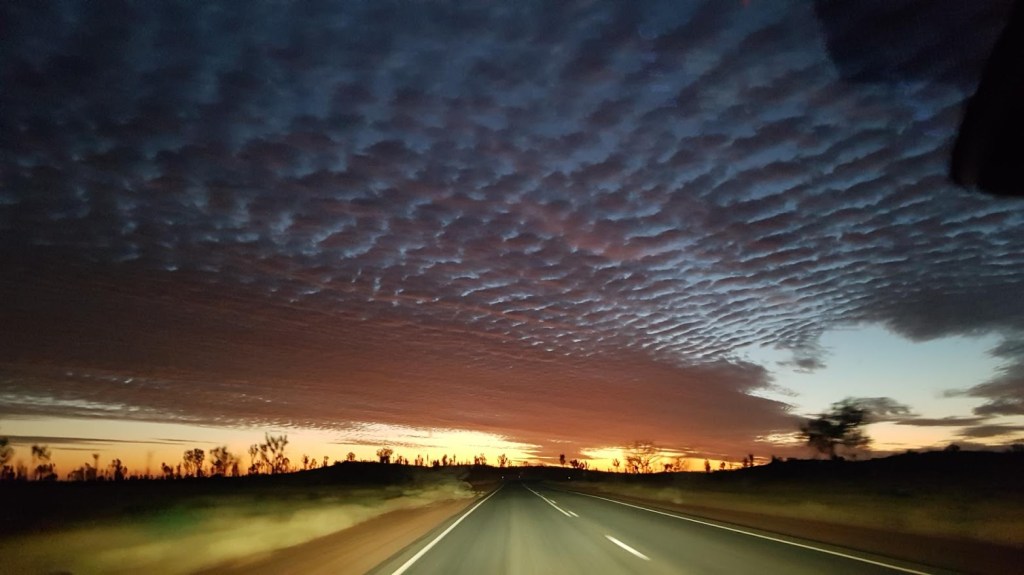
Spectacular early morning drive from Yulara to Uluruto do the cycle around the RockThen Uluru appears for yet another magical view as the sun rises
Early morning start but it soon warms up
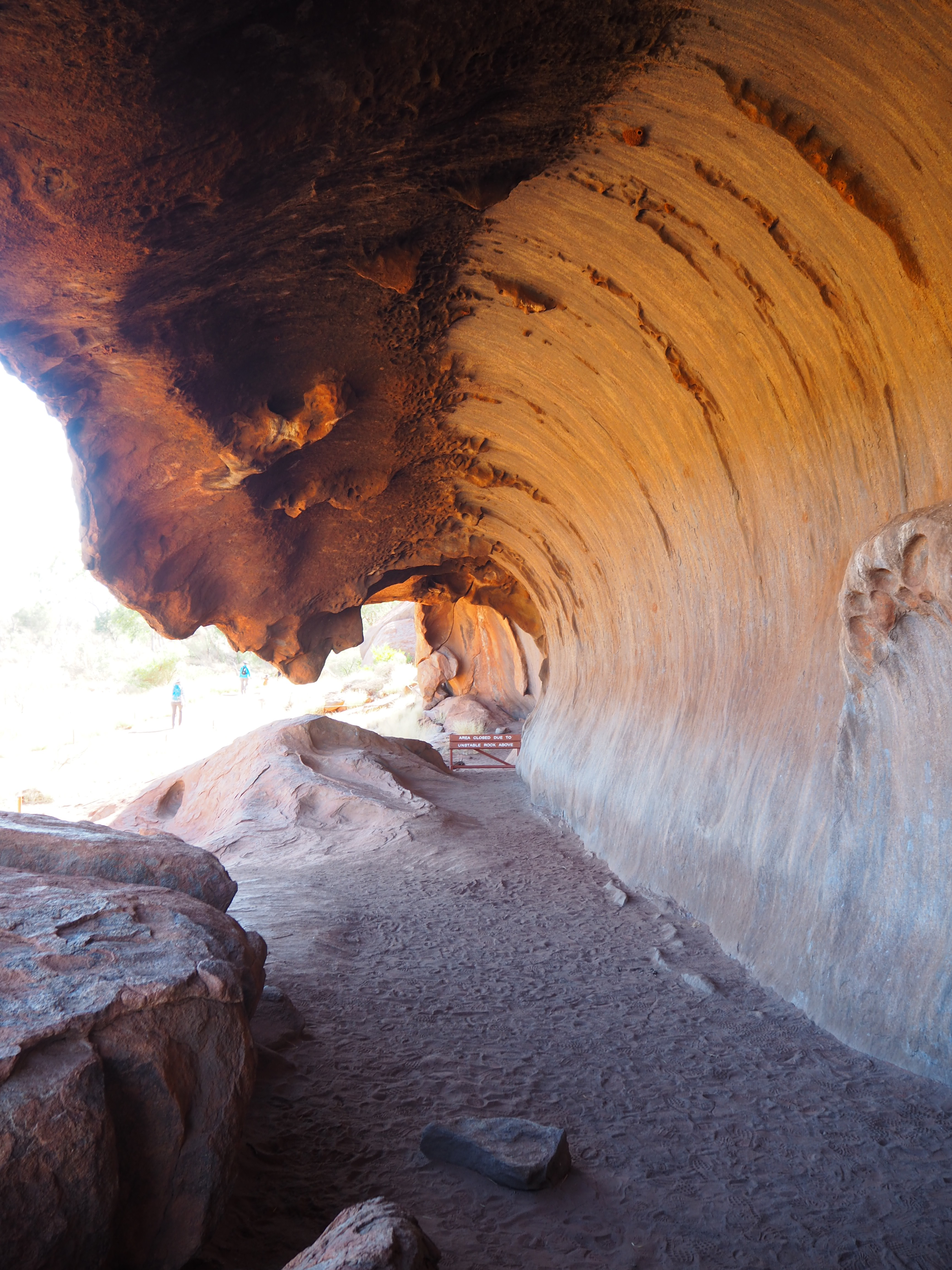
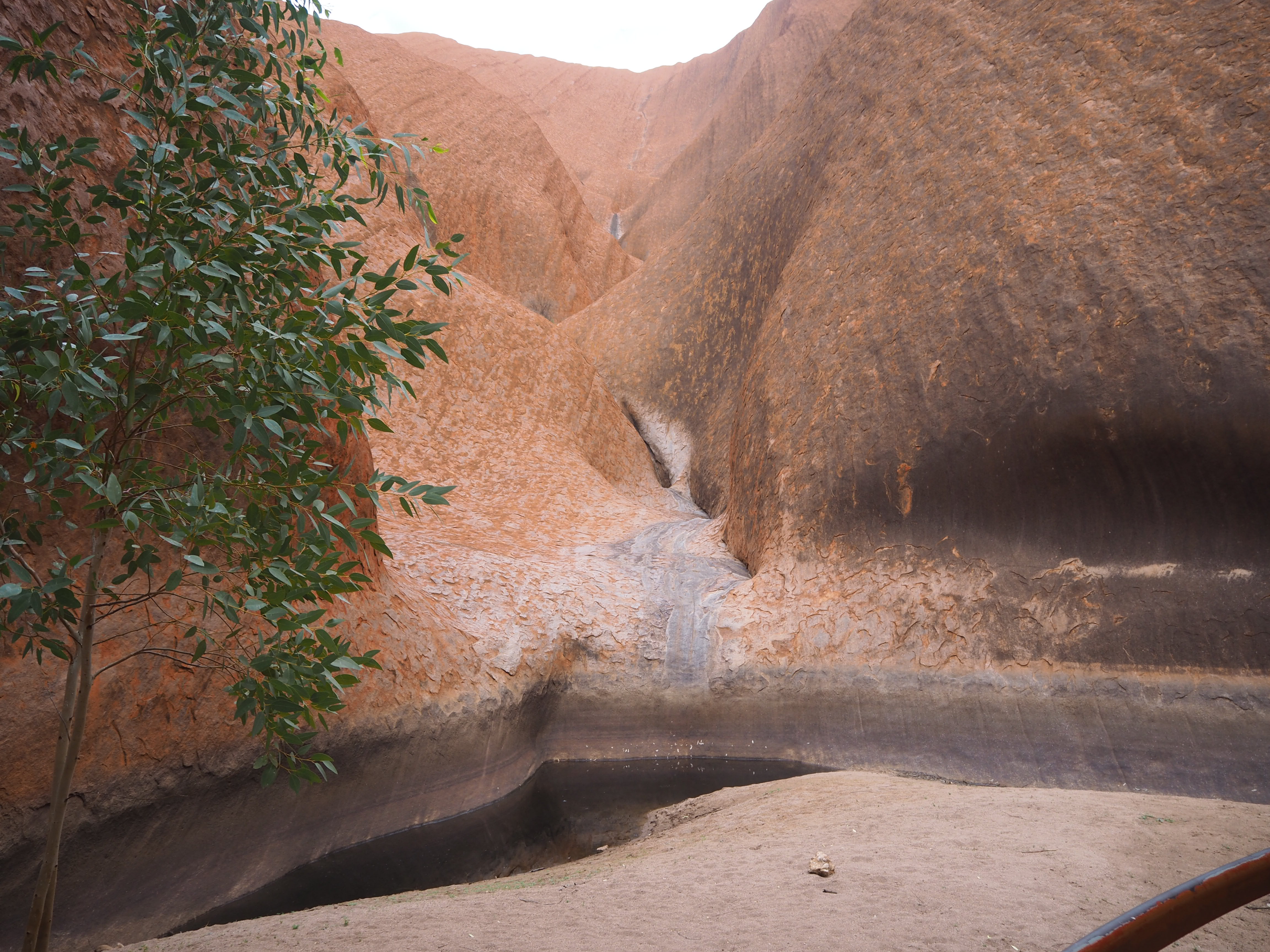
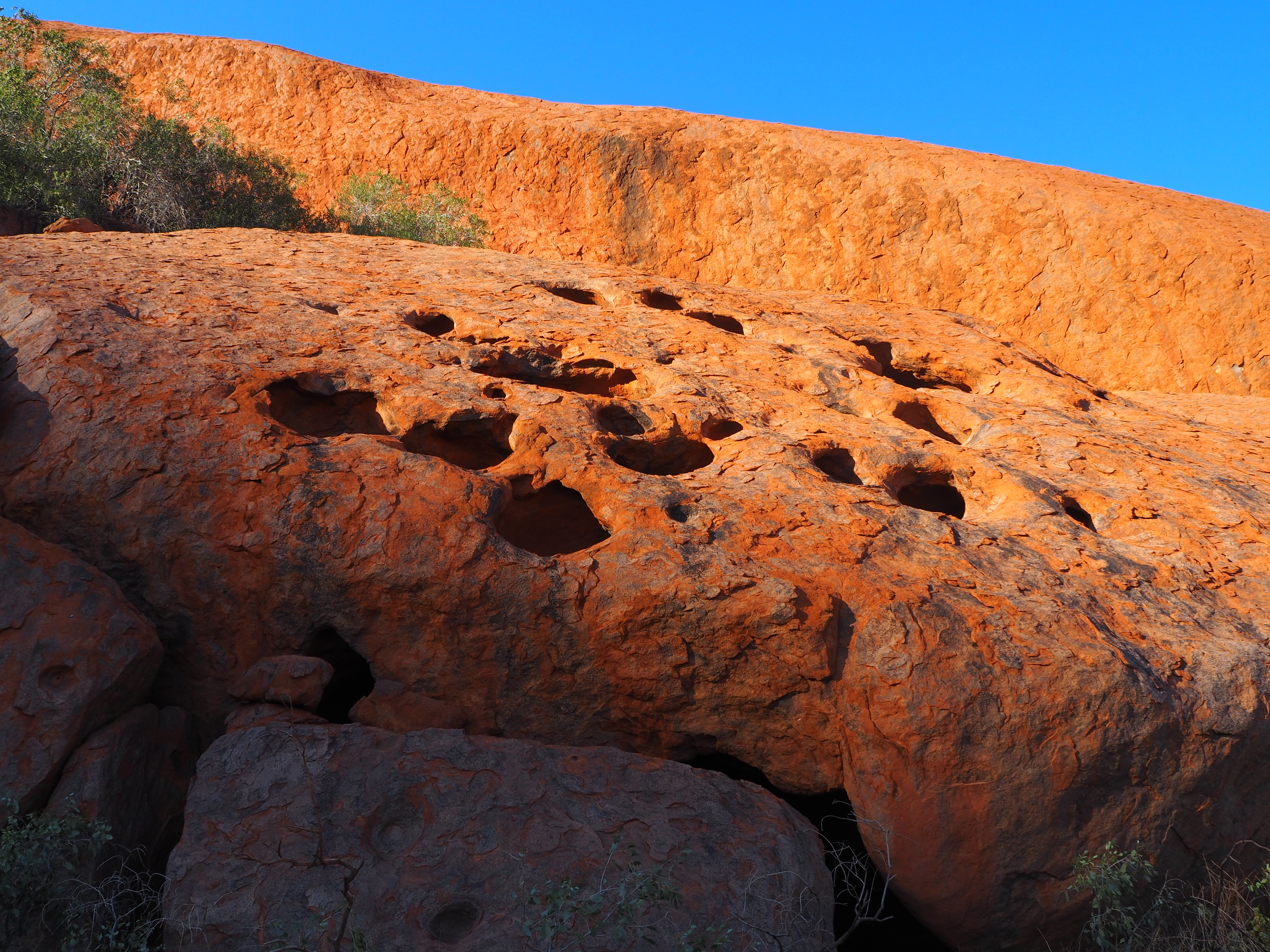
Flat all the way, but a little tricky in a couple of spots. Shaded areas, sacred sites (photography forbidden), opportunities to get very close, places to meditate quietly and waterholes that fill when the rains cascade down the Rock. The cycle or the walk around the Rock is pretty special. A drive around is possible for the less mobile with the road just a further distance away. The Ranger guided Mala walk the day before certainly enhanced our experience.
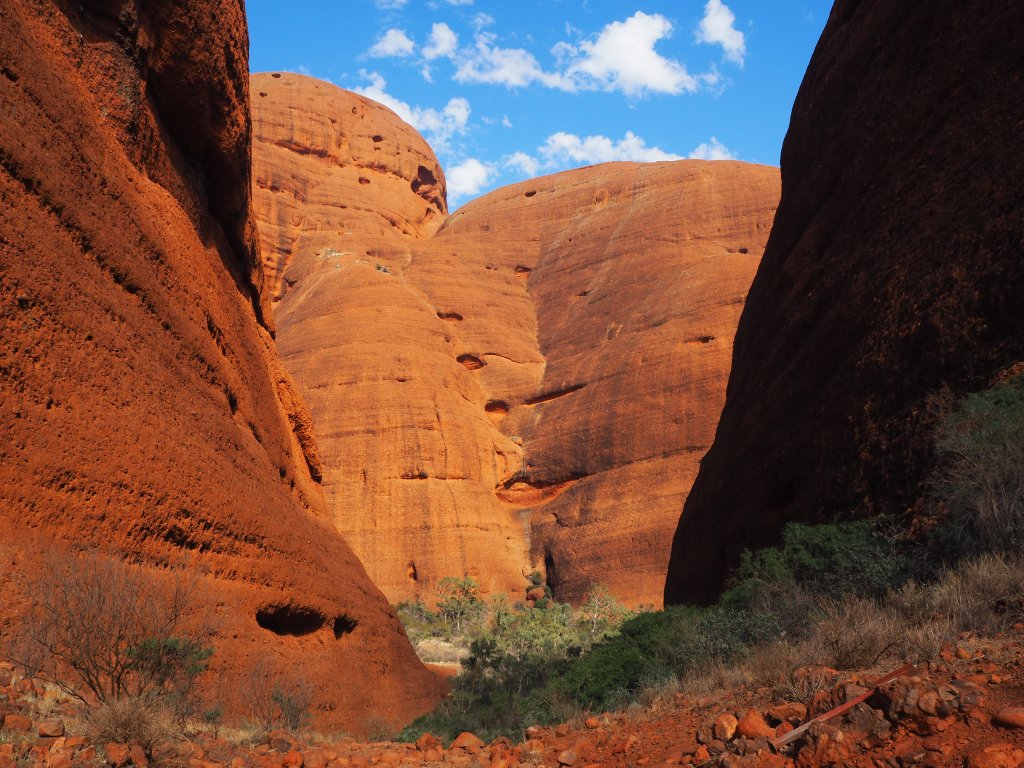
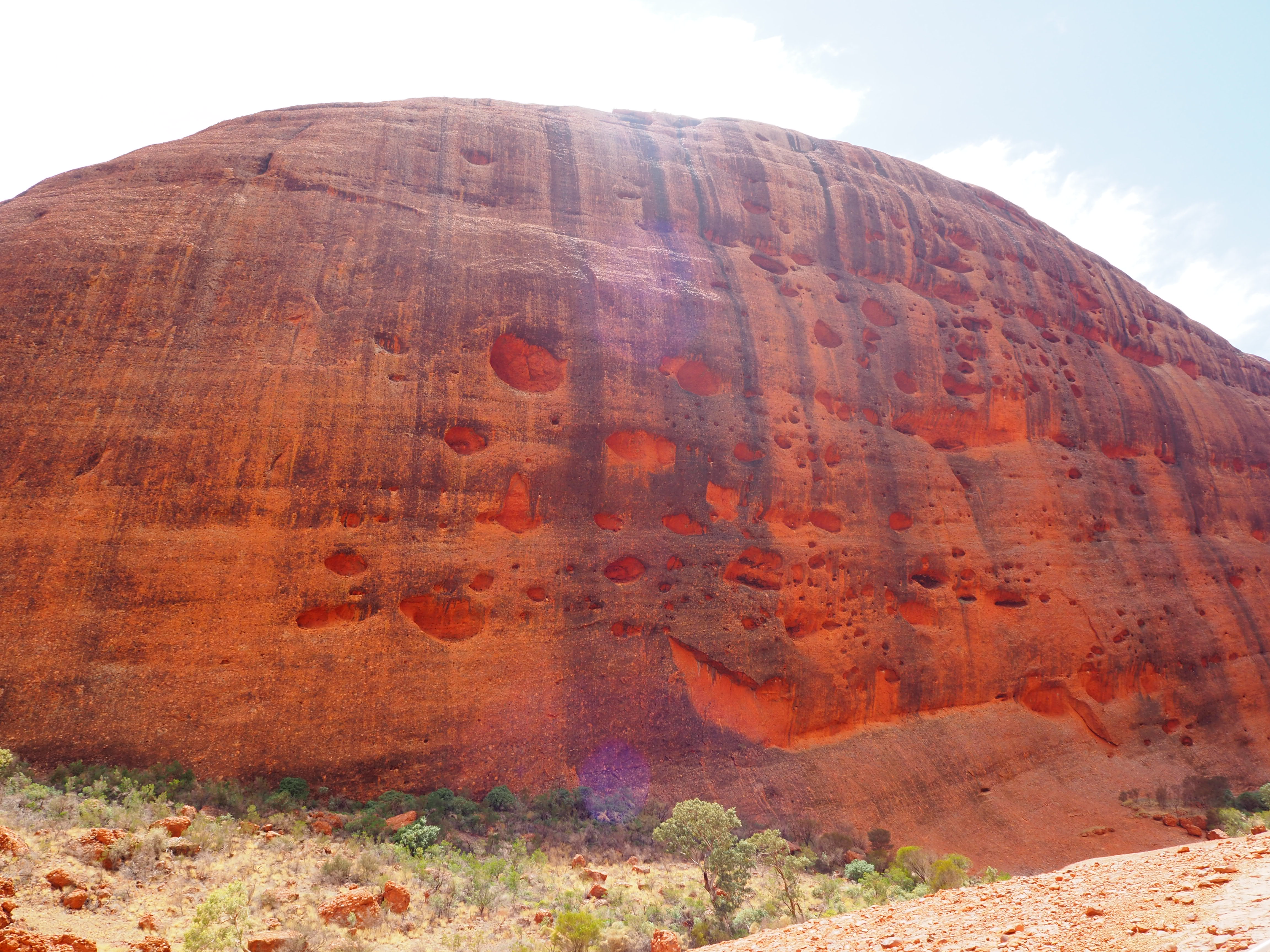
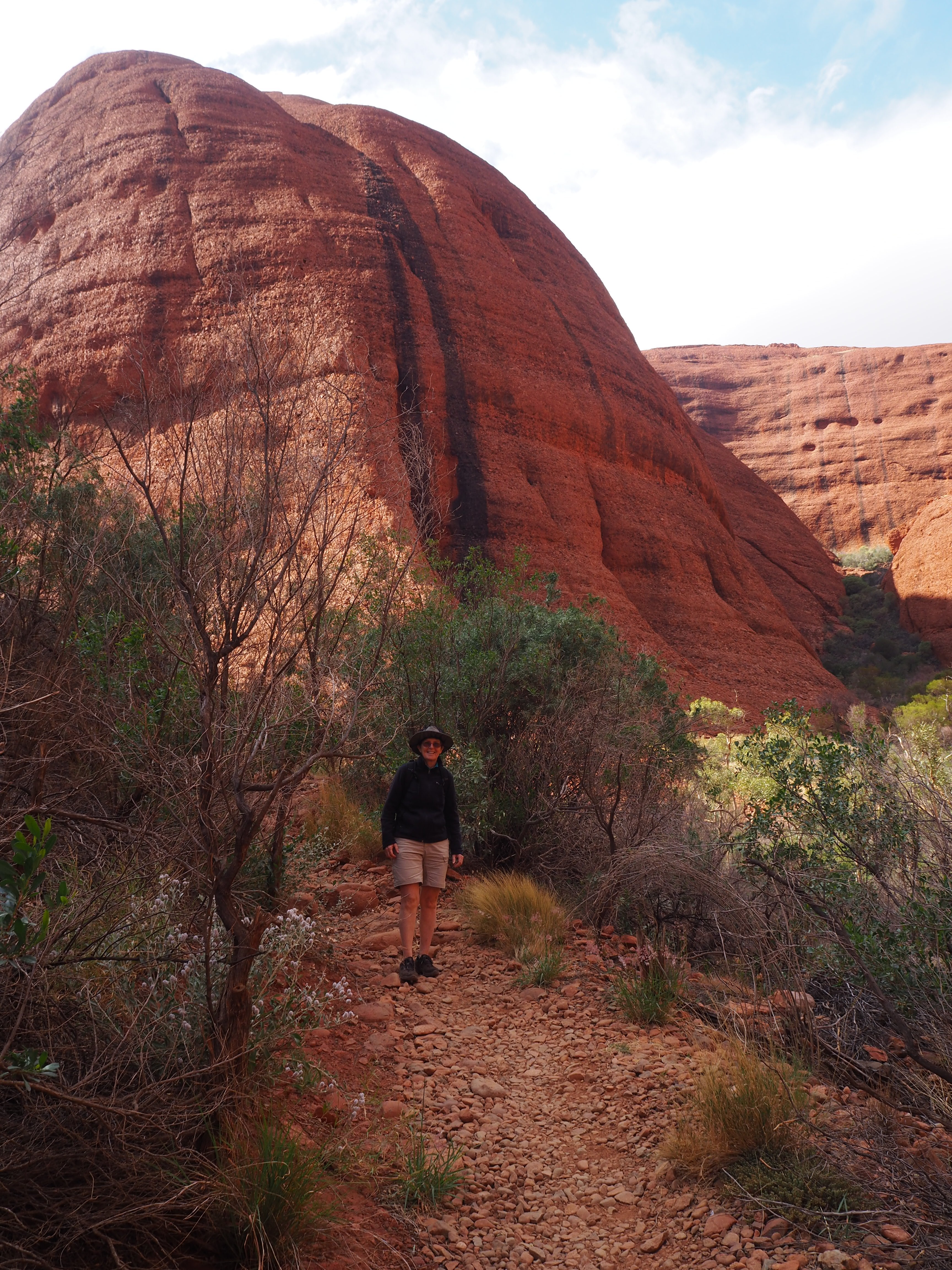
Kata Tjuta offers great walks – Walpa Gorge and the very aptly named Valley of the Winds were the ones we took.
Kata Tjuta is majestic
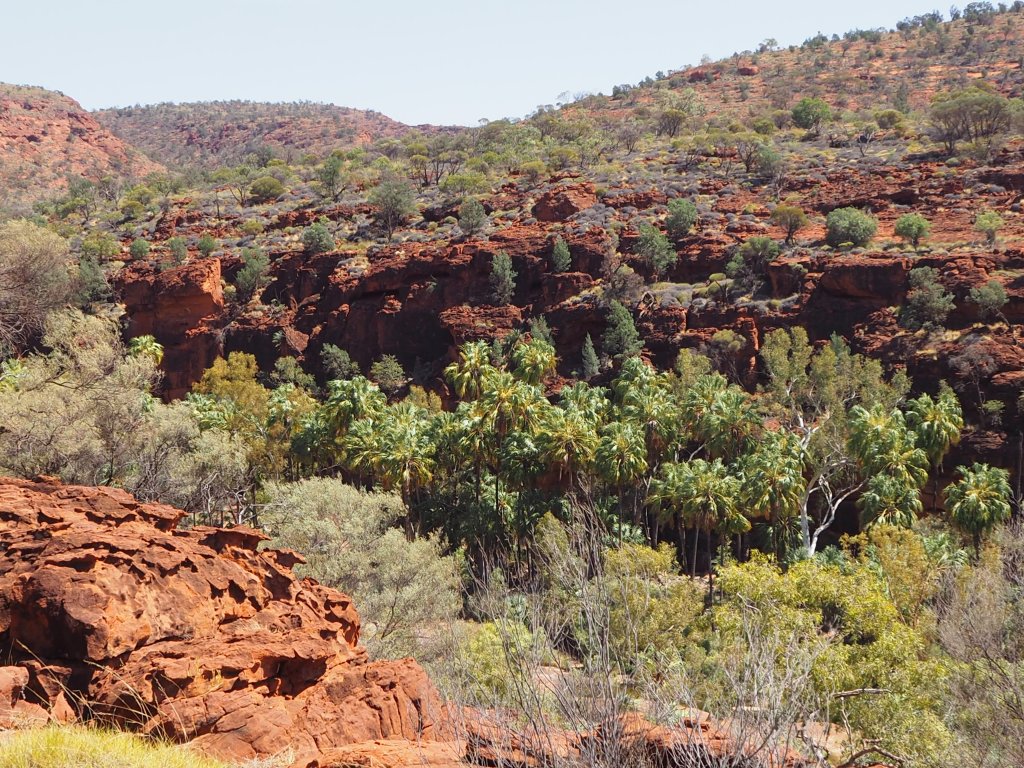
I’ve been to Uluru and Alice Springs on several occasions but only to Palm Valley once in the 70’s. So that became the second and main nostalgia goal of this trip. It so nearly didn’t happen. The season finishes at the end of September and with Covid amplifying the lack of tourists, our October dates meant there was only one possible day and even then it was only on at the very last minute. It had to be a tour as it is 4WD only. And boy, was it ever 4WD compulsory!! The roughest drive in towards the end when only an experienced driver can make it. But is was worth every rock clambering moment.
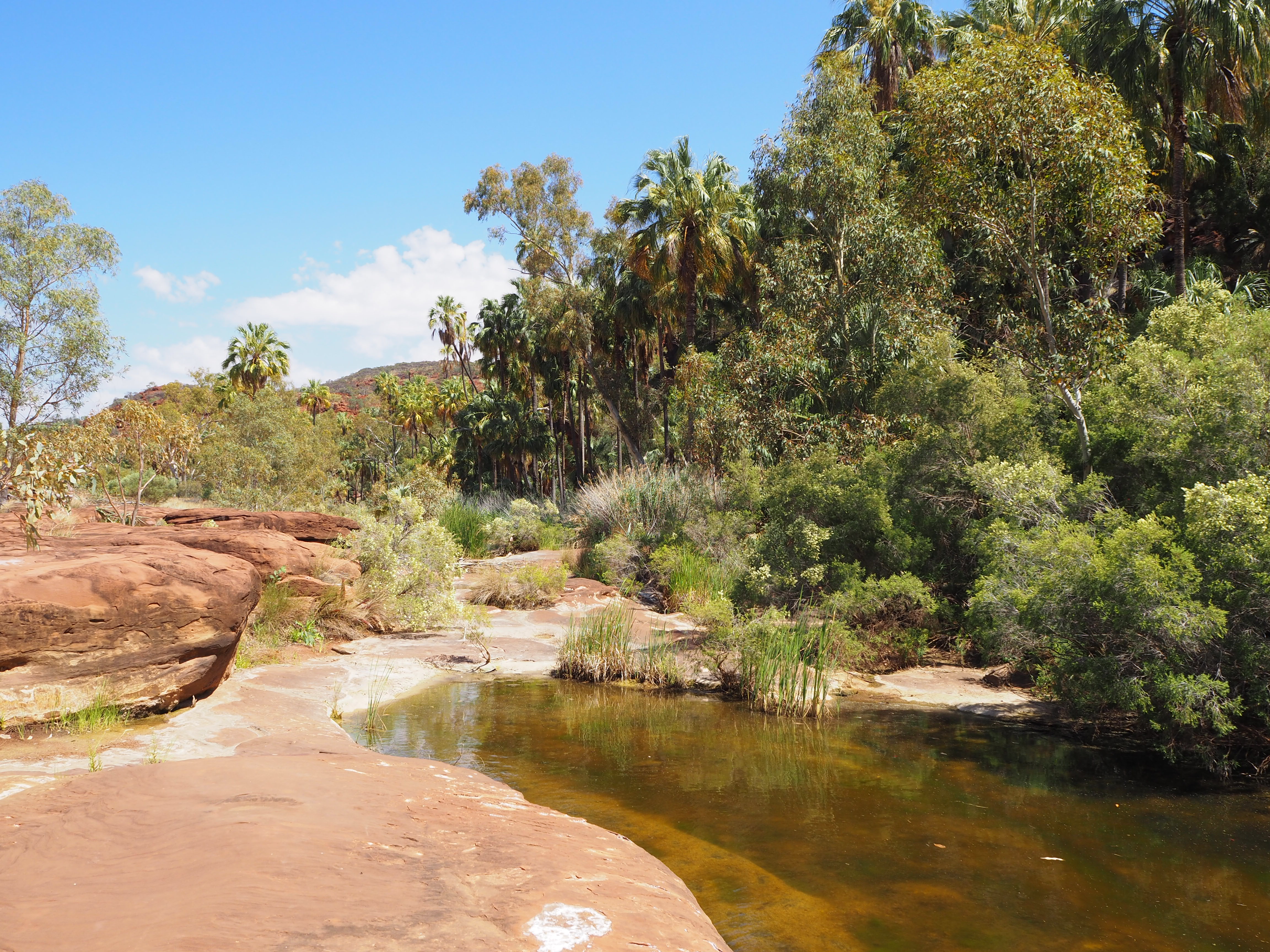
Palm Valley is in the Finke Gorge National Park and the ancient red cliffs tower over thousands of palms and cycads, remnants from millions of years ago. It was as wonderful as I remembered. Another great walk with a climb but not as arduous as Valley of the Winds.
Hiking up to look down on Palm Valley
The floor of Palm Valley
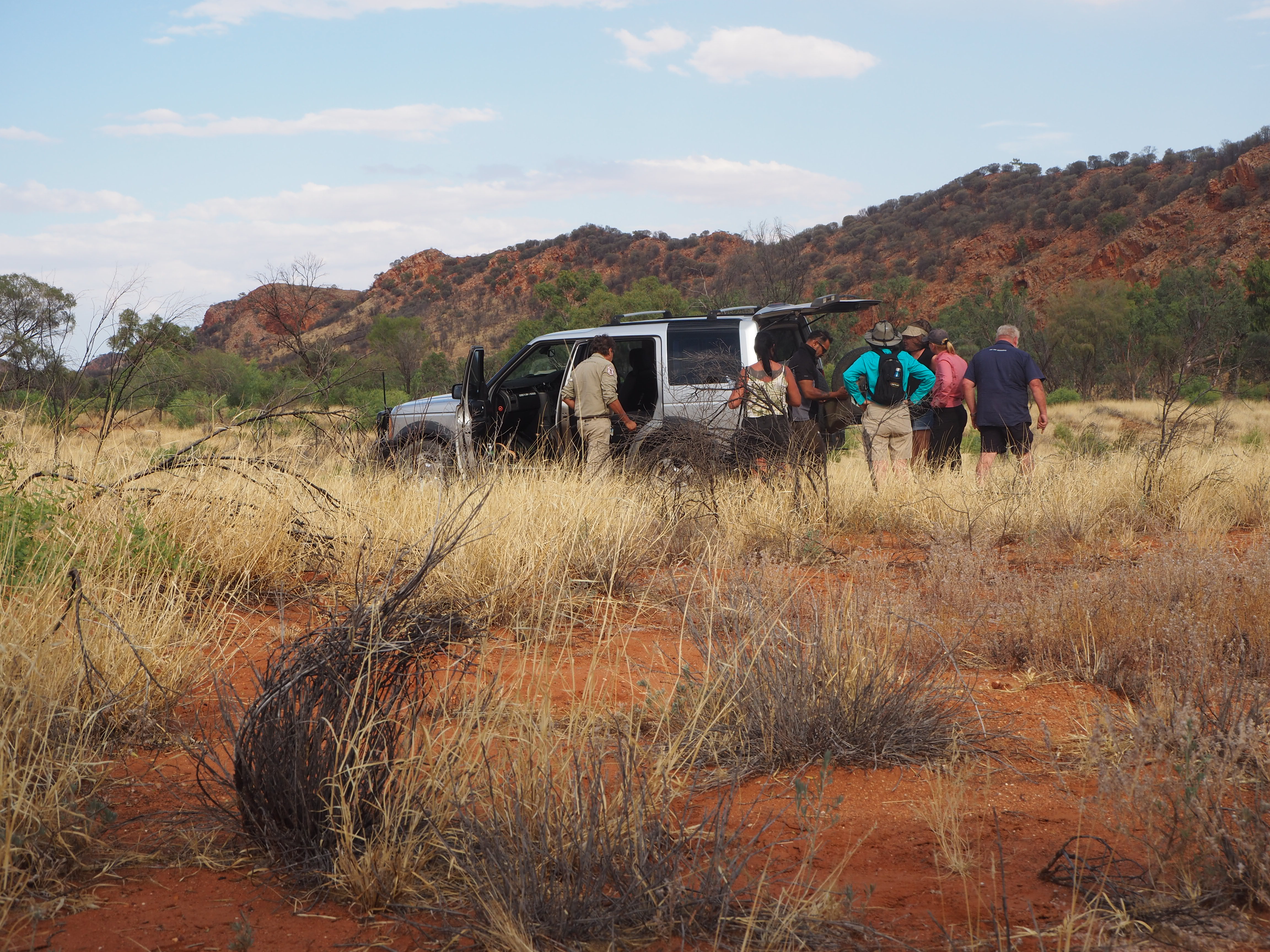
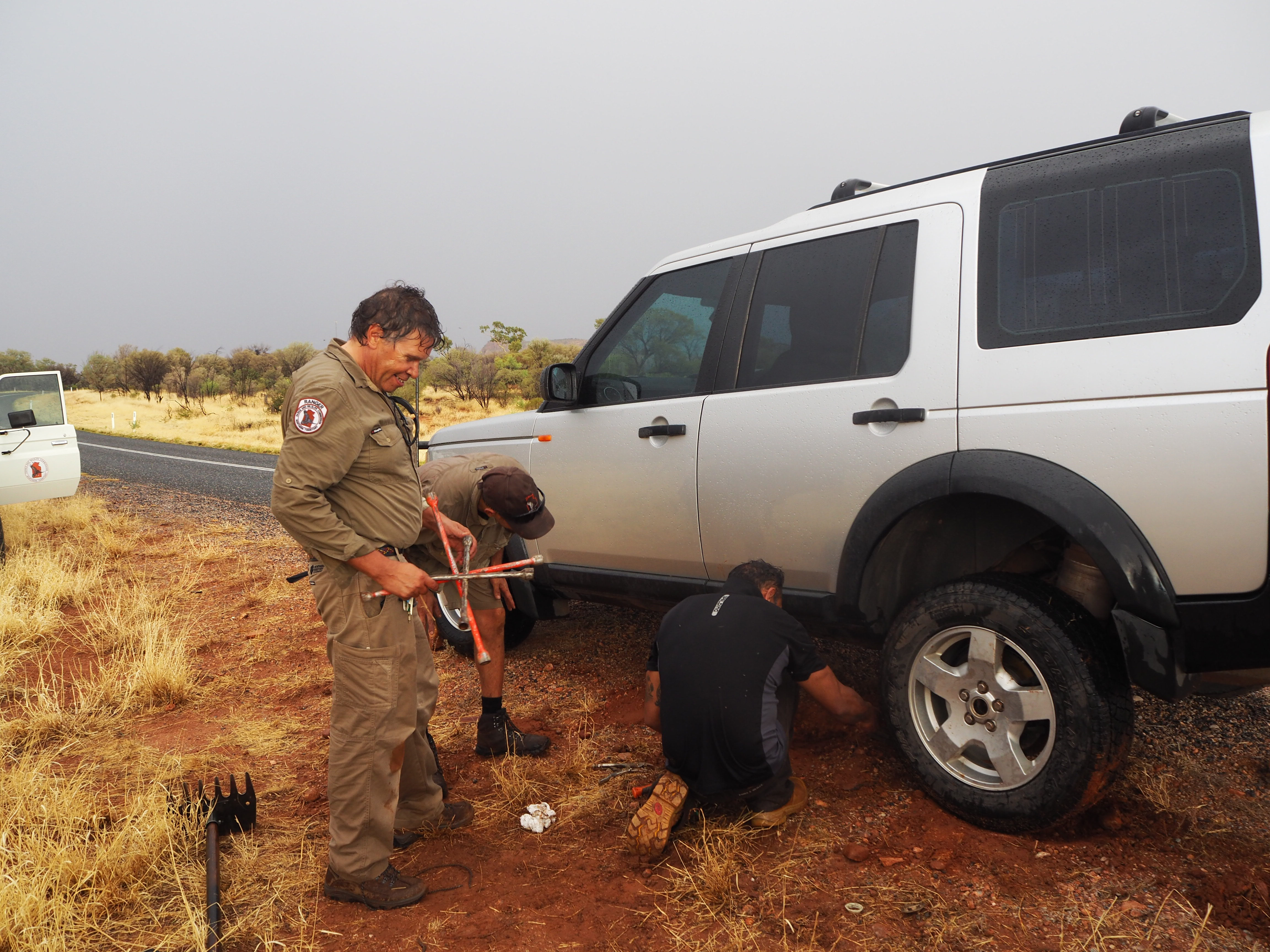
That day ended eventfully. Flat tyre far enough out of Alice to mean there was no phone coverage. The situation deteriorated – lack of correct tyre changing equipment! Even worse, the car collapses onto the rim! We were in for the long haul. Luckily for us, NT Rangers came to the rescue. A wind and rain storm wild and strong enough to blow down a tree nearby did nothing to deter our rescuers from acieving success in their mission.
Soaking wet but smiles all roundafter a job well done. Territory Rangers rock
Quite a few things on the itinerary missed the cut but always better to have too many choices than too few. More to see next time and we had definitely given it our best shot with a cracking non stop pace for the couple of weeks we had.
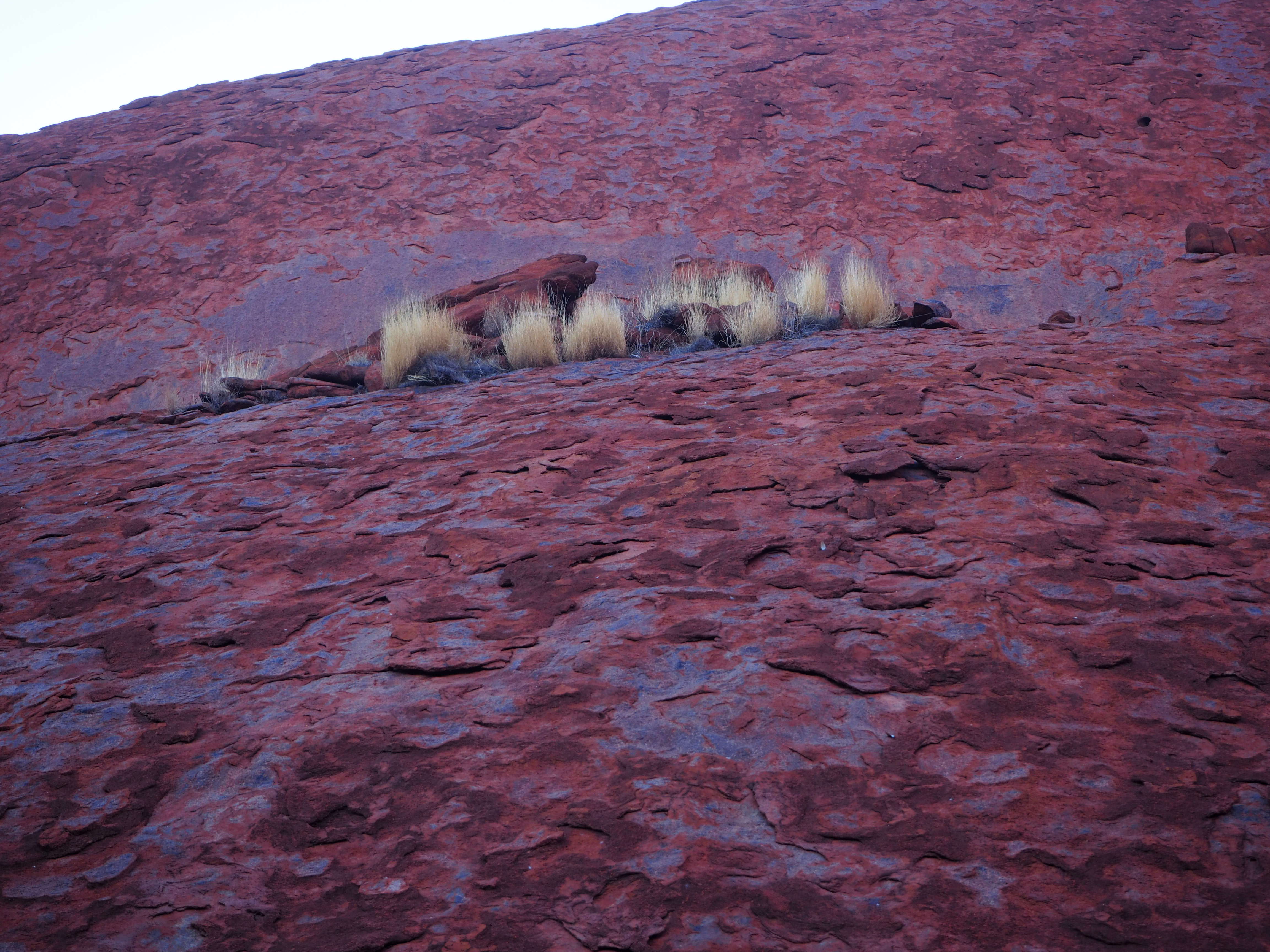
Grassy tufts on the Rock, Hermannsburg, storyteller ever so casually makes the red dirt a vivid canvas for waterholes and just as casually sweeps them away
So much more to see in the Northern Territory. Our trip is just a sampler of what the Centre has to offer. Then there is Kakadu and everything else along the track!
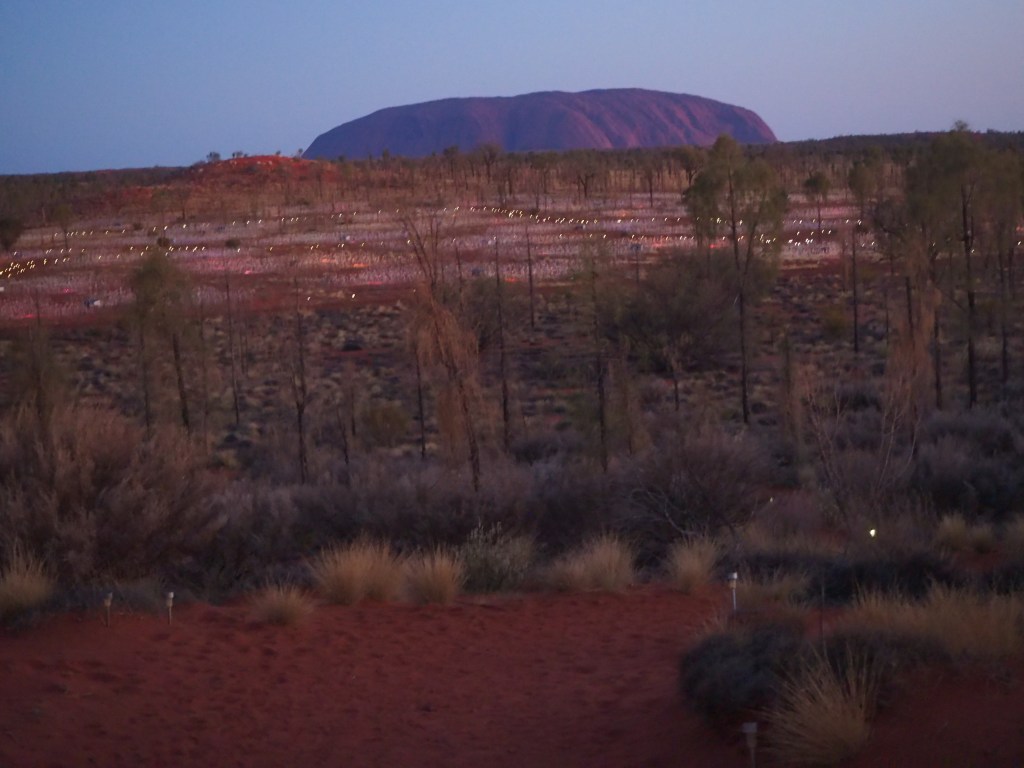
Watching the Field of Lights slowly come to life as evening falls. Uluru is a spectacular backdrop. An exceptionally freezing night followed for a birthday celebration Dinner under the desert Stars. Five layers and a beanie barely did it!Just love that country
For the last half hour or so it took us to get into Kabul, we sat in silence. The engine roar of the police truck, along with the circumstances that had put us into the back of the truck, made talking seem superfluous. I was sitting at the tailgate, Afghan Police in the cabin and the only other foreigners who had been on the bus, two guys from Mauritius, sat alongside us.
A large piece of the mostly shredded truck canvas canopy was flapping crazily behind me until one of the Mauritians managed to gallantly put his back against it. I had a good view behind in the moonlit night. There was nothing to see but the mesmerising sight of two tyre tracks marking our ever-receding trail in the snow.
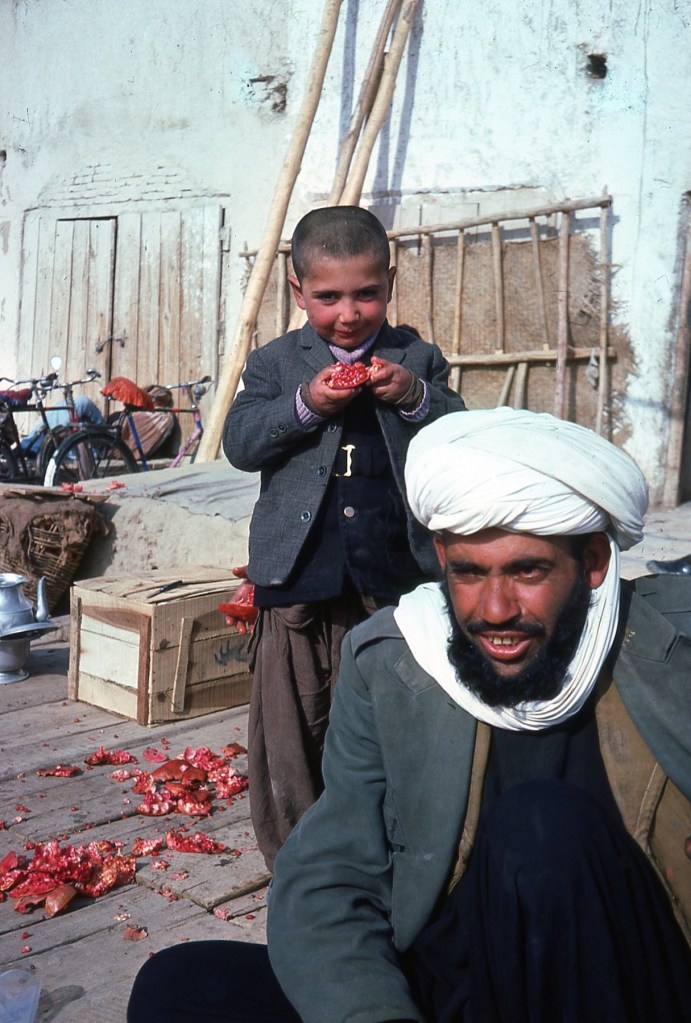
I knew nothing of the accident until I was awoken by the blaring of the bus horn. From my third row seat, the driver was clearly visible slumped motionless over the horn. My knee hurt as the impact had thrown me forward. That habit of sleeping with knees up on the back of the seat in front perhaps saved my face. People who were seated in the aisles were now either nursing split lips or on the floor amongst the litter of pomegranate skins spat out along the journey by most of the passengers.
Everyone except the unconscious driver piled out into the snow to survey the scene. A truck was stopped right across the road. No lights. Our driver had only just managed to avert a full head on collision on the icy night road. His side of the bus front took the full impact though, totally jamming him in and he lay heavily across the still blaring horn. The back of the bus had swung around into a snow filled ditch.
Before anyone could do anything, another bus appeared out of the darkness and slammed directly into the truck. It had perhaps seen the meagre lights from our bus and so had managed to slow down a lot more. Only the radiator was smashed. Amazingly, we had all somehow chosen not to stand on the road.
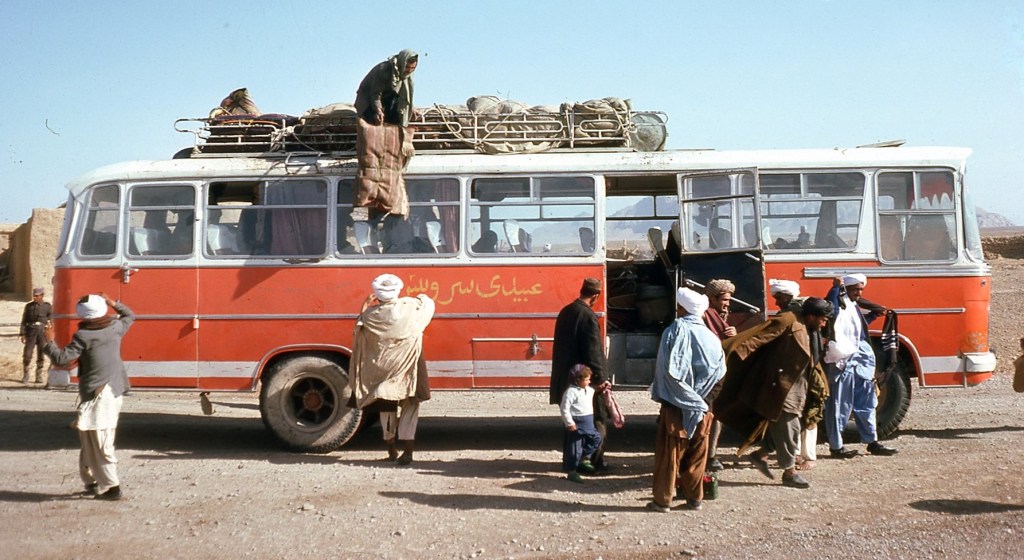
With luggage on top, we had just one sleeping bag in the cabin between us, so a return to the bus was the best option in the freezing night. This was not a modern bus. Our choice of bus was based on a decision to save 50 cents in travel costs (enough to pay for a pretty good meal). Think ancient school bus with hard seats that have low hard backs, it was of course unheated, and the windows were dodgy. This was normal travel mode right across Asia, and we had set out unblinkingly at the crack of dawn on our journey from Herat in this contraption, the only females on the bus.
Deluxe Bus
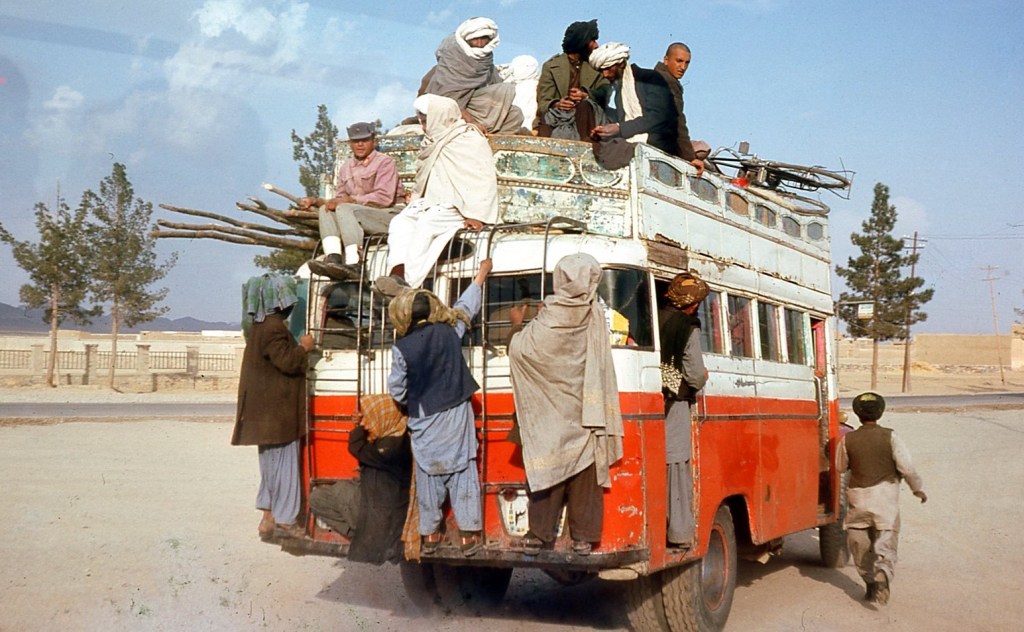
Not the Deluxe Bus
And Off We Go
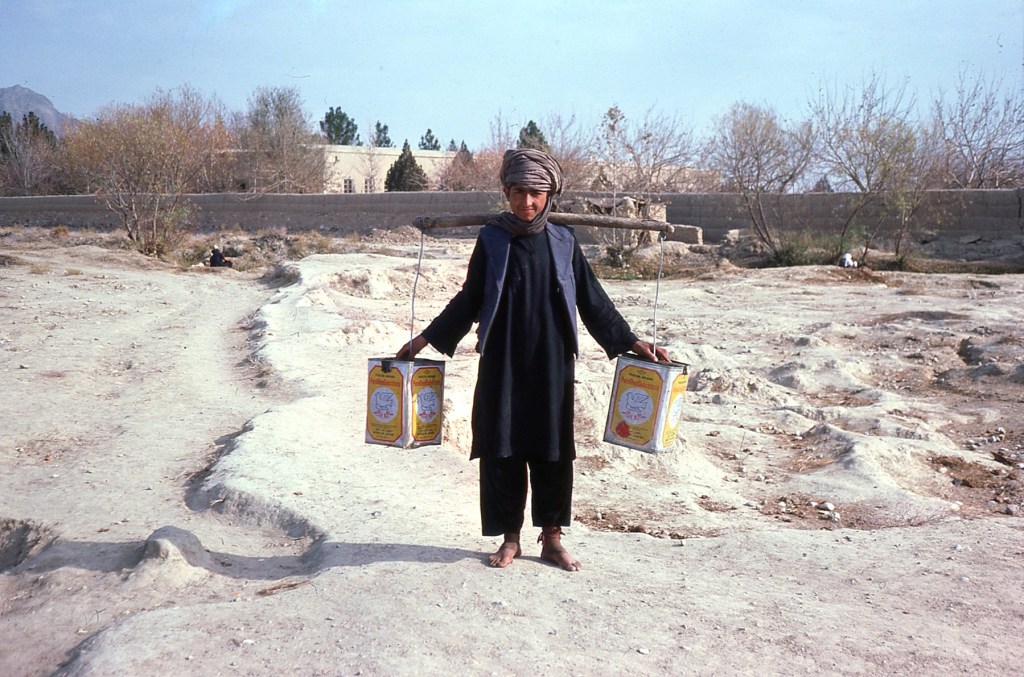
We had arrived in Herat via the standard travel arrangements of the times. A bus out of Mashhad took us east to the Iranian border. Leaving Iran was a mere formality. Display cabinets were set up to entertain us during this process. They exhibited the variety of smuggling options that previous unfortunate travellers had used to try to get their stash, mostly hash, out of Afghanistan and into Iran.
It was about half a kilometre walk from the Iranian border post to the point where minibuses waited to be filled before proceeding to the Afghan border post. The top of our bus was laden almost beyond belief with what seemed to be straw – it wafted down for the entire journey. The “conductor” made the journey standing on the ladder at the back so would have spent the entire journey swallowing and inhaling straw.
Our fellow travellers, all locals except for us and the two guys from Mauritius, were in a hurry, so after much haggling, we all agreed to pay extra to get under way before the bus was full. A fee to the border and a separate fee into Herat. Cars crossing the border from Iran had to park over a pit for a thorough search underneath and then everything inside the car was pulled out and searched. It was much less painful for us in the minibus, apart from the weird failure of not having had our vaccination certificates stamped by the Health Officer resulting in a mad run back to get this rectified.
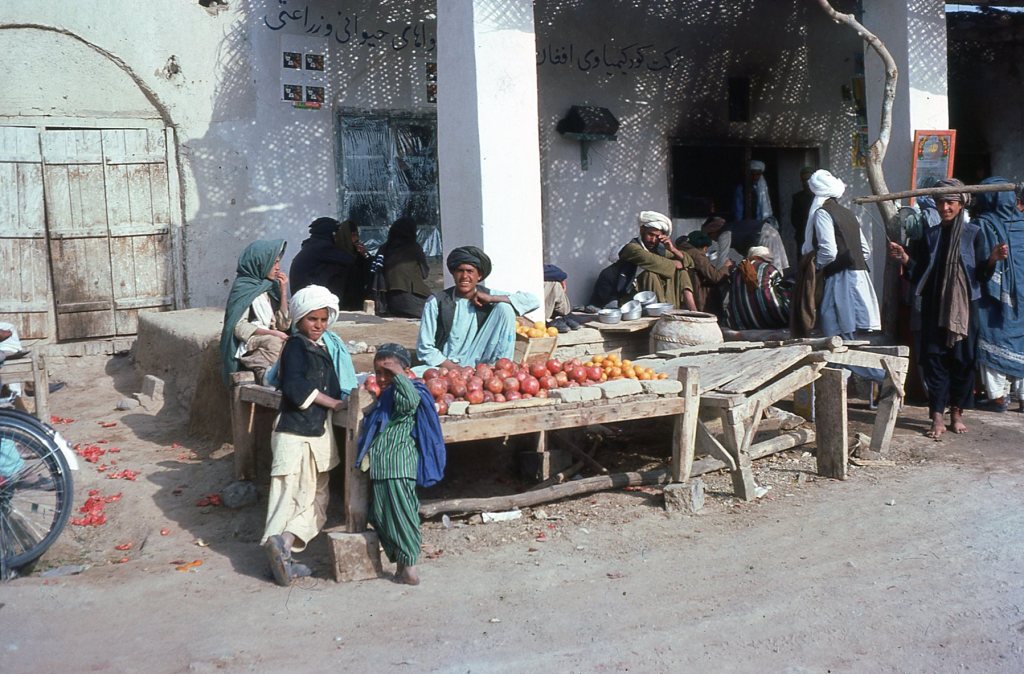
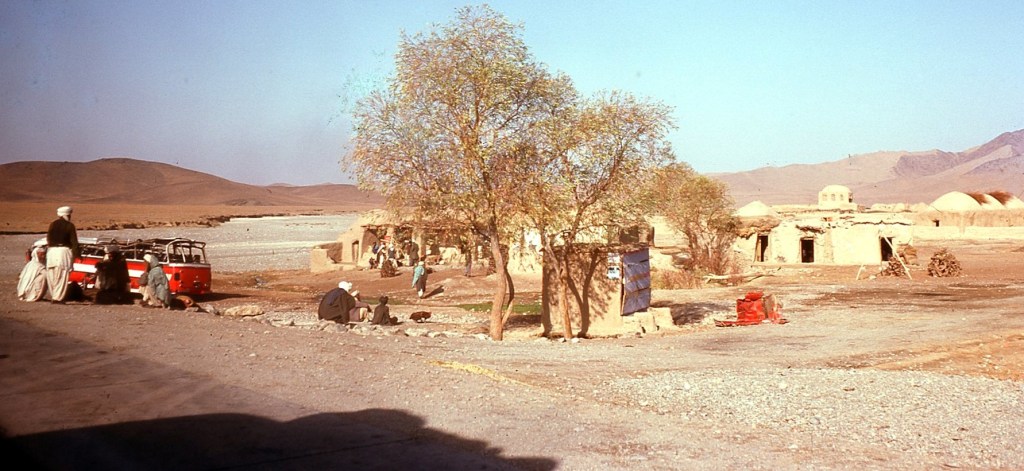
And so it happened that we left Herat on a particular day on a particular bus to keep heading further east to Kabul with the bus company advising an estimated arrival time of 9 pm. There were just three break stops, each at very interesting places. However, the food looked incredibly unhygienic, so fruit and stale Iranian bread provided our sustenance over the long journey. Even though the bus travelled at a good clip, it finally dawned on we four foreigners that our arrival was going to be closer to midnight, which is why we had all settled down to sleep.
Community Facility – A Rare Option
Our accident appeared to us to be in the middle of nowhere, but police arrived on the scene in a relatively short space of time, under an hour. The driver was taken away. After much discussion, we were all ordered out of the bus and an attempt was made to move the truck. This was a fruitless exercise so back into the bus we piled. Much more chatter and after about 2 hours in all, an instruction in the first English that had been spoken all night, “Ok, come on”.
We four foreigners were to get into the back of a truck escorted by three rifle bearing Afghan policeman who were well rugged up against the cold. Naturally, every Afghan on the bus seeing this unfold started to cram into the truck as well. No dice. The sardine pack that had quickly developed in the back of the smallish truck had to slide back out just as quickly and so we four privileged foreigners headed off leaving the locals to cool their heels in the freezing night.
The saga continued as our truck kept stopping along the way for our police to converse with the police in the convoy car driving in with us to Kabul. Perhaps it was just a warmup stop. The green powder went under the tongue and was then spat out again after some minutes.
We four were chilled to the bone and so dog tired we just sat and observed, grateful we were not still in the crowd left behind back at the bus.
Eventually we arrived at the closest police station on the outskirts of Kabul. It was about 2 am. From there a taxi was to drive us to our hotel. Unable to find our chosen cheapie hotel, the driver took us to a “posh” place. It was just a newly constructed (plywood springs to mind), very basic travellers stop so guess it had not yet hit the travel grapevine in a big way.
Like all destinations anywhere in the world, but especially on the overland trail, arrival in a new place not only marked the chance for new discoveries, but it was the ritual of story sharing and the exchange of current news of the road ahead that enriched the whole experience. That was how we found out from Germans travelling the night after us that there were now three abandoned buses at the accident site.
“Yesterday’s Bus” – A Frequent Sight
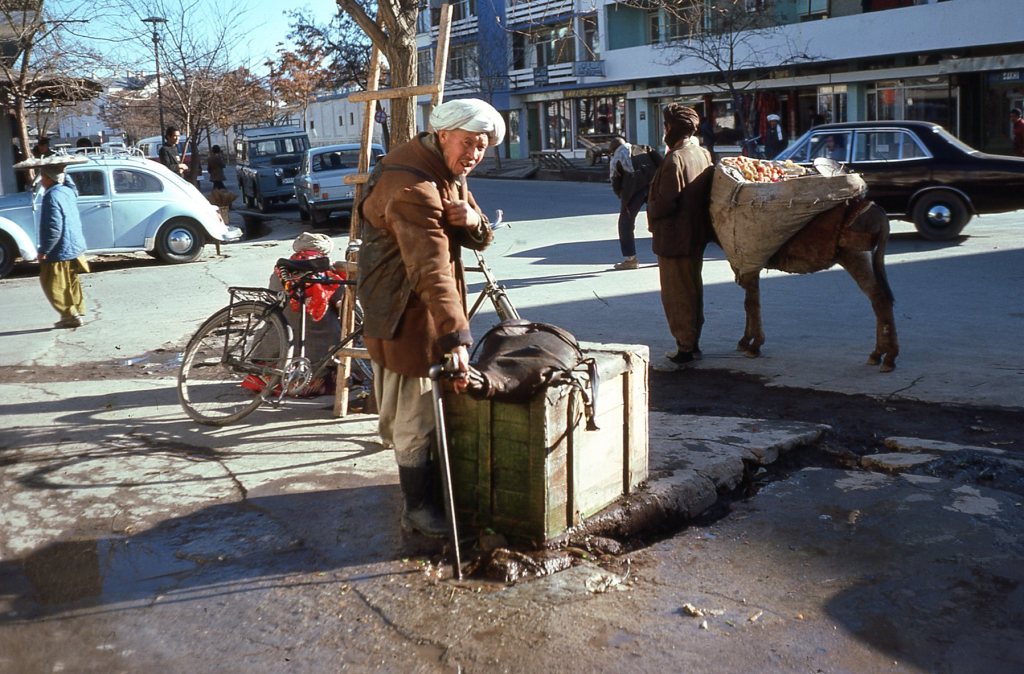
When you have been on the road for a long time, it is amazing how delicious a fillet steak and vegies followed by apple or lemon meringue pie can taste. Our favourite restaurant featured local musicians and here we enjoyed our first real taste of that part of Afghan culture. Kabul was quite something on the trail in those days.
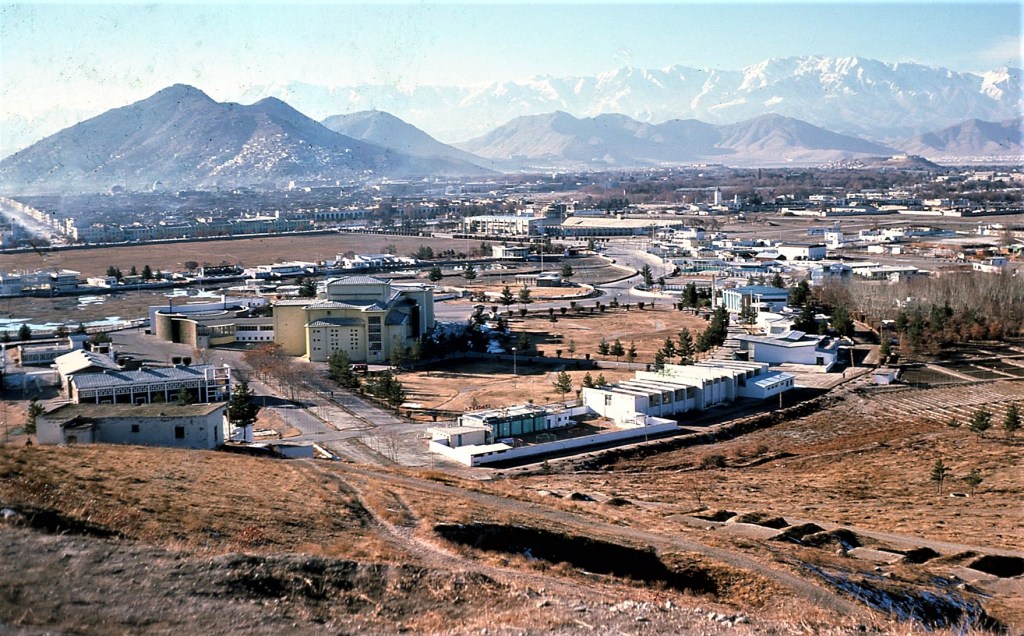
A friendly local drove us to a lookout over the city, we got caught out by the lads running the shoeshine scam, had a taxi drive us for miles in a fruitless search for the camel market, resisted what we thought was an exorbitant price for lapis lazuli (regret that one) and wandered all over the city fascinated by a way of life unseen in our years of travels.
The view from the back of the police truck over that final drive into Kabul remains one of those very vivid travel memories. Despite the engine noise, grinding gears and the wildly flapping canvas, the image of the endless tyre tracks in the glistening snow created a sense of deep stillness in my doubtless slightly chilled brain. It still has the power to pull me right back to that night and to reflect on what could have been for Afghanistan.
The man was unshaven, scruffily dressed and the large bulge in his back pocket was unmistakably a handgun. He was asking in Spanish for our passports – we had just cunningly concealed them under the mattress. The hotel room contained nothing more than a bed really, but it had seemed a good idea at the time. A lanky American with a smallish monkey perched on his shoulder strolled down the spacious corridor past the three of us: “You’d better give them to him” he drawled, “he’s the chief of police”.
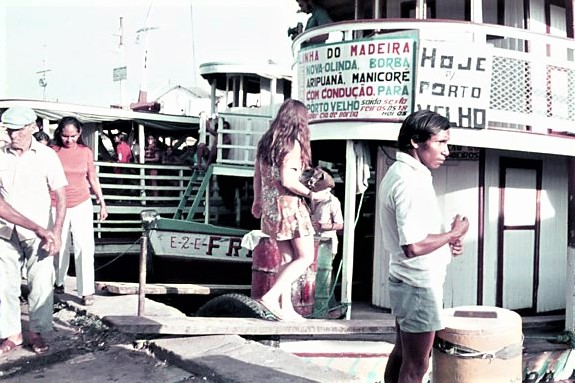
The day had started well. We arrived at the Brazilian border town of Guajará-Mirim after a fabulous journey through the Amazon basin for a few weeks. The first week took us on a local river boat halfway along the Amazon from Belem at the mouth over 1,500 kilometres upstream to ex rubber boom-town Manaus. The river boat was the type where you sling your hammock on the deck and line up at the cookhouse door for meals. Each meal allocation was checked off on the boat ticket in case of greediness. The likelihood I would go back for seconds was zero; I unfailingly passed my meal on to one of the only two other gringos on the boat, it was so inedible.
Drinking water was pulled from the river in the wash of the boat, more or less in line with the toilet outflow (outflow being a generous description of the sanitary arrangements for third class deck travellers). The river water was transferred into a large clay pot, but after a few days we discovered the filter had been removed – it made it too slow for water to drip through. A much smaller river boat took us southwards for another 5 days on the Rio Madeira, the longest tributary of the Amazon, into Porto Velho. From there, it was just a hop and a skip to the Brazil/Bolivian border, which was yet another river, Rio Mamore.
Checking out the boats to Porto Velho, Amazon River, Manaus
For the princely equivalent of 20 cents, we piled into a putt-putt canoe. A combination of the small motor and the racing current took us from Brazil to Bolivia and the small town of Guayara Merin. The only transport in and out of this town was by river and apparently rare flights where the pushiest who got to the head of the crush at the ticket “office” got a ticket on the next flight. No roads in or out of town.
The motorbike taxi lads balanced our packs in front, we got on our respective pillions and roared off from the riverbank into town and to our surprisingly pleasant hotel. So, this is where, under pressure, we had no alternative but to retrieve the passports.
Multiple enquiries along the route for a month or more had each time assured us Australians did not need a visa for Bolivia. Was it one of those Austria/Australia things? The situation felt more than a little sticky when, after inspecting our passports, the gangster like policeman triumphantly advised us that indeed we did need visas. Maybe the look on our faces softened him quickly, but as we later discovered, he also enjoyed the power he had in this town. He transformed into a magnanimous benefactor who suddenly spoke excellent English. He would fix it, he told us.
After much important stamping of documents and signing of forms we became best friends for the 10 days we were there waiting for a plane out of this “wild west” town in the furthest reaches of Bolivia. He even invited us for lunch to celebrate a birthday. Very pleasant, and the reason the American farmer from further along the river had been invited as well (sans monkey) was revealed when he was the one who was left to foot the lunch bill.
Trinidad airport and a motorbike taxi. Trinidad, Bolivia was the “big smoke” destination and next 10 day stop after Guayara Merin before we could fly on to Cochabamba
Bolivian Airways was memorable too. The fuselage was unlined so we sat observing the frame holding us all in place enjoying our half cup of cordial en route from Guayara Merin to Trinidad. As we gratefully left the plane at Trinidad airport, the sight of all the grass caught in the landing gear as it had skittered down the runway was another graphic memory that has never left me.
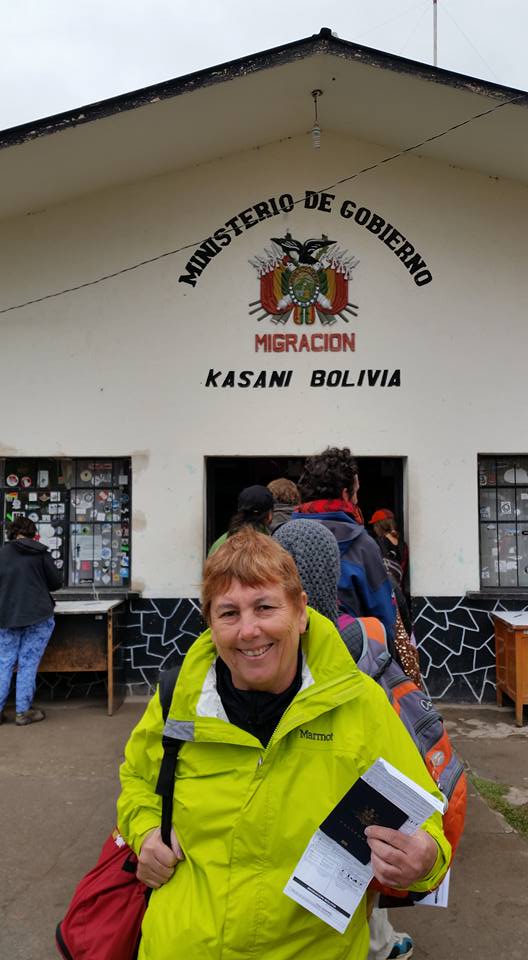
Over 40 years later when I next crossed the border into Bolivia, I documented my legal entry for posterity. That crossing was much more orthodox, though it did involve literally walking from the Peruvian side over to Bolivia.
Entering Bolivia with a visa January 2017
Twenty cents had been a pretty cheap price to pay to go from one country to another in border crossing transportation, but there was an even cheaper one in store a couple of years further along in our travels. There are always surprises along the road, especially in pre-internet days.
One memorable surprise that ended well occurred during a long bus journey in far northern Finland. The bus pulled up in the evening at quite a nice hotel totally in the middle of nowhere; not another dwelling or person to be seen. The surprise was that, while we thought this was yet another overnight bus trip, everyone else on the bus was booked into the hotel for the night. The kindly staff took pity on the forlorn Aussie girls and allowed us to spend the night in quite comfy armchairs in the hotel lobby.
This particular border crossing surprise however, was that the bus we thought we were taking from Greece into Turkey did not in fact take us over the border, much less into Turkey. It was cold and wet and walking seemed to be the only option when we got off the bus at the end of the line on the Greek side of the border. Not a solitary soul or vehicle anywhere on the horizon. Again, we were saved by the kindness of a stranger. On this occasion, a farmer on a tractor allowed us to sit in a trailer he was pulling ever so slowly into the first Turkish town across the border. Rain drizzled down all the way but, we had arrived safely and in daylight, for the start of the Turkey leg of the journey.
A kind Turkish farmer transports us into the first town over the border.
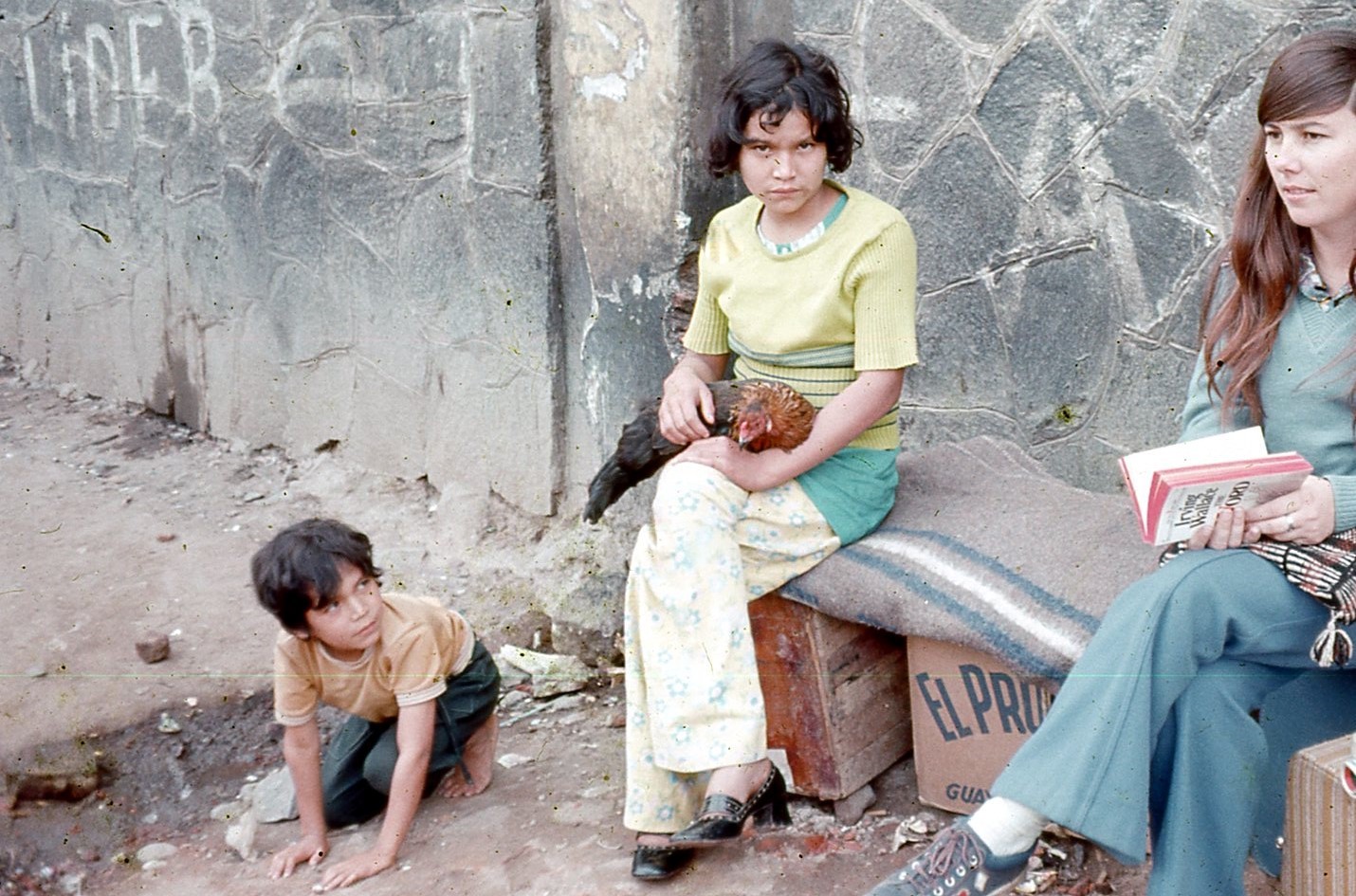
Probably the most spectacular border crossing memory occurred heading out of Ecuador north to Colombia. Again, the bus did not actually cross the border, however this situation was so much more civilised in that taxis did the border run. The deal is for four passengers plus luggage to pile into a medium sized sedan, pay the driver and off we go. Not sure what it is about cockerels in Ecuador, but we had already sat on the street in Quito waiting for the bus with a fellow travelling companion and her feathered friend.
Waiting for the bus on a Quito street
Her young fowl however, was but a chick compared to the majestic bird the front seat passenger in our taxi was holding on his lap. We two were crammed in the back seat with a third local, all of us pinned in soundly by luggage that did not fit in the boot. The taxi driver finally deemed it was time to depart and began to manoeuvre gradually out of the parking area jammed with taxis and travellers. This was obviously the moment for rooster man to complete his final travel preparations. He engaged in a very generous throat clearing and a gathering together of the produce of this exercise. The moment was completed by an enormous expulsion out the taxi window. Sadly, the window was closed. No-one said a word as we all watched the voluminous expectoration make its way down the inside of the window. The man and his cockerel looked straight ahead. The gringas in the back seat struggled to maintain decorum to preserve what little dignity rooster man had left while their bellies shook with suppressed laughter that threatened to explode uncontrollably.
The most important task at a border post after the Passport check is complete
Our breakfast waiter is from Turkmenistan so we brush up on some basic Russian. Nice to be able to say Good morning. More importantly, I want my coffe after I have finished eating. Serving tea or coffee immediately is the thing here so I learn the word for “Later” in Russian which is pretty much the lingua franca in this particular establishment, after Turkish.
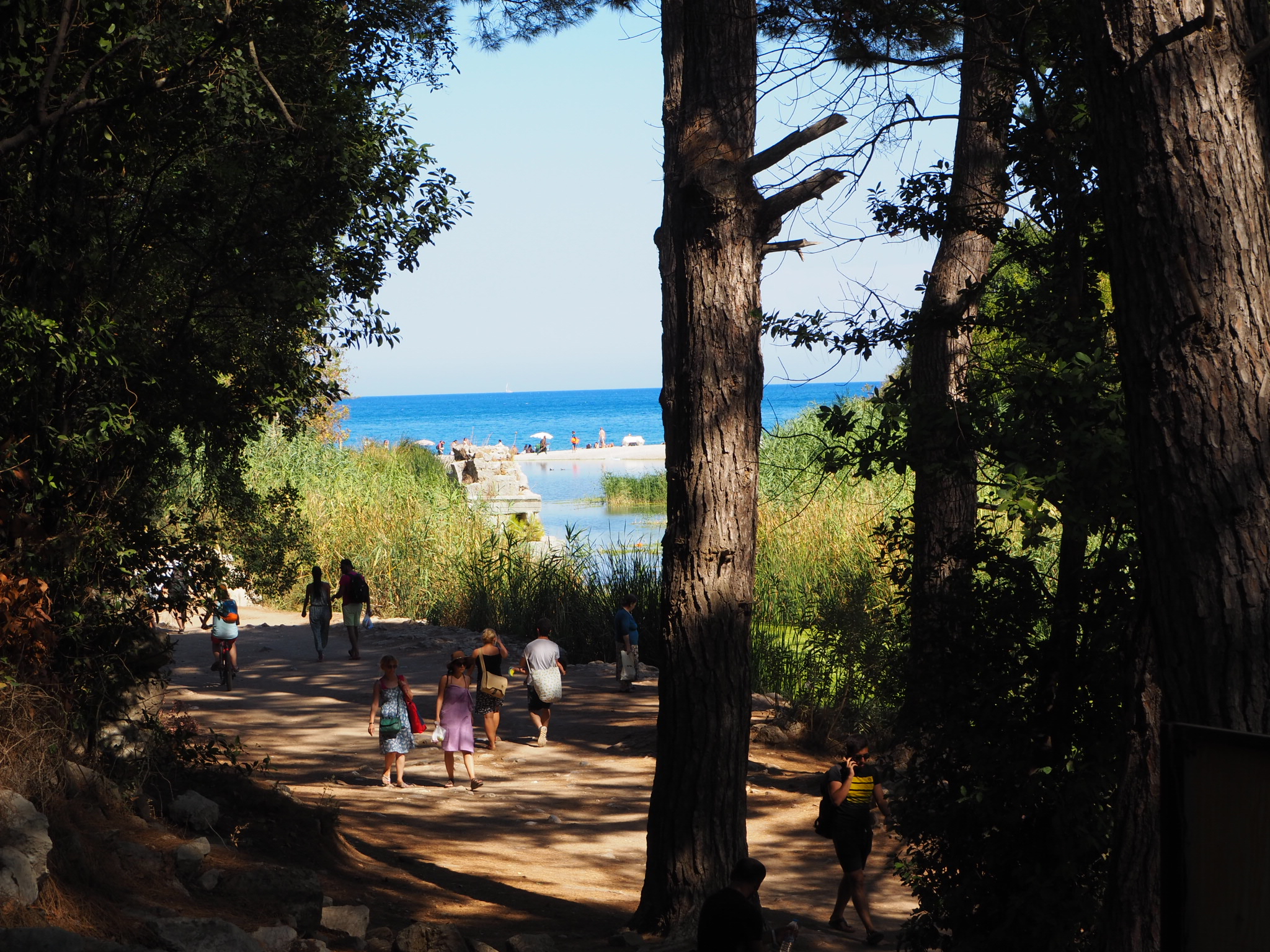
Autumn leaves are falling where we have just been but here in Cirali the heat is still intense in the second half of September. We have well over two weeks now to take it easy exploring the Turquoise coast and parts of the Mediterranean.
It was hard to find too much detail on getting here from Pamukale but it all fell into place on the day. Our exceptionally helpful hotel guy in Pamukkale dropped us at the dolmus to get back into Denizli. The uphill walk would have been a killer with all our gear. From there, it was a regular bus to Antalya. Back through security at the Antalya bus station to find out how to get to Chirali. “Number 7, pay on the bus” we are told. This smaller bus operates like a local bus and heads south along the coast dropping us at the Cirali turnoff. The dolmus waiting at the junction is full once we get on so off we go on the winding narrow road down the mountain with everyone dropped off at our respective lodgings. A very civilised arrangement.
Cirali is a tiny place seemingly devoted entirely to tourists but in a pleasant, relaxed, non obnoxious atmosphere a la Bali perhaps in the 70’s. Not a high rise in sight and Pensions stretch for several kilometres along the beach with the biggest concentration of accommodation and restaurants at the Olympos end. We are about a km or so further on in a garden environment and with a quieter beach.
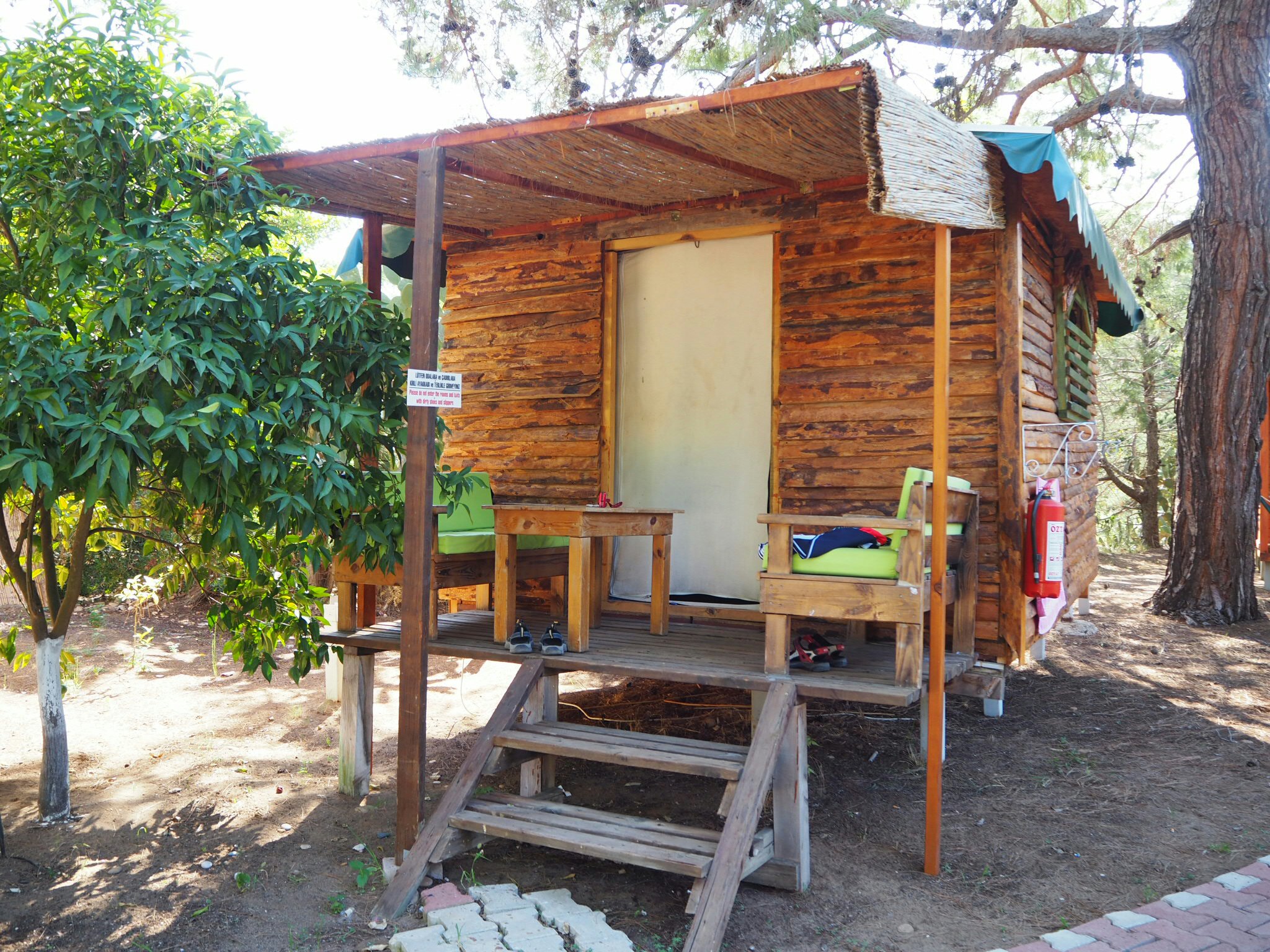
For three nights we glamp it in a tent. Being on a platform with a small balcony and air con makes it just that teeny bit more comfortable, though it is cool enough at night to not have the air con on.
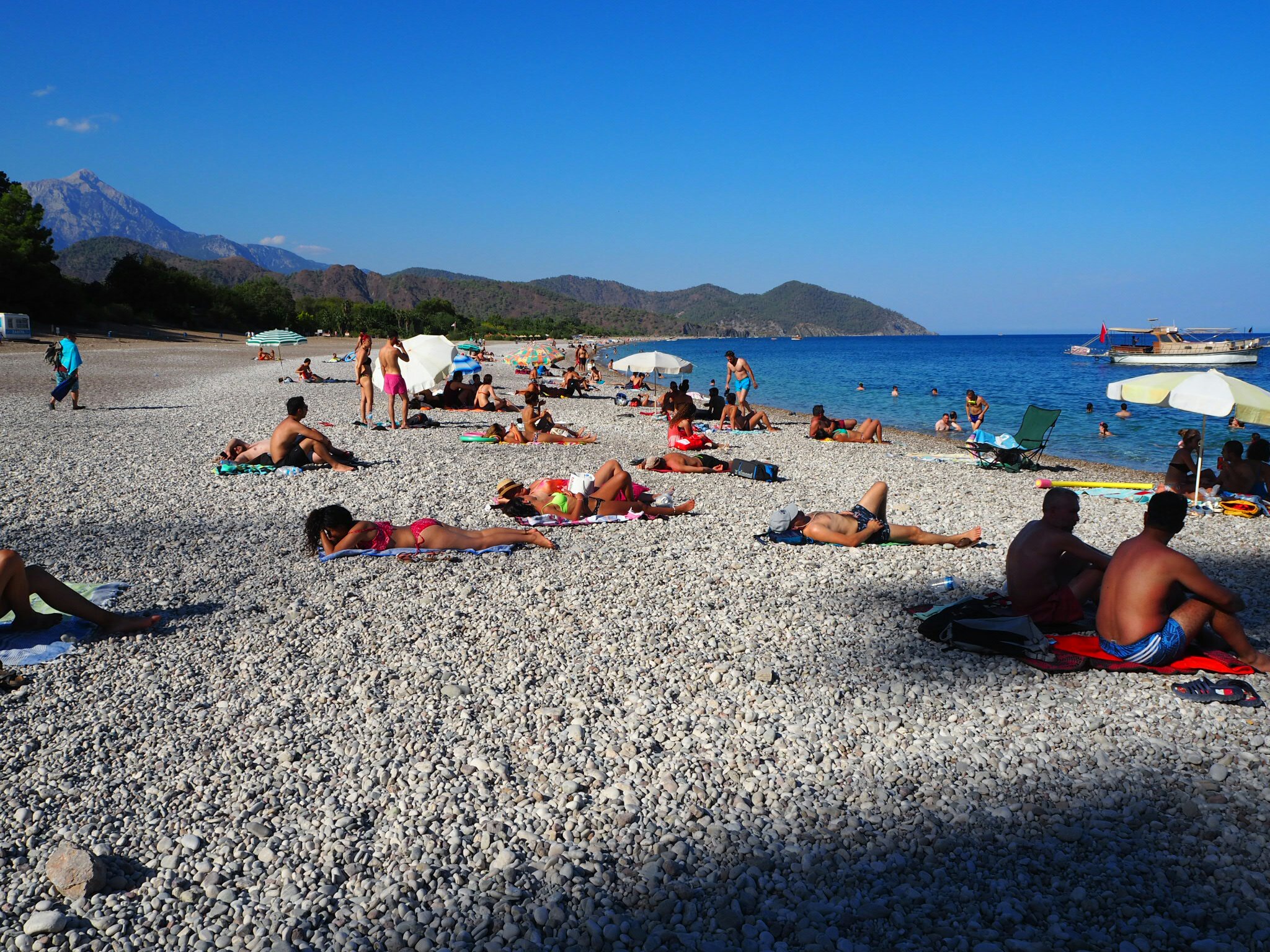
Olympos Beach – on the pebbles
Great spot to park it guys
The beach is just a few steps in front of us and the ocean is not only inviting, it is beautiful. Major downside for me are the pebbles. A strip of burning sand is negotiated first, uncomfortable but normal in my world. Much less comfortable is the stretch of annoying tiny burning pebbles followed by a stretch of larger burning pebbles before you reach the water. The drill is, make a beeline for water and then directly back, no relaxing beach strolls. Many people seem to find no problem however lying on their towels on the pebbles.
Chirali Beach – Ouch
We are here to see the chimaera and the ruins of Olympos, each at opposite ends of Cirali. Apparently the number three thing to do according to the guy trying to sell us one was to go on a boat trip to explore the coast. I am sure it would be but we are looking forward to a week on a gulet coming up so will have a rest day instead.
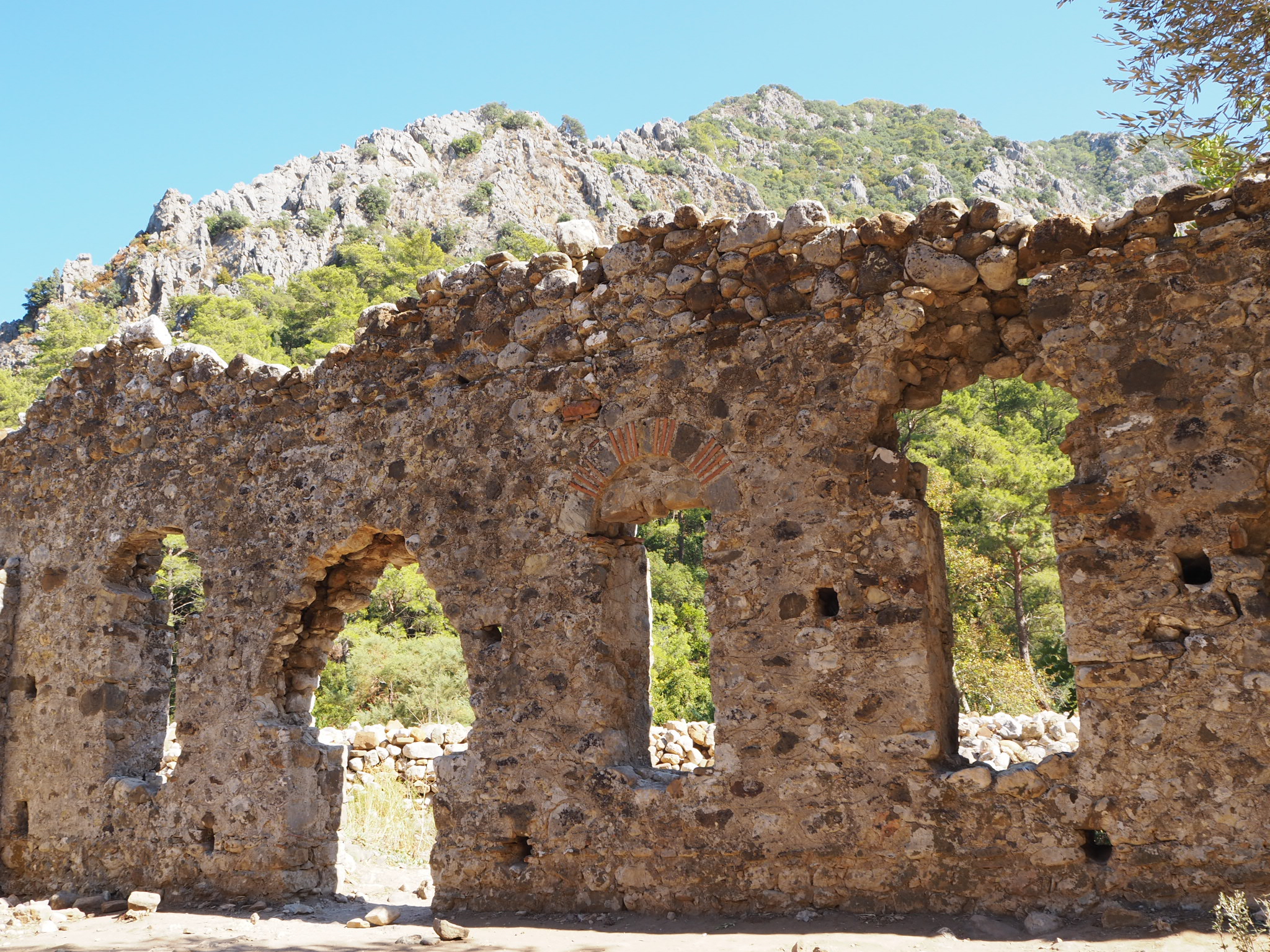
It is an exceptionally hot walk to get to Olympos from Cirali though plenty of shade once there. A modest fee is payable to get onto the site. For those staying at Olympos rather than Cirali, a beach fee is payable with a much more substantial walk all the way through the ruins every day to get to and from the beach.
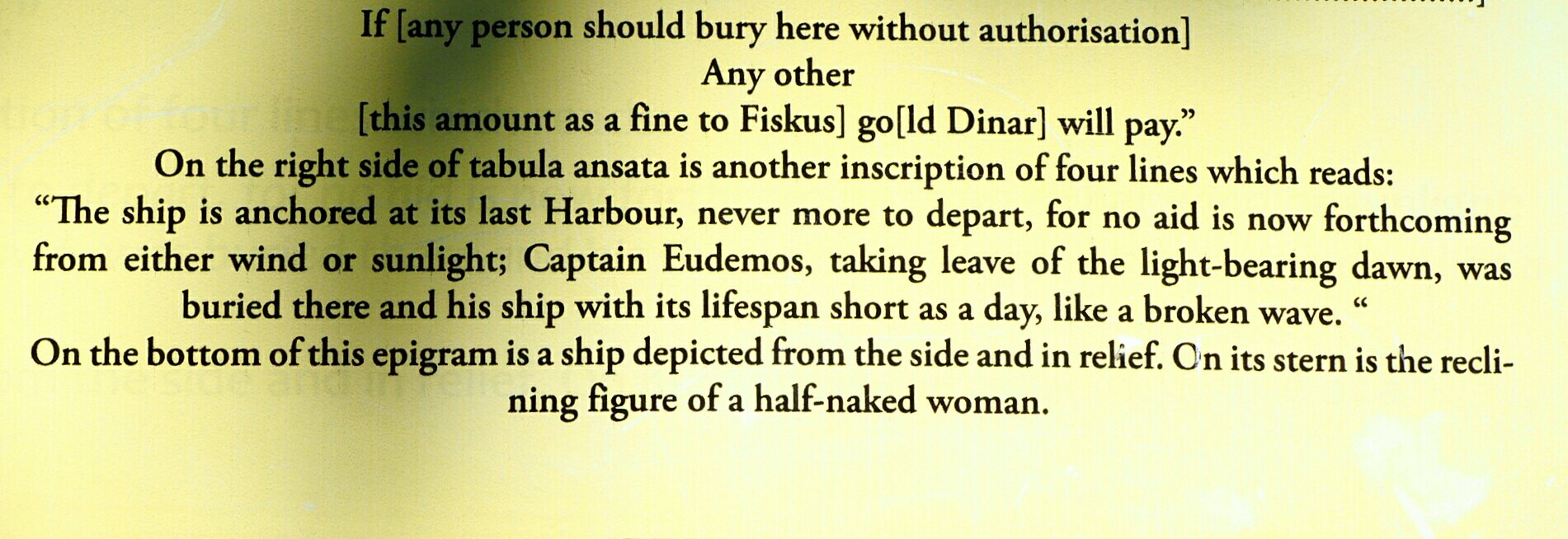
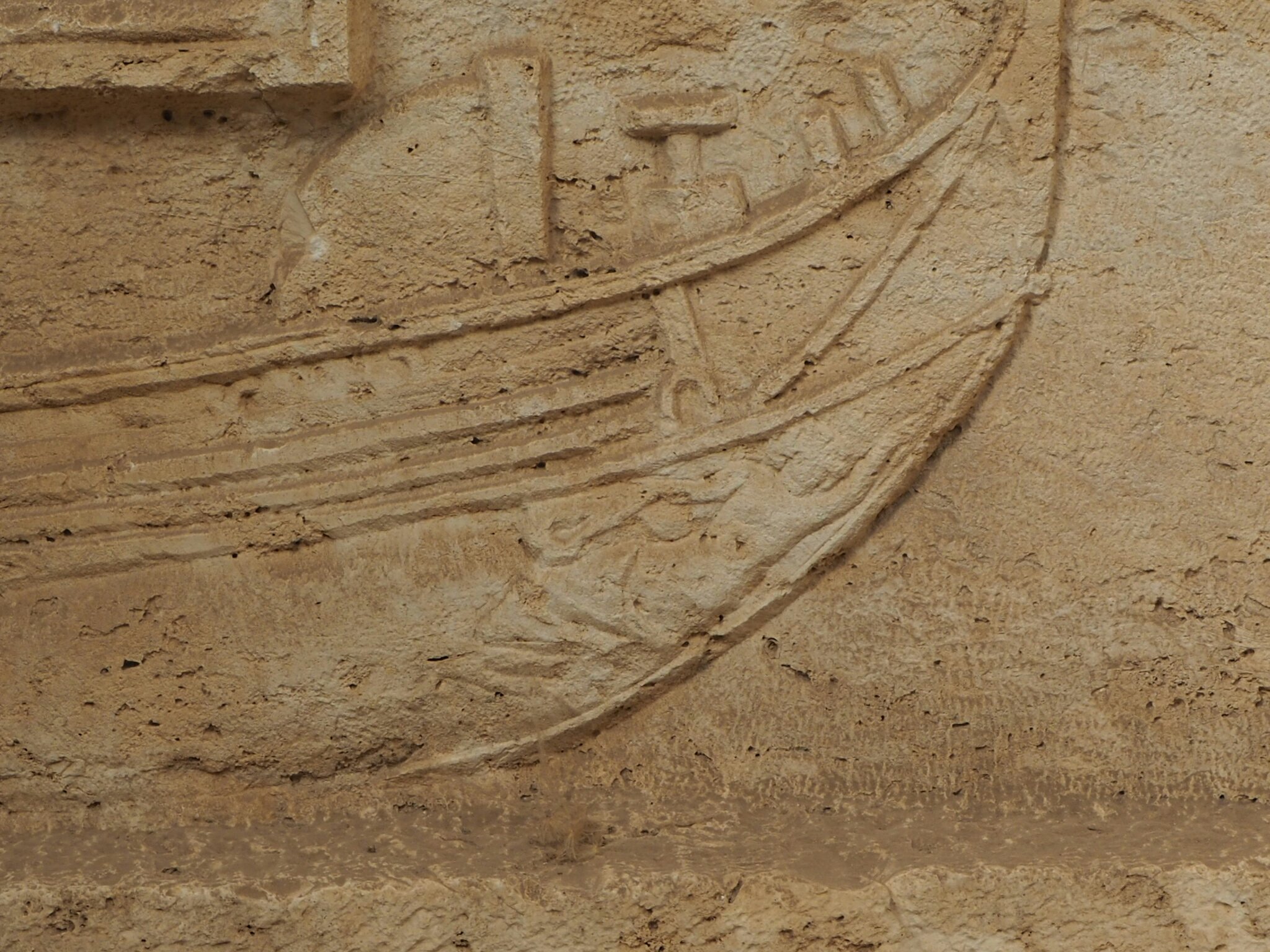
Much less excavation has gone on at Olympos than in Ephesus or Hierapolis but there were some interesting sections and I found the inscription on the sarcophagus of the sea Captain Eudemos to be quite moving.
After this exertion in the heat, we pay 10 Turkish Lira each to be driven to the Chimaera for the night experience. That is for the 3.5kms to the base of the mountain and back again after 2 hours to explore. From the dropoff point it is an arduous 20 minute plus climb up the mountain to the place of the flames. Even though we are climbing at 7pm, it is still hot. But worth it in the end to see this spectacle.
It is a popular activity in spite of the climb and quite a crowd gathers to see the flames that spontaneously and mysteriously are blazing out of openings in the rock like some long forgotten barbecue site with an endless gas supply.
Note, going down the mountain in the dark is just as difficult with yet again incredibly deep steps and a basic track to follow.
OLYMPUS DIGITAL CAMERA
For a very laid back beachy relax, good food and places of interest, Cirali has been a pleasant interlude.
Footnote on Getting out of Cirali: The dolmus winds back up the side of the mountain to the highway through pretty pine trees and craggy outcrops. The road is exceptionally steep, winding and narrow but in good condition and not at all a cliff hanger. The main road is maybe 750 metres above sea level. At the top, we join fellow travellers sitting on small stools under shade at a tea stand. Part of the deal includes the dolmus driver flagging down the Kas bus for us.
The bus sails past in spite of the drivers frenzied arm waving. He directs us back into the dolmus and we go about a km or so up the road where the bus has stopped. He gives the driver a serve (we assume), then for good measure passes on his advice to the driver going in the other direction back to Antalya.
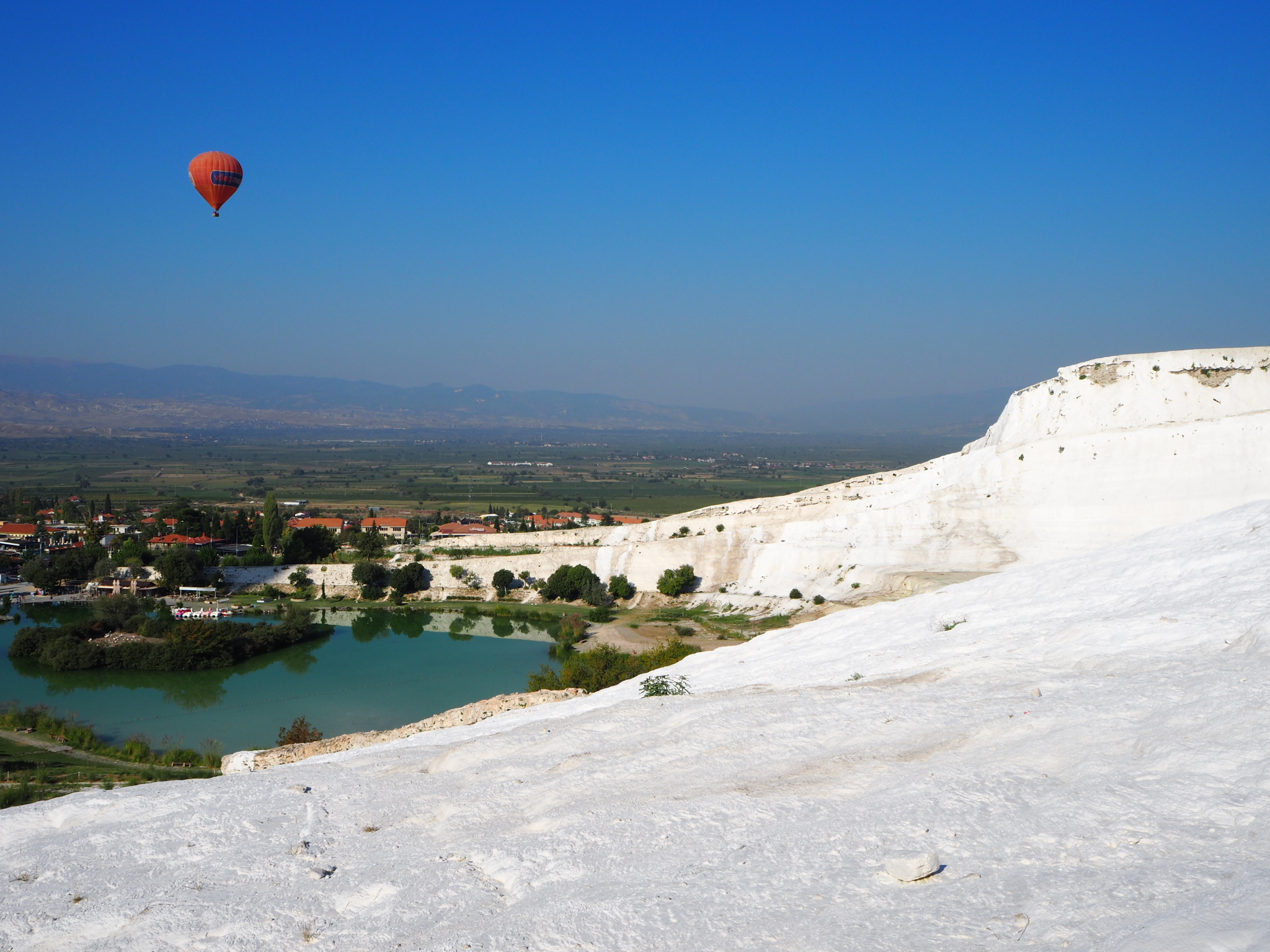
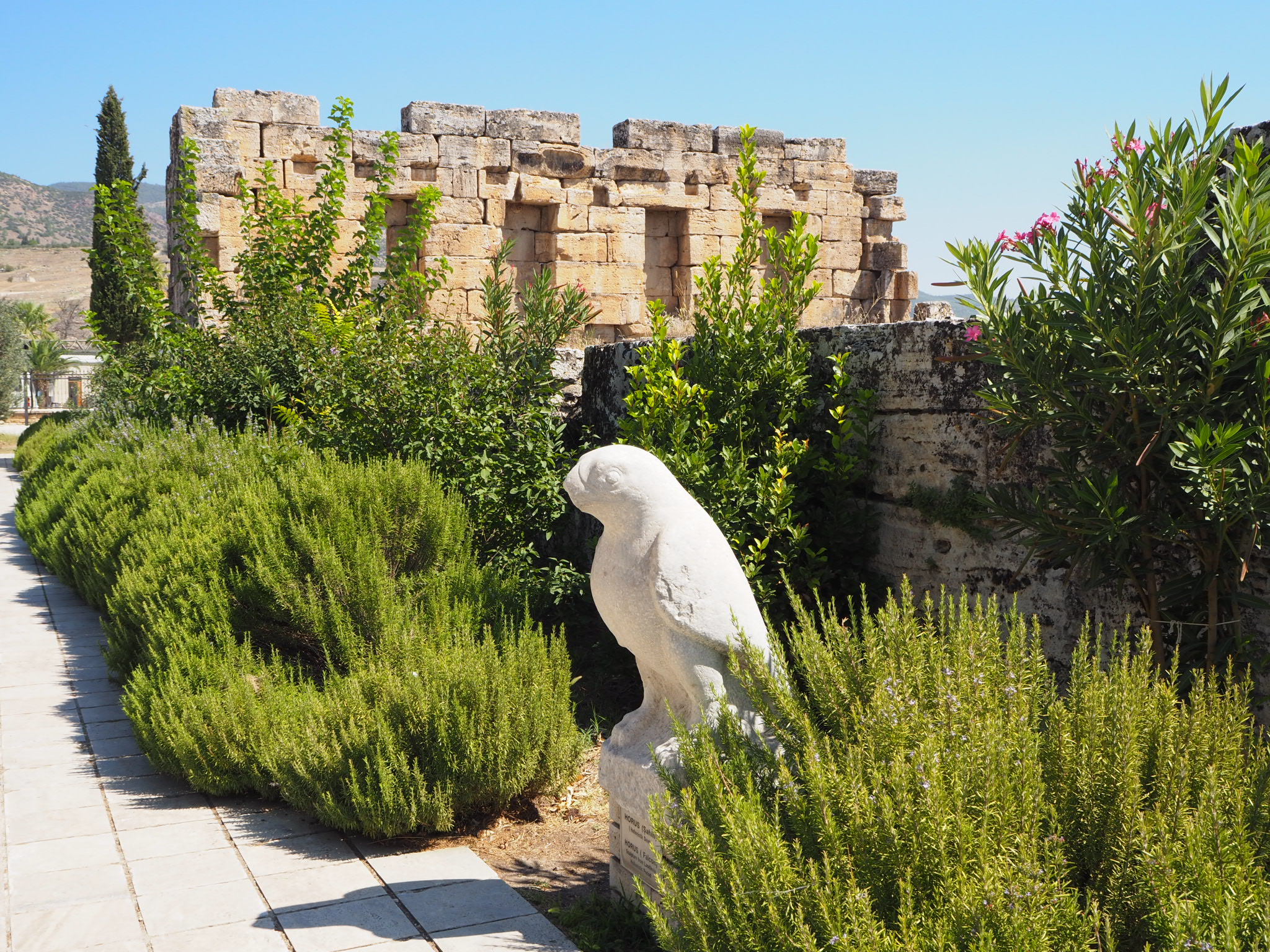
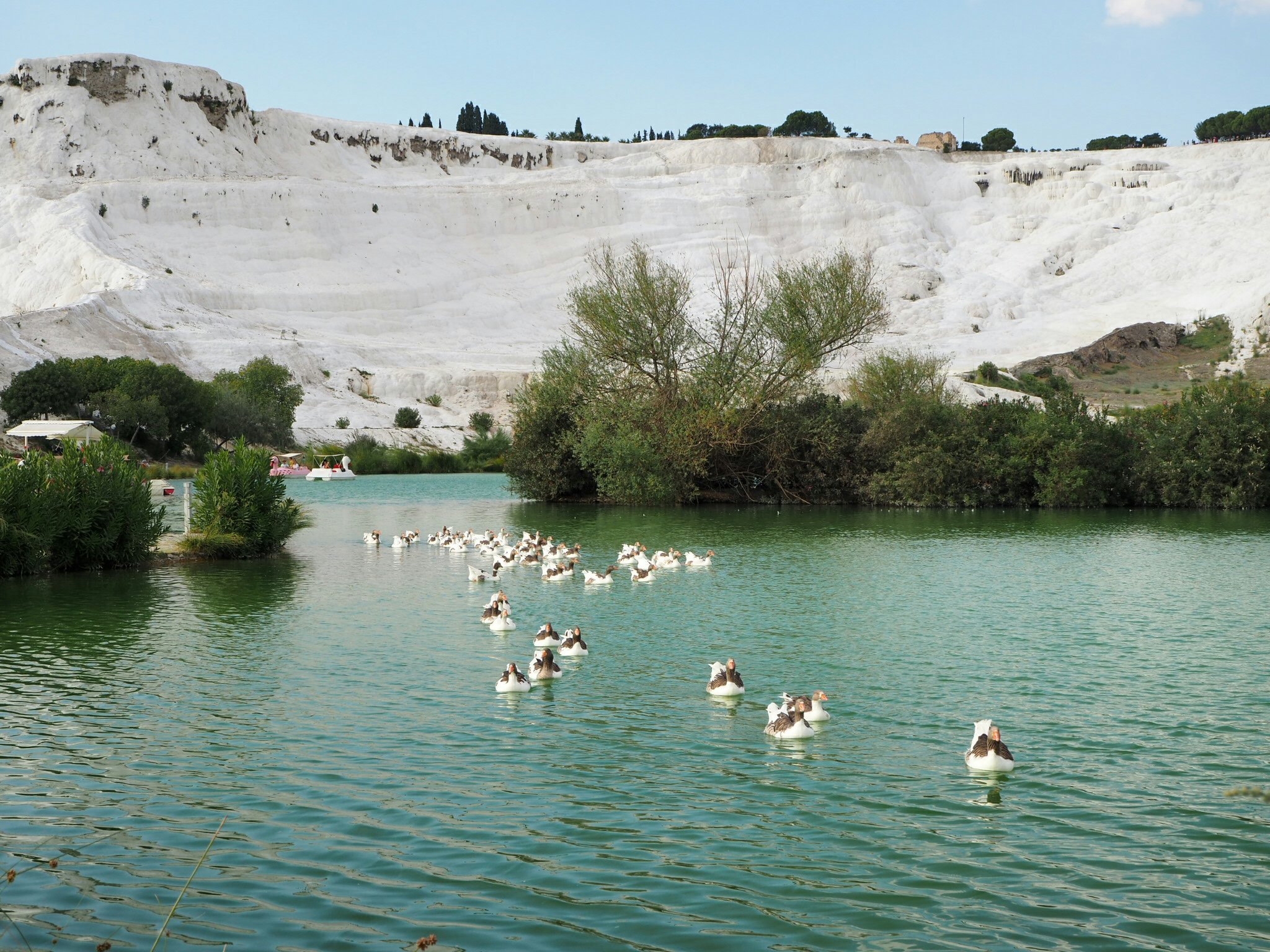
Lavendar, rosemary and occasionally subtle rose perfumes waft from the gardens that link the Pamukkale travertines and the ancient ruins of Hierapolis. It’s another stunning day in Turkey and my fears that this amazing place would be spoilt by masses of people or worse, no water at all, have not materialised.
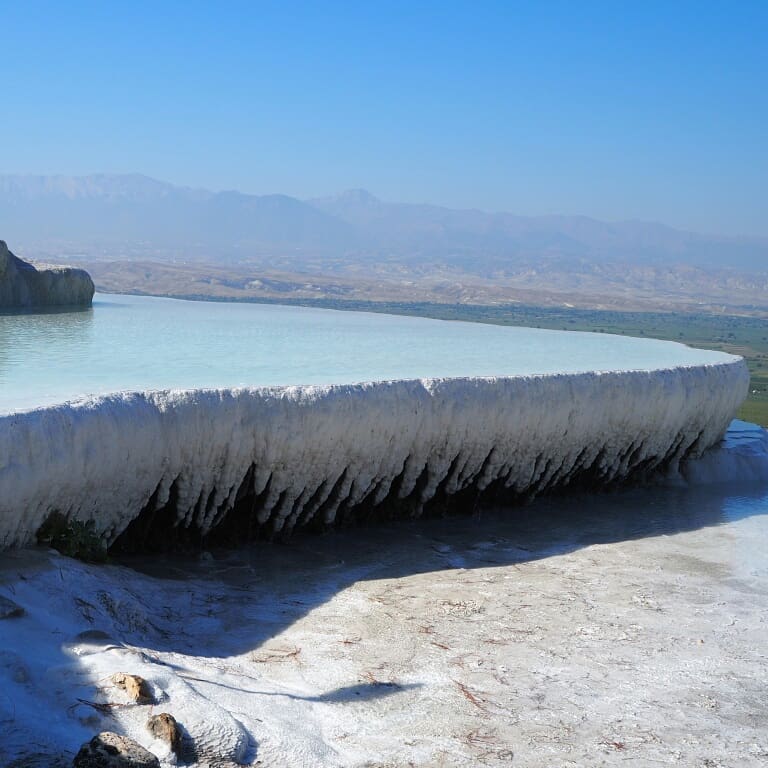
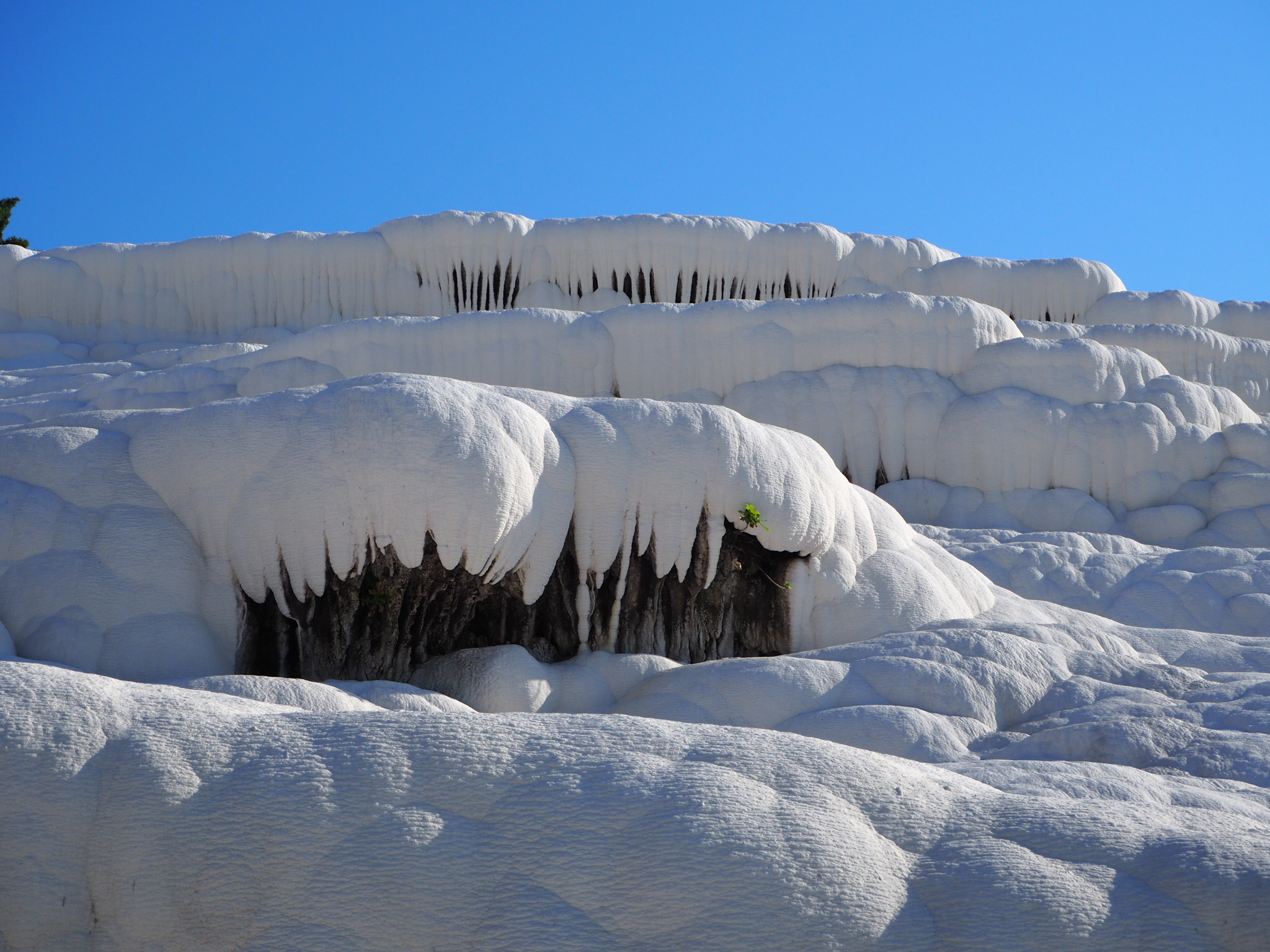
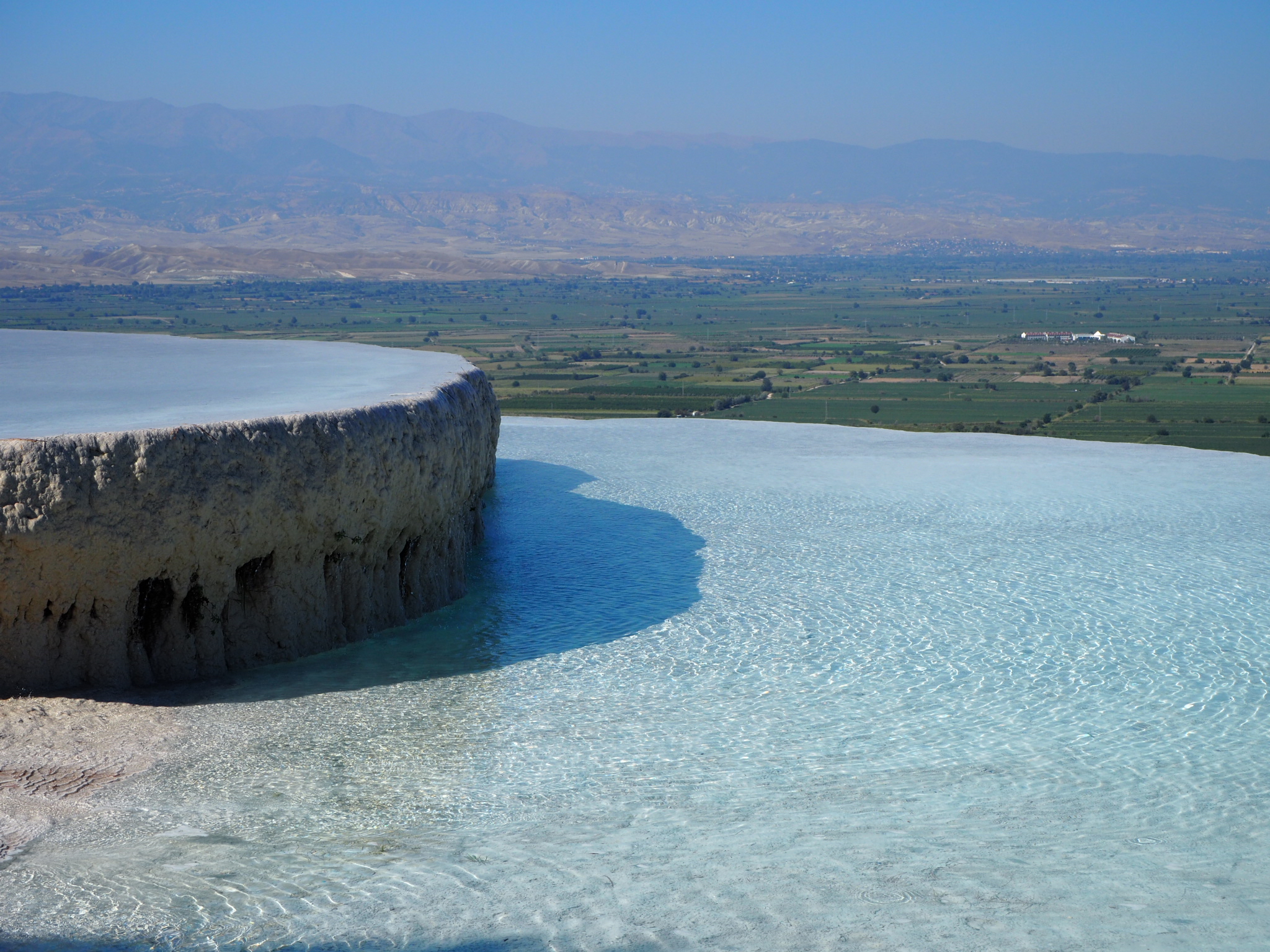
The attraction of Pamukkale is the spectacular platforms, travertines that have been formed from the mineral springs that gush, full of calcium and magnesium, depositing layers over the centuries. They are initially soft and gooey underfoot in the platforms, eventually solidifying into the calcite we all walk on barefoot to protect the site.
Patterns are formed, some just gentle marks, others in sharp ridges that test tender feet. Large pools in platforms extend the length of the site and short walks in either direction away from the main area reveal other pools worth a look. Overflows create stalactyte like formations,
We enter early by the centre gate just a short walk from our hotel thus avoiding the tour groups who enter at higher gates and so are massing at the pools well after we have moved on.
At the top, it’s shoes back on and we move around the boardwalks and gardens that seem only to be inhabited by people not on a schedule – a benefit of allowing a full day to explore the site. Unlike Ephesus, there is plenty of shade to be found, with picnic tables in many places under trees or vine covered small pergolas. It’s over 30degC out in the sun but a cool breeze when you take a break is so pleasant.
Above the travertines are the ruins of Hierapolis, a Roman spa town. This is definitely worth the price of admission, all part of the Pamukkale ticket, a modest A$8 approx and stay as long as you like.
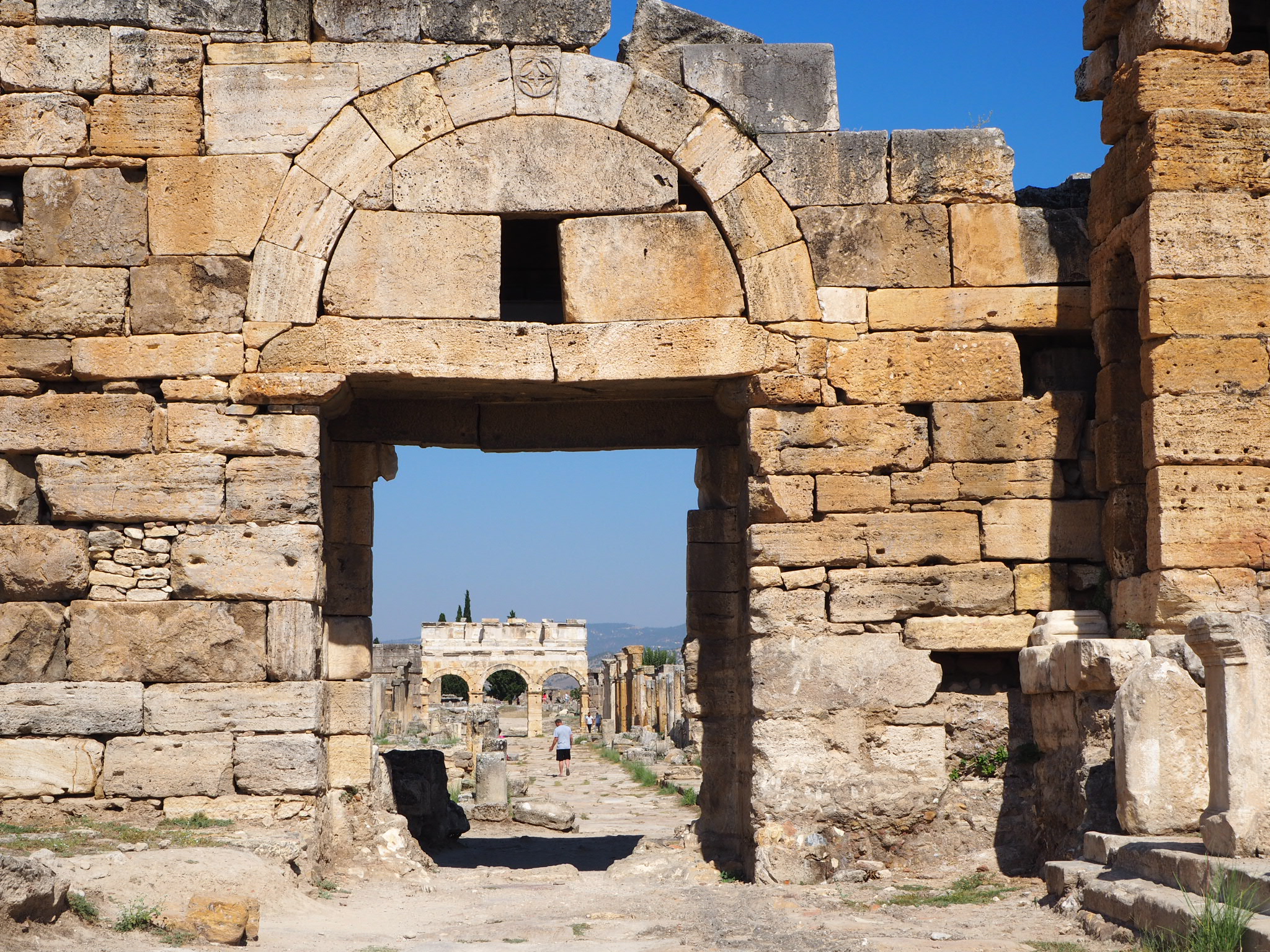
We head to the north gate. Just outside the gates, as in many ancient towns, are the remains of the baths. It was customary to clean up prior to entering the city, an early health management strategy for the citizens. Possibly even more important here as this is a town where the sick came for the cure. The size of the necropolis is testament to the fact that the waters did not always cure.
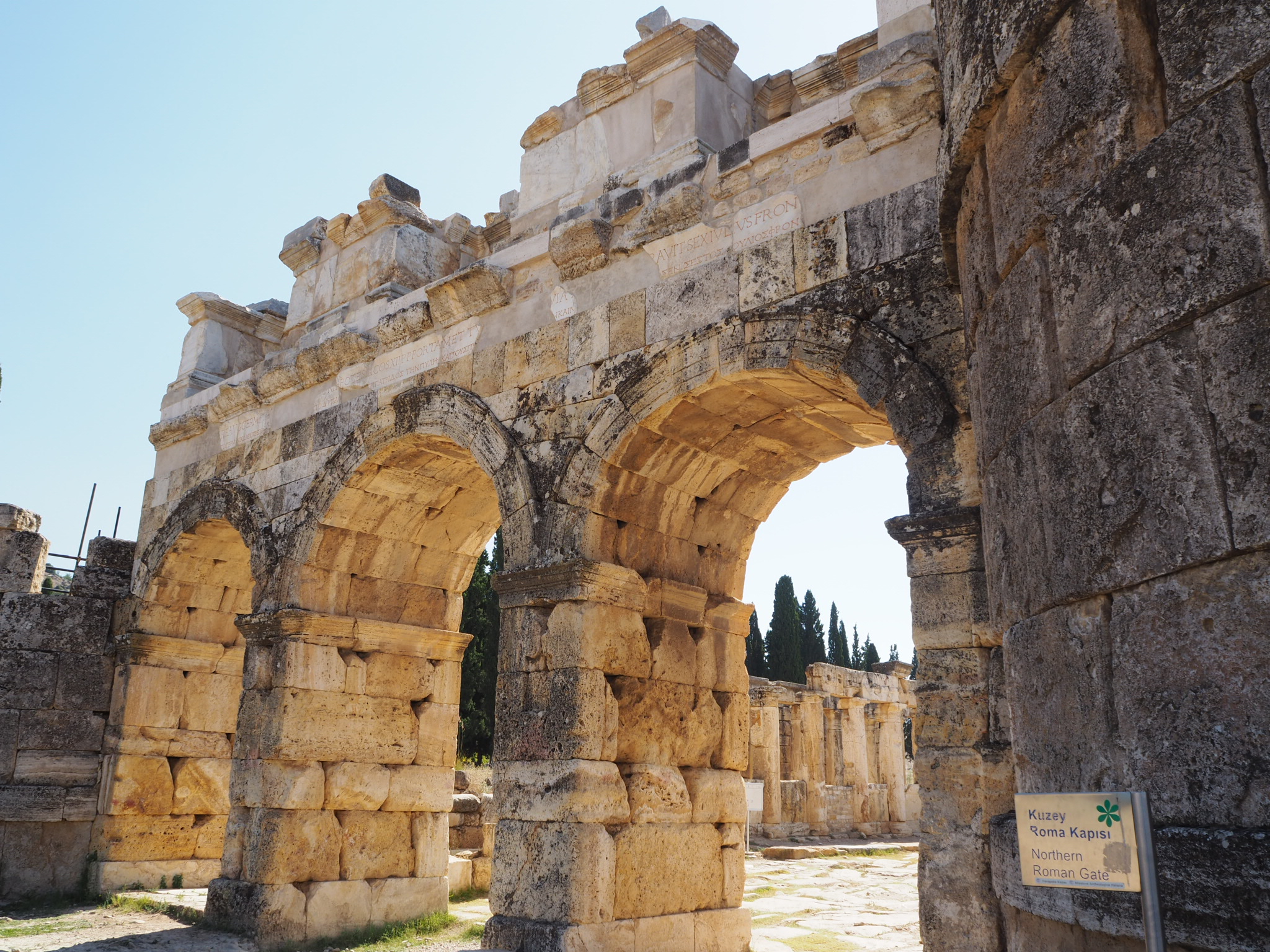
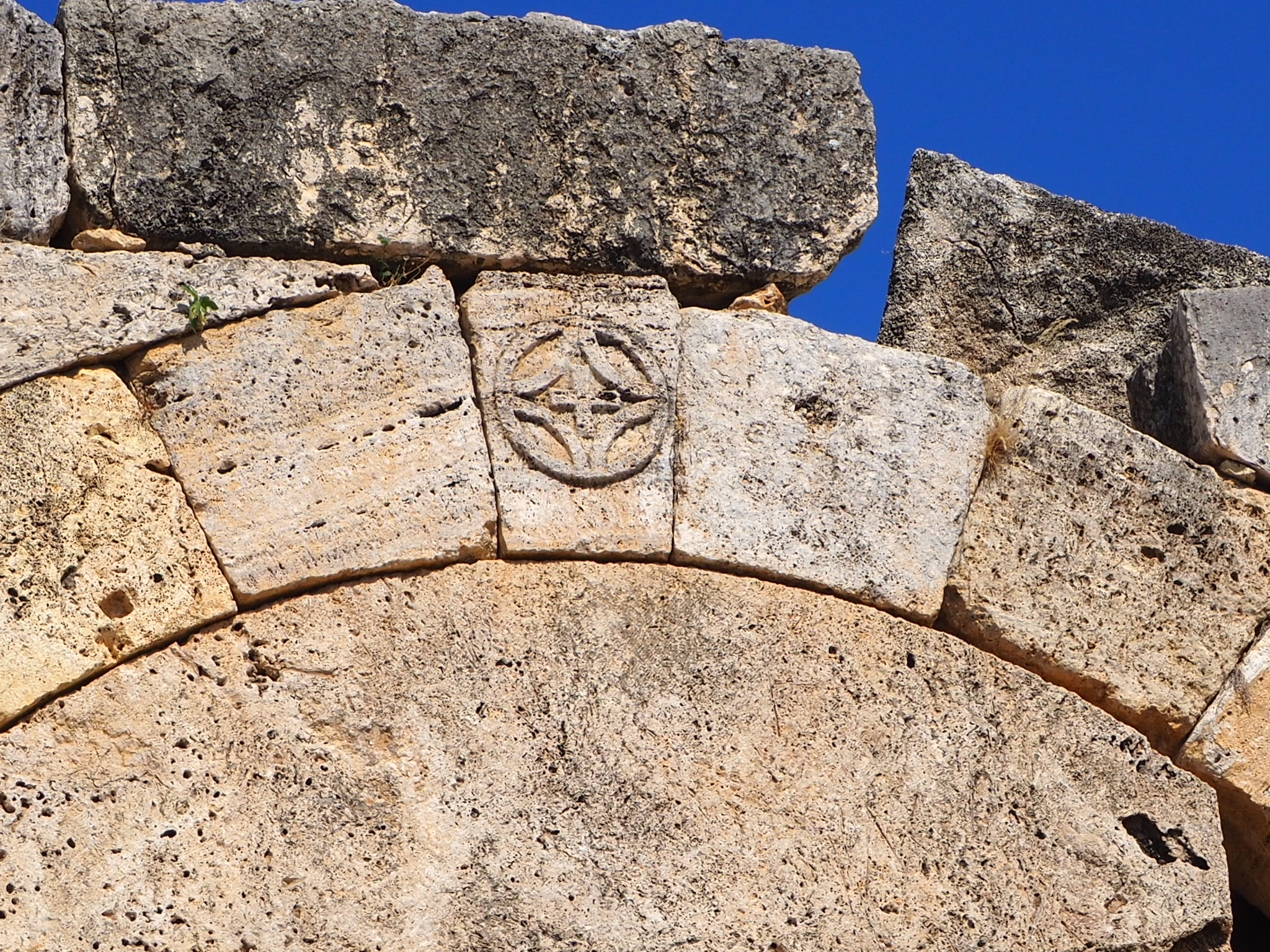
Through the grand gates and we walk along the generously sized road about 14 metres across. Two metres of calcite was apparently jack hammered away to reveal the original road. Excavations continue in various parts of the site.
Walking along this ancient road into the city, once lined with houses and shops, and having it almost to ourselves is just a bit awesome.
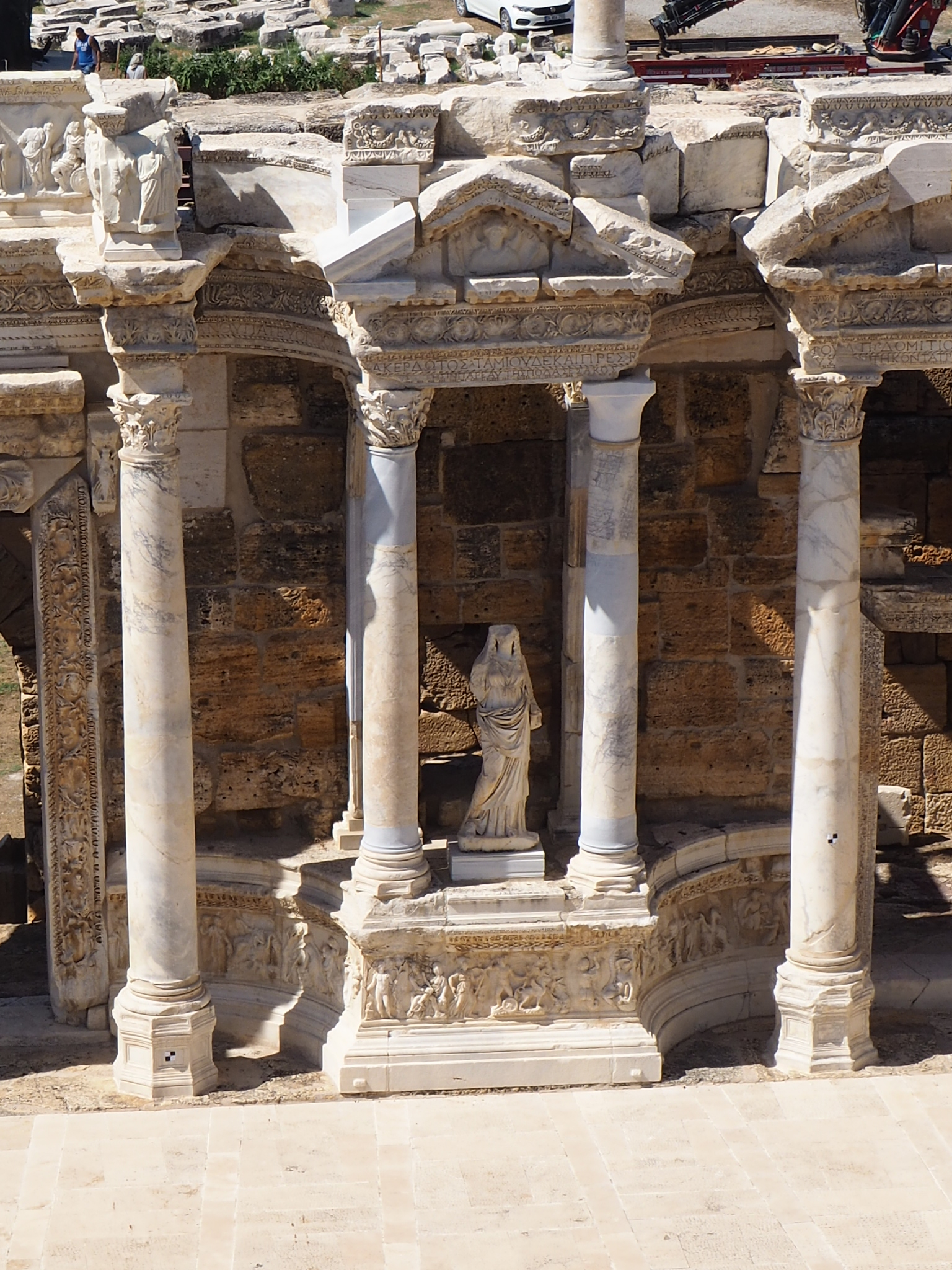
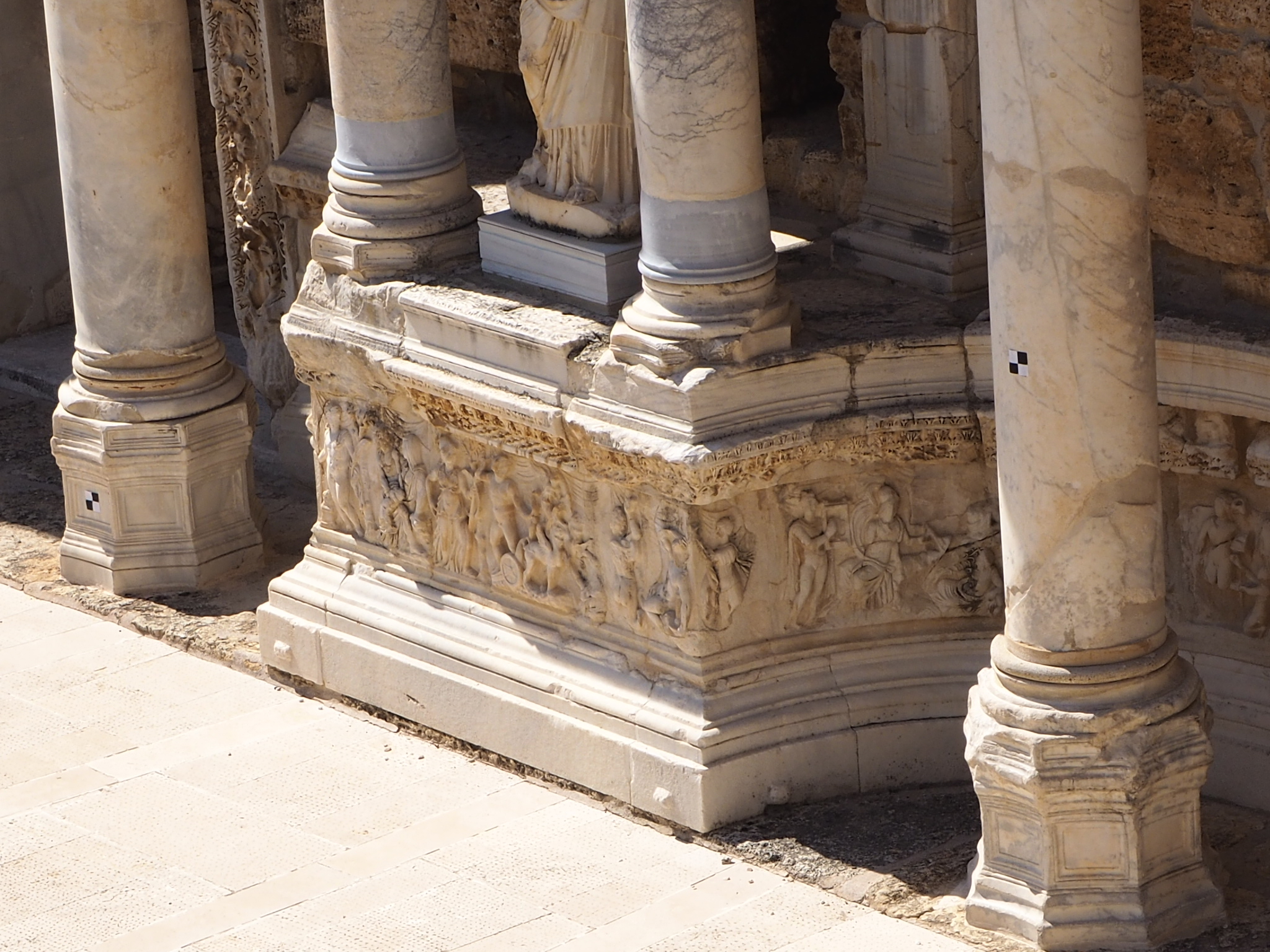
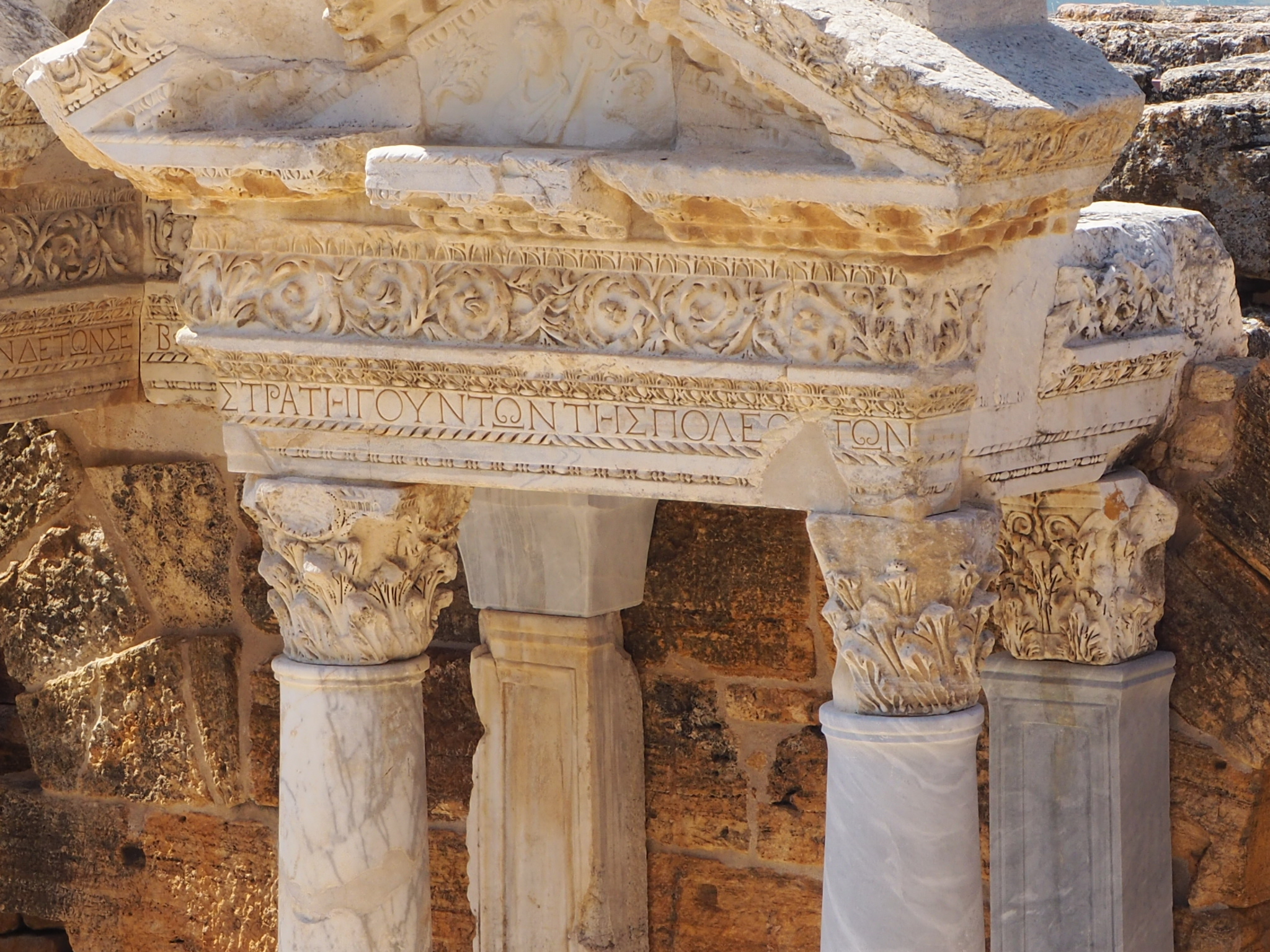
Far and away the most spectacular thing to see in Hierapolis, in my opinion, is the Theatre, about 1800 years old. Not as big as the theatre at Ephesus, but somehow more spectacular because of its completeness. Definitely worth coming here for this alone.
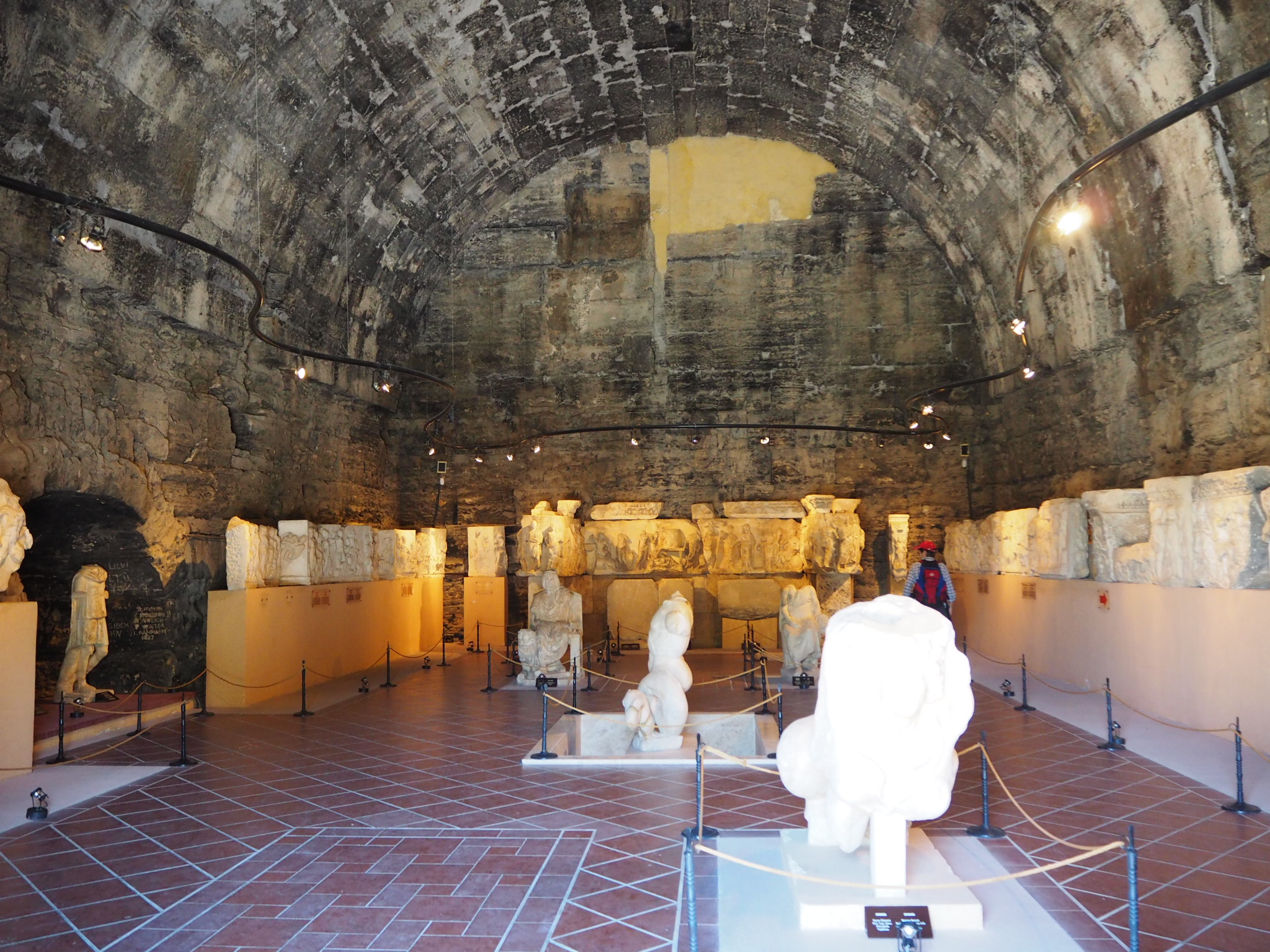
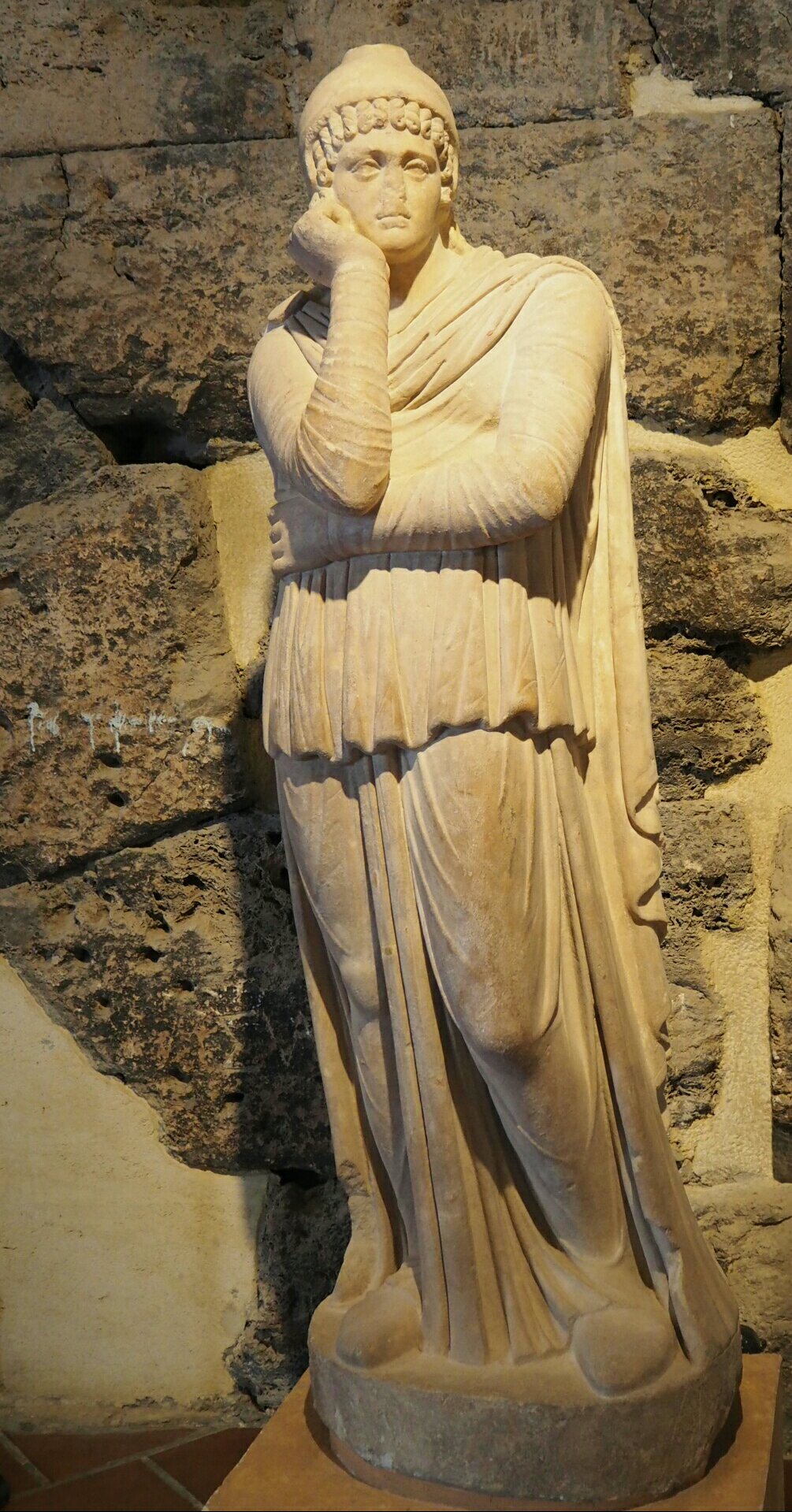
A museum is now housed in what were the town baths, a monumental building. An extra 5Turkish Lira (A$1) to go in but interesting and rather nicely done.
OLYMPUS DIGITAL CAMERA
In all we probably spent 5 or 6 hours on the entire site just cruising at a relaxed pace. The benefit of using the entry from Pamukkale town itself is we not only go up through the calcite deposits but get to experience it all over again on the way home. By this time, many people are gathered around the top pools, some in fairly skimpy bathing gear risking the suns rays reflecting off all that water and whiteness of the calcite. It soon thins out again as we progress down.
Top tip, go early and allow plenty of time to explore the entire site, taking a snack and plenty of water to avoid the massive markups on site.
Yet another excellent breakfast at Bellamaritimo. Everywhere in Turkey we have enjoyed breakfasts of the freshest tomato, cucumber, capsicum, black olives, green olives, egg usually in omelet form, turkish sausage, bread galore, pastry or similar sometimes crepes, often yoghurt and this place is the creamiest yet, fresh fruit, sometimes dried apricots and figs as well, coffee, tea – a veritable smorgasbord that can satisfy even a coeliac like me.
The Bursa otogar is enormous, like a stadium. Men are loudly touting imminent destinations for their particular bus company, of which there is an untold number, going to places we have not heard of. Thankfully it is a smoke free zone. A solitary and very tiny ginger kitten is treated kindly as it tiptoes along. Rain falls steadily outside. It’s been three very pleasant days but now is an excellent day to be leaving.
After a week in Istanbul, the choice was to head north east to a village on the Black Sea or south to Bursa nearly 2 hours on the ferry from Yenikapi across the Sea of Marmara. Bursa won mainly on the grounds of logistics, plus we could visit an alternate picturesque village.
Camulikizik, an old Ottoman village, had many glowing reports on the web and is on the UNESCO World Heritage list, usually a winner recommendation.
OLYMPUS DIGITAL CAMERA
OLYMPUS DIGITAL CAMERA
OLYMPUS DIGITAL CAMERA
Have to say it didn’t really do it for me. The welcoming party of masses of stalls and competing sales pitches probably put me off from the beginning. But what is it with all those little tractors littering the streets? That was intriguing.
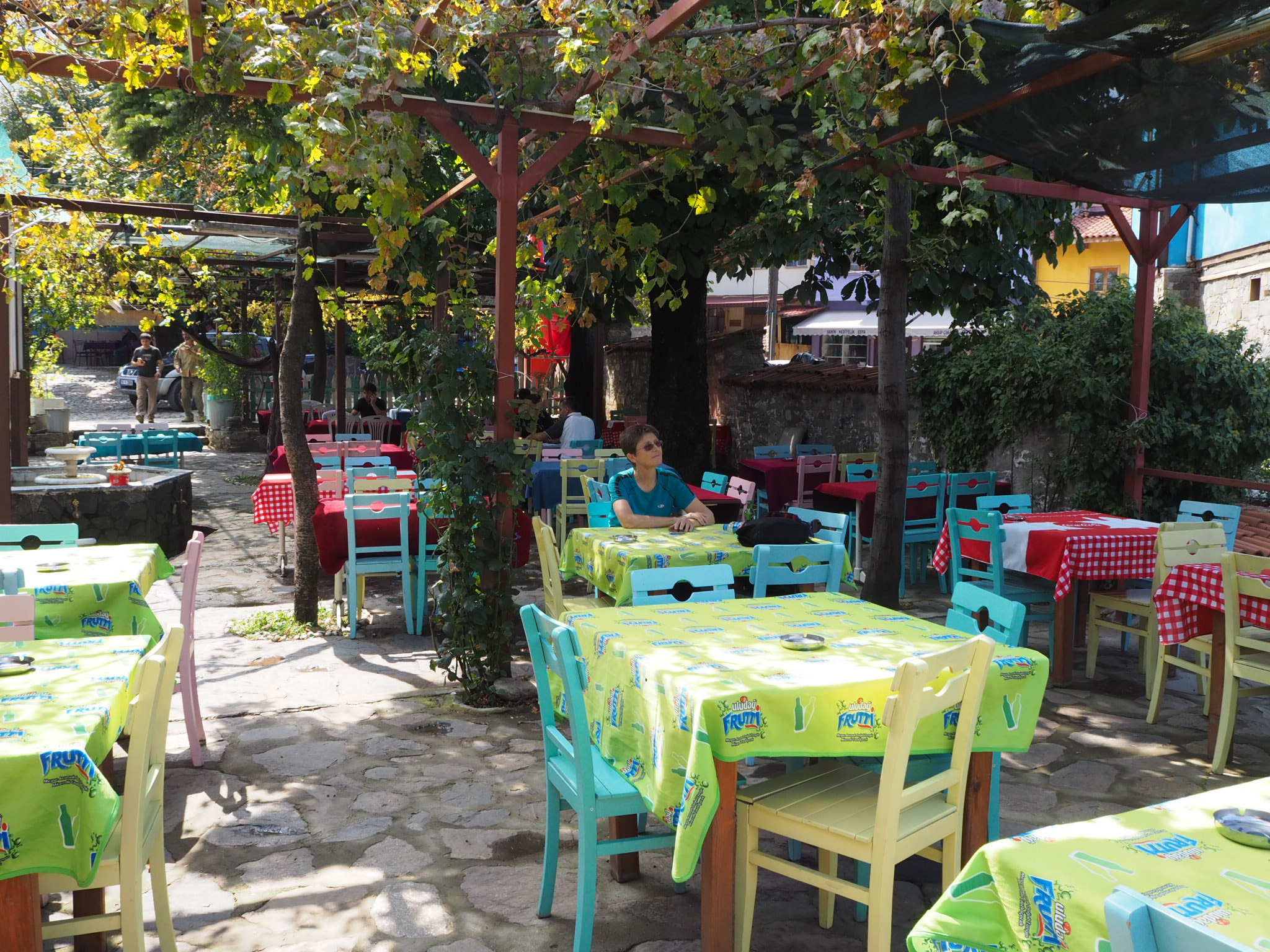
We did find our way out of the melee though and met a charming young women in a pleasant garden restaurant for the first Turkish coffee hit of the day. If you are after a knick knack with your picturesque, this could be the place, but for us it was a dolmus back to Bursa.
It has become rapidly clear after leaving Istanbul that a few words of Turkish is an imperative. Got the one for “no sugar” in my Turkish coffee down pat (sade) but how many languages in the world have a 5 or is it 6 syllable word for thankyou? Bahasa has 5 but so easy to pronounce. After 10 days I’m still trying to get my tongue around saying something as important as Thankyou in Turkish. A kind waiter gave us a handy guide for inflexible Anglo tongues – tea sugar dream – quite a substantial bit more to it than that but a helpful start!!
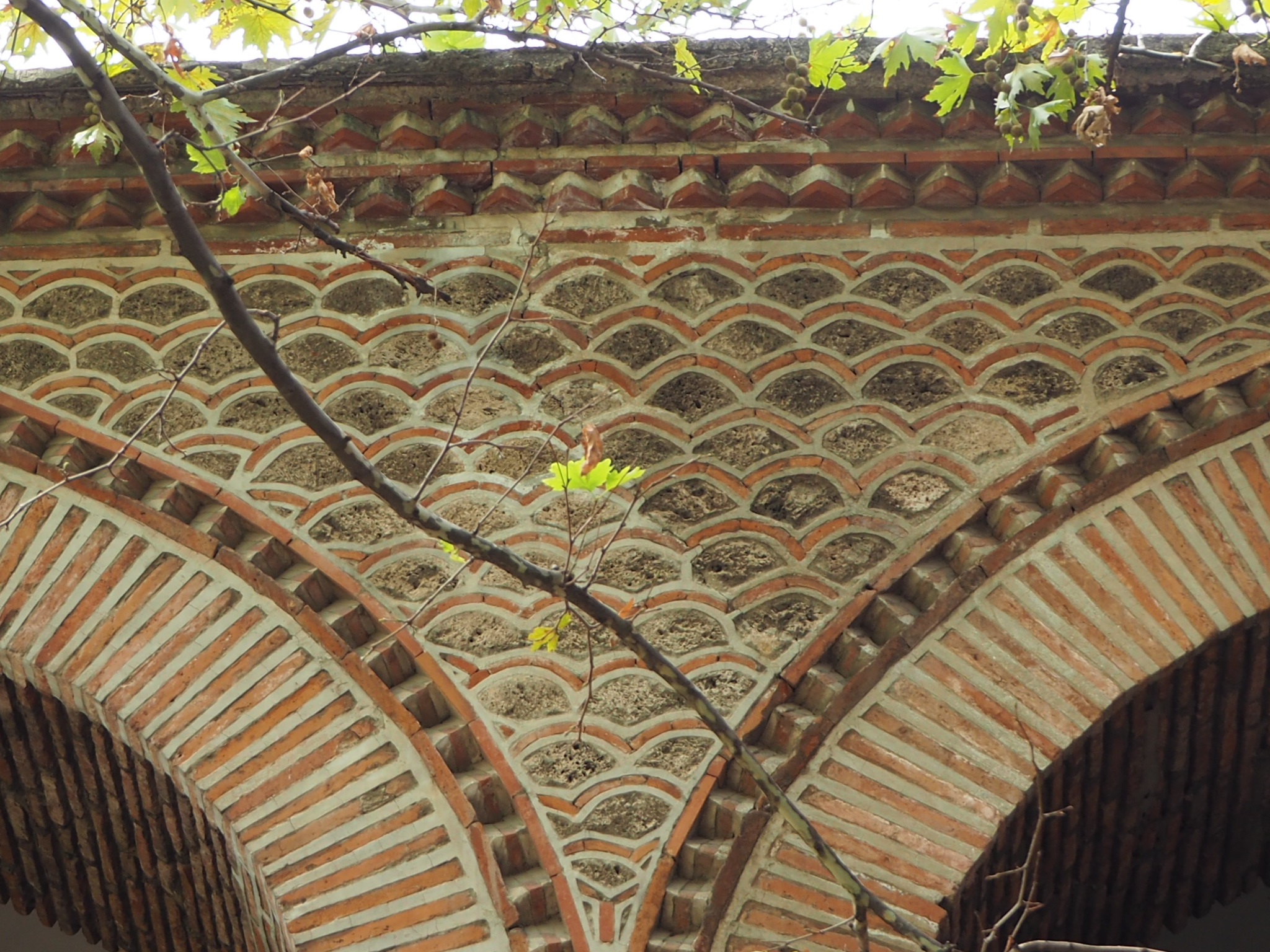
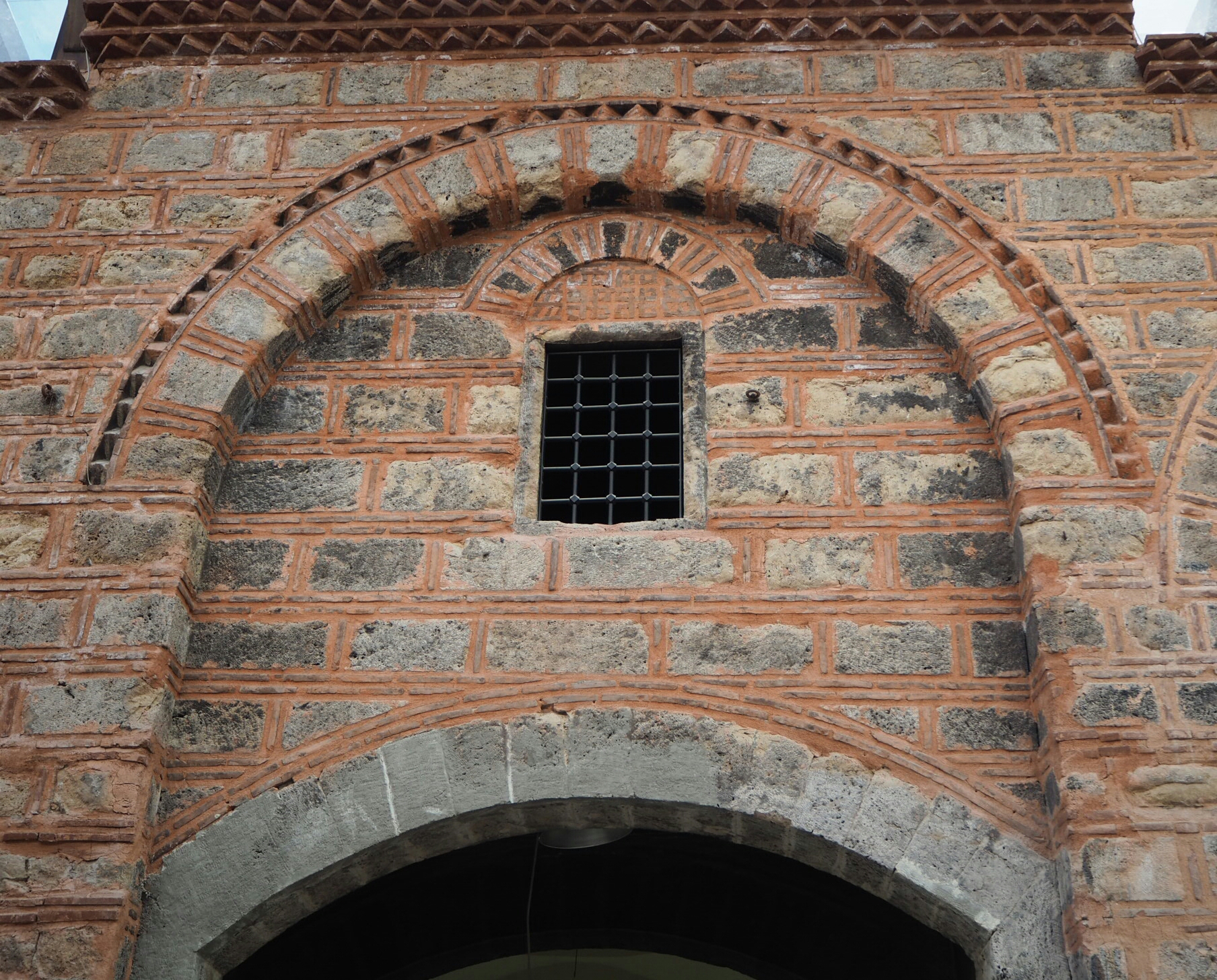
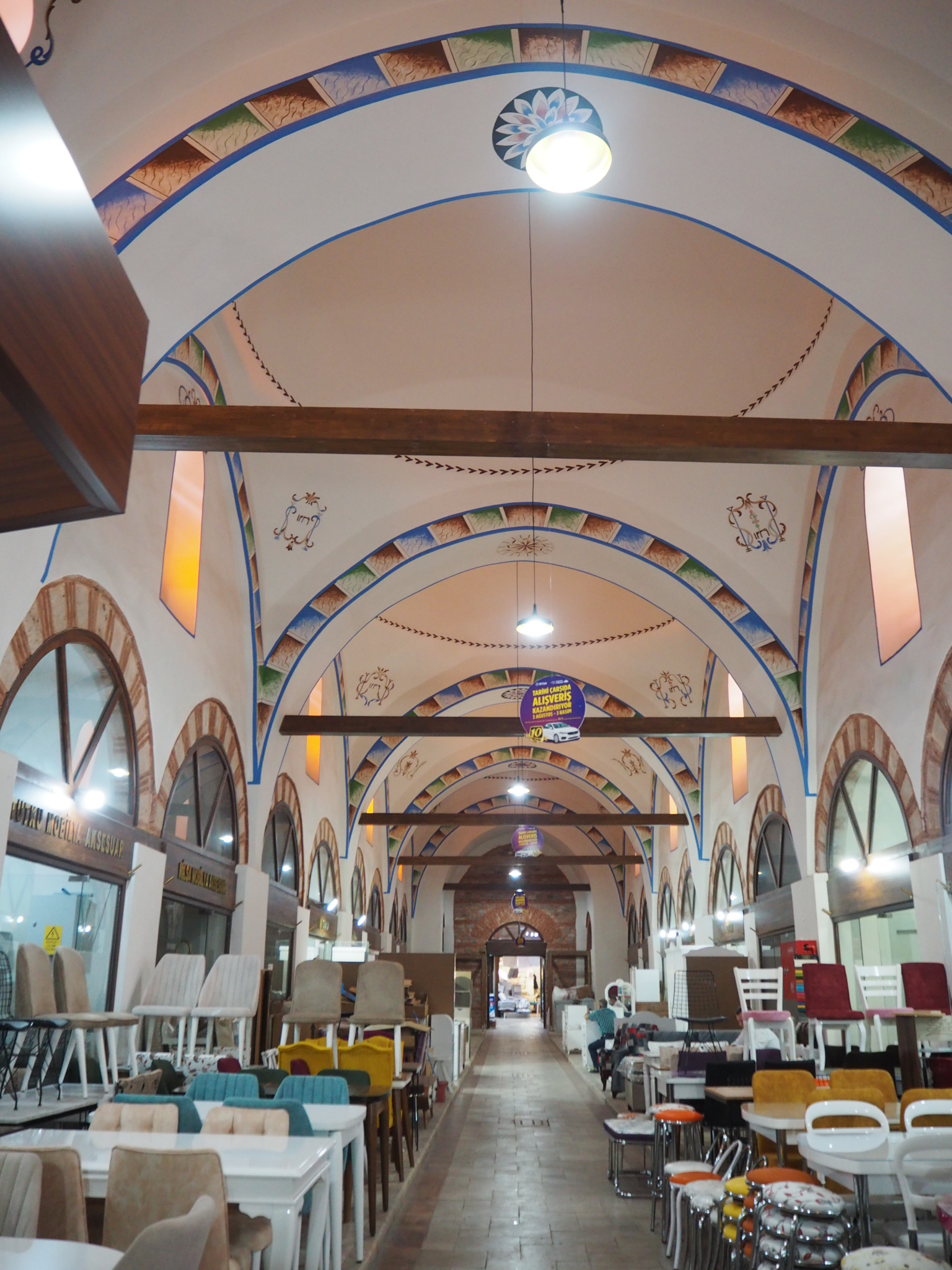
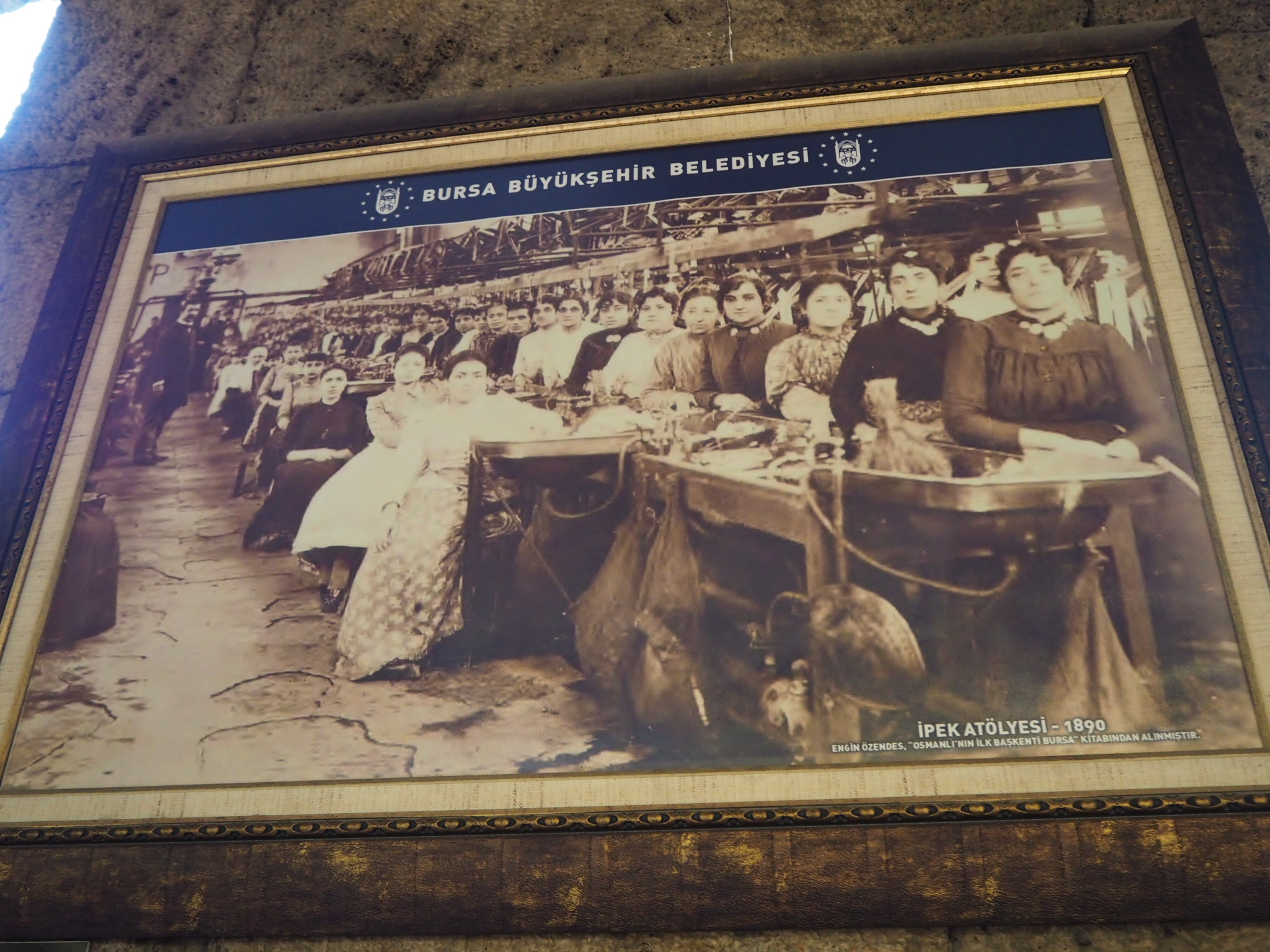
The ancient and historical is ever present in Turkey and for me the pleasure in Bursa was wandering and exploring the beautiful 15th century market buildings. Loved the vintage photographs of market activity back to 1890 and early 20th century. Furniture to finest silks is available in the maze and as always the challenge of finding the spot with the most ambience for a coffee.
In fact the Turks are avid tea drinkers rather than coffee. There seems never to be a moment in the day when waiters are not wandering around with a tray of the distinctive glasses of tea delivering to all and sundry.
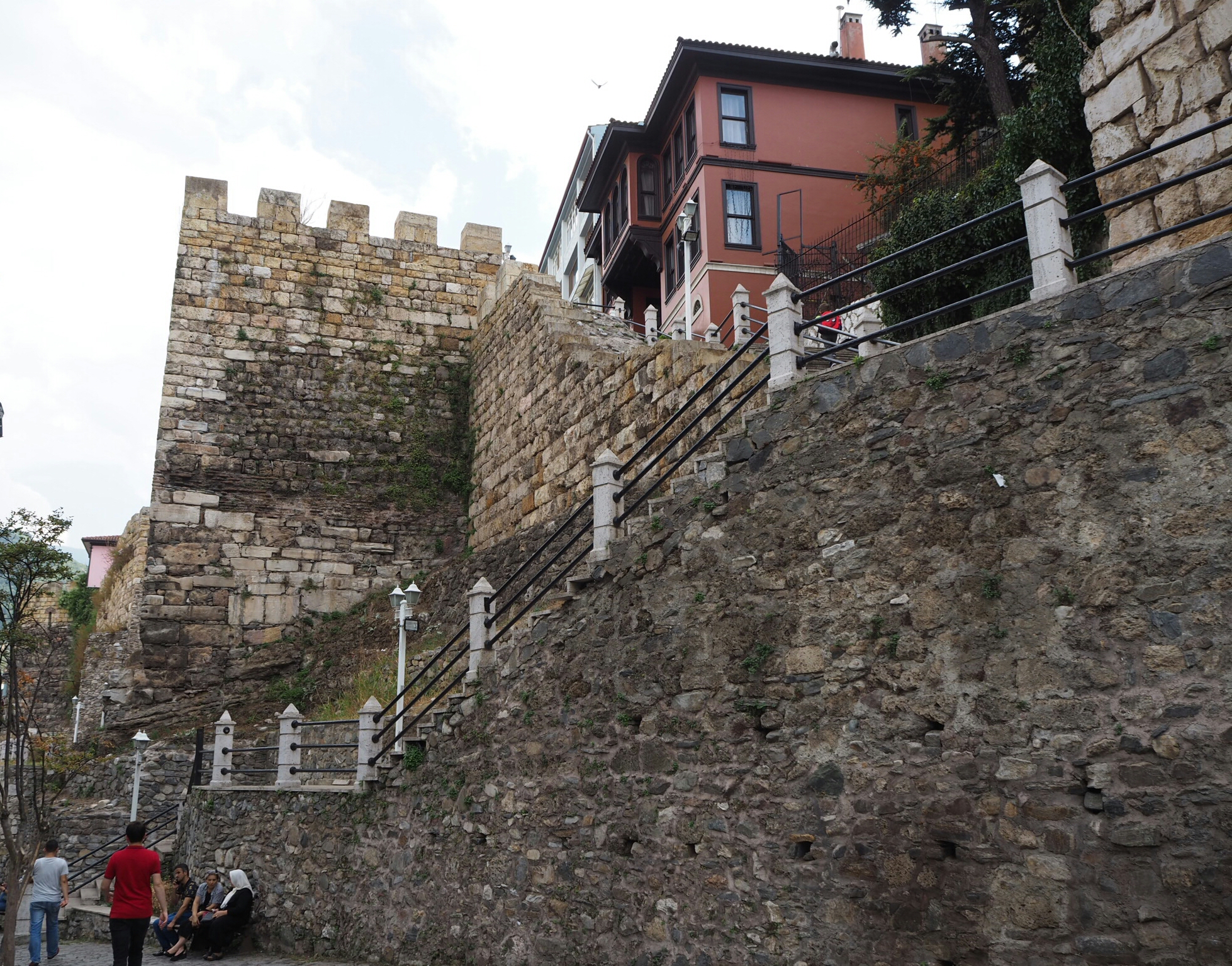
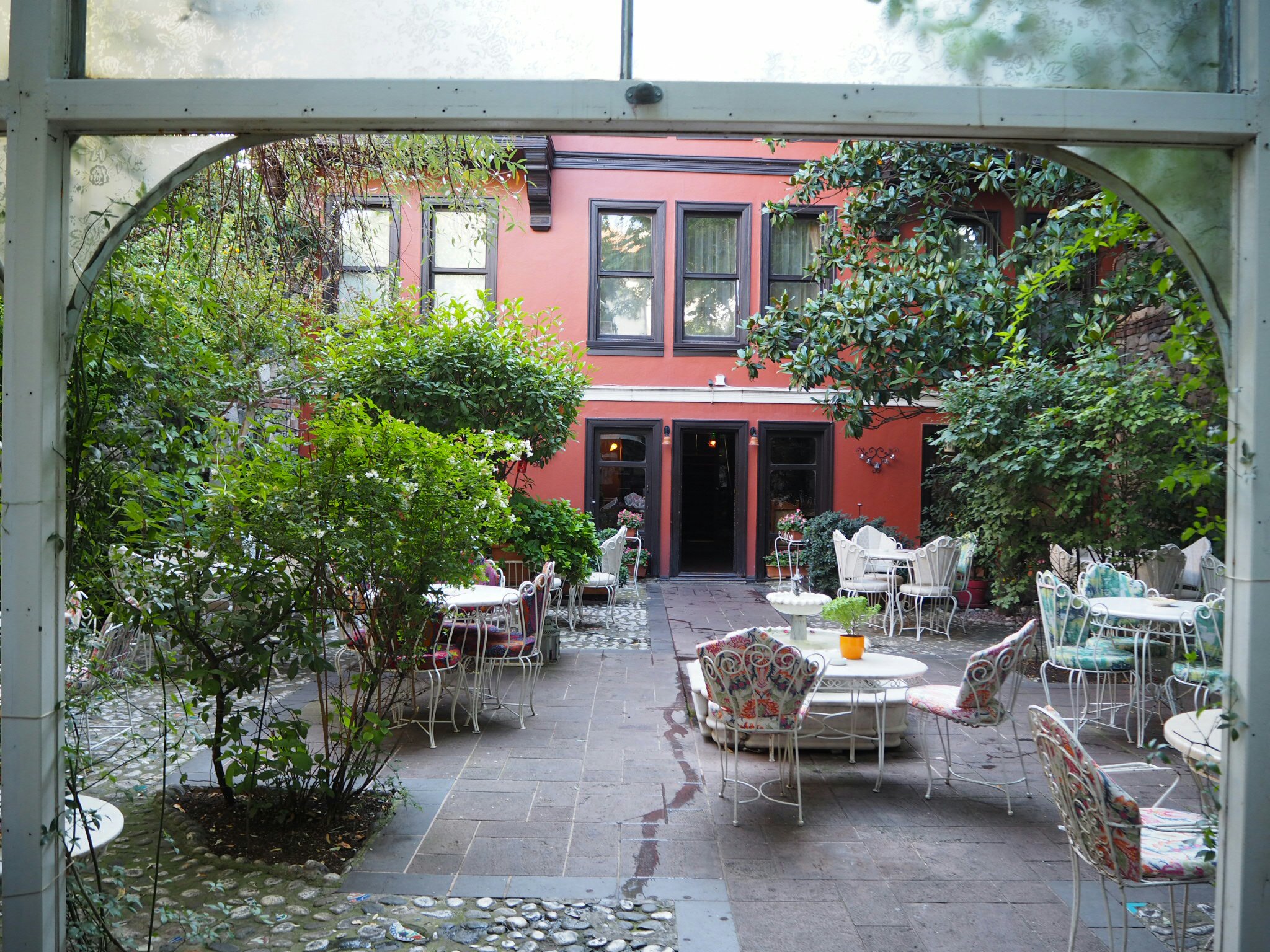
We are staying high up in the ramparts, the city wall, which means an uphill walk at the end of every day, temperature in the mid to high 20’s, finishing with some serious stairs just to check how the fitness is progressing. It is a lovely old ex bookshop complete with creaking wooden floors, books scattered in many spots and an inviting enclosed garden courtyard where we enjoyed delicious breakfasts with exquisite service and attention to detail.
I produced my coeliac gluten free digital card on the first night for dinner. The head waiter took a photo and made it his business to see that all was organised for breakfast next morning, no more explanation required. Seriously impressive.
The big ticket items in Bursa though are the Ulu Cami, the Grand Mosque, and the Green Mosque. Calligraphy and tiles, design and layout, as always a high point. With scores of tile photos already in the camera, the green tiles are iresistable.
So here we are at the bus station, bodies a little weary after 14 very full days on the go, looking forward to a rest on the road to Selcuk and Ephesus.
“Imagine you are here in a flash flood. Water swirls violently in the Amphitheatre like a washing machine pushing everything before it….” Just as I read these words on the explanatory sign, plump drops of rain strike me. Others impel like random bullets in to the thin layer of bulldust I am standing in. I look up at the series of vertical steel ladders with quite narrow steps that we will need to ascend to reach the Amphitheatre and more importantly, will later need to descend backwards. The image of the flash flood instantly becomes more vivid than the sign writer could ever have hoped for.
Common sense prevails. A flash flood in the next 20 minutes or so is not going to happen, but for one brief moment the visual was enhanced by the sudden rain into a moment of intensity.
Carnarvon Gorge in central western Queensland can claim to be one of the great National Parks of Australia. Even though it is practically in my backyard, this will be my first trip and another great expedition ticked off. A straight through drive from my house takes about the same time as a flight from Brisbane to Honolulu, or Sydney to Hong Kong. Almost anywhere you want to go from here is an expedition.
Dragon on the move
Everything you need in a country town
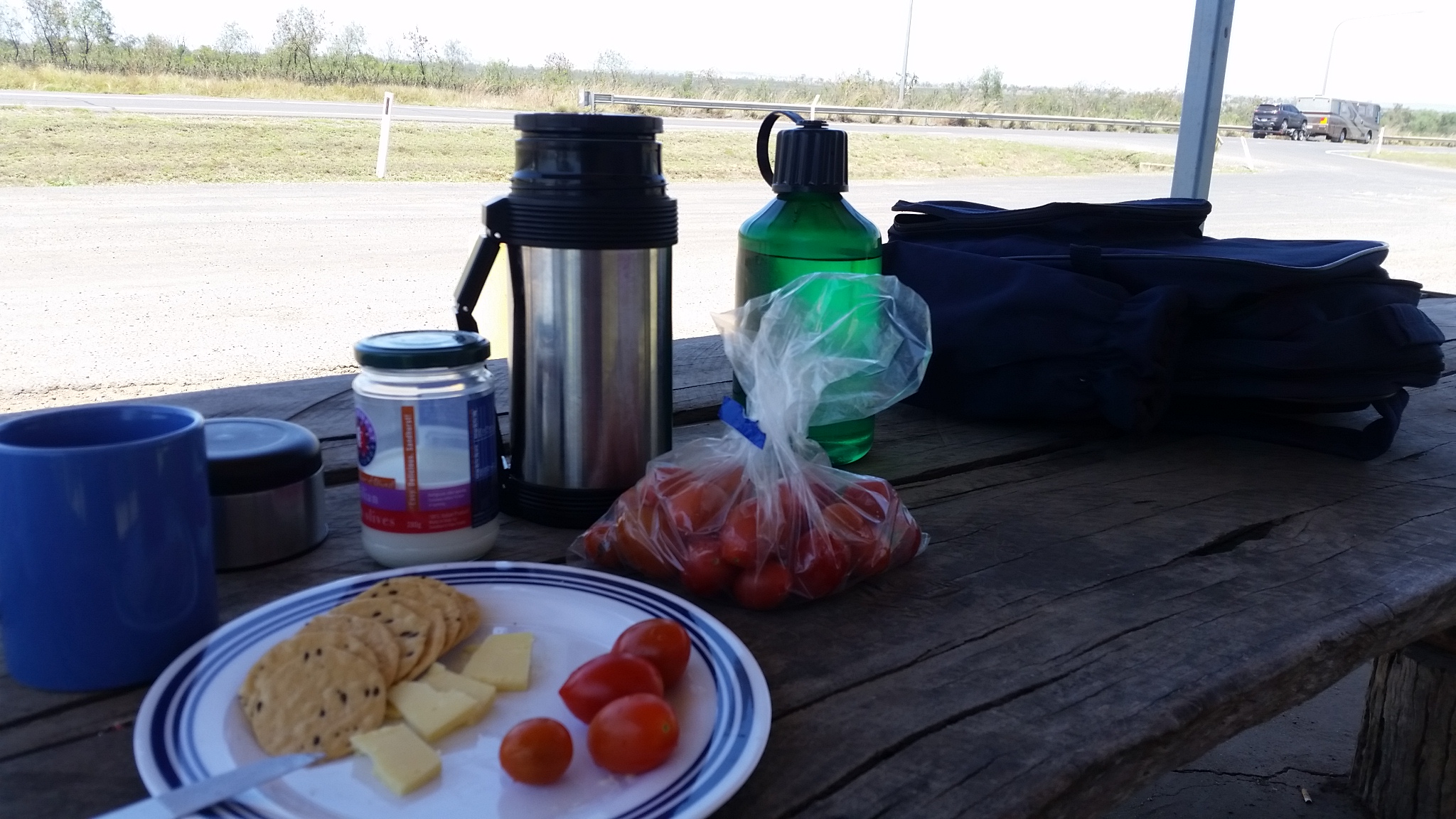
Coffee break at the truck stop
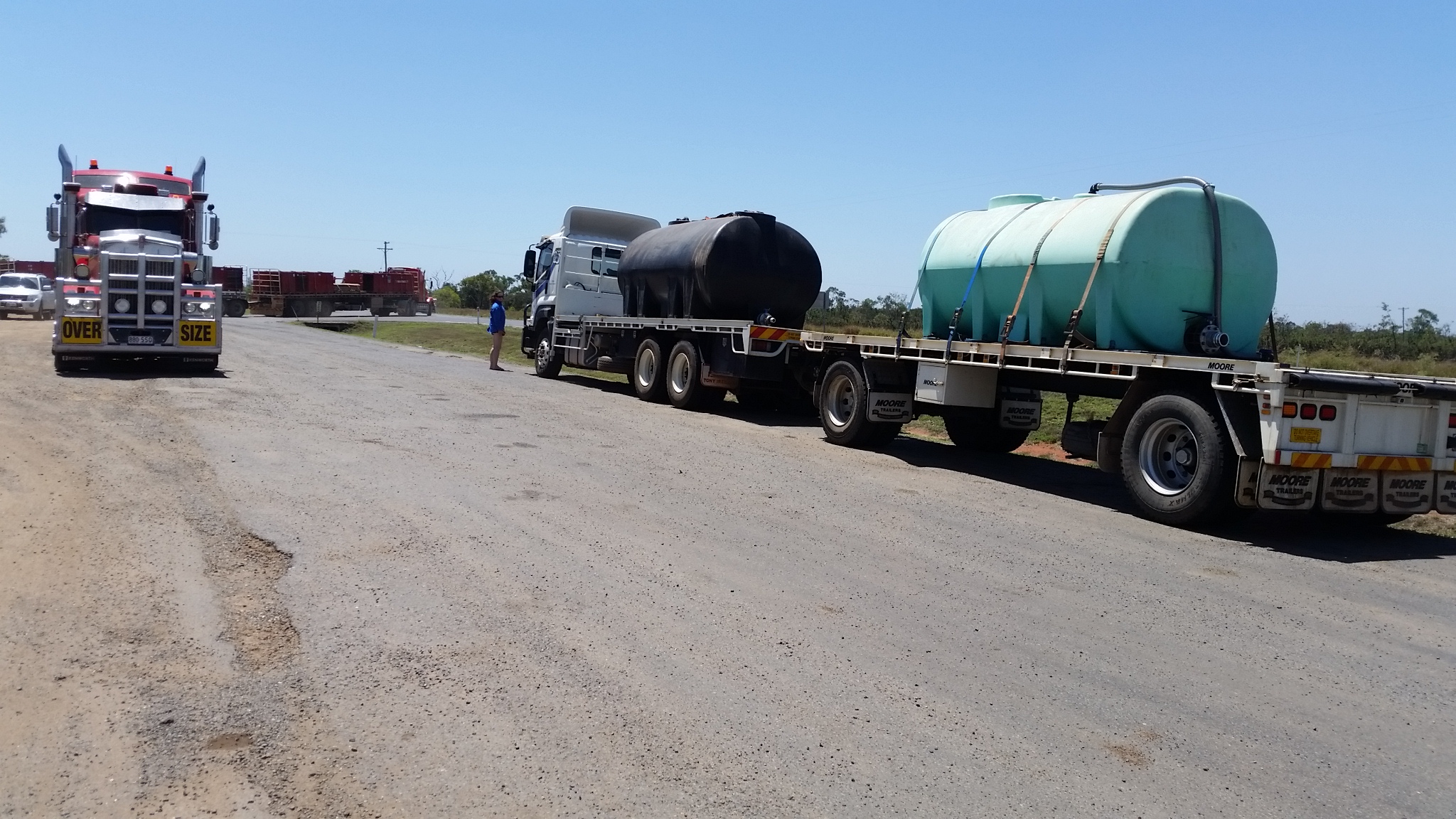
It really is a truck stop
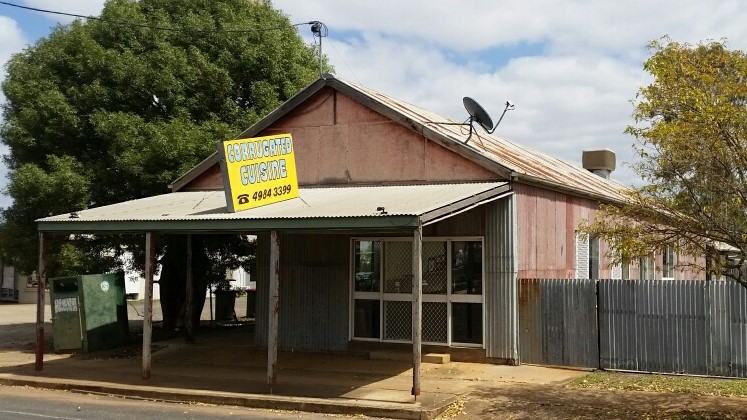
Corrugated cuisine
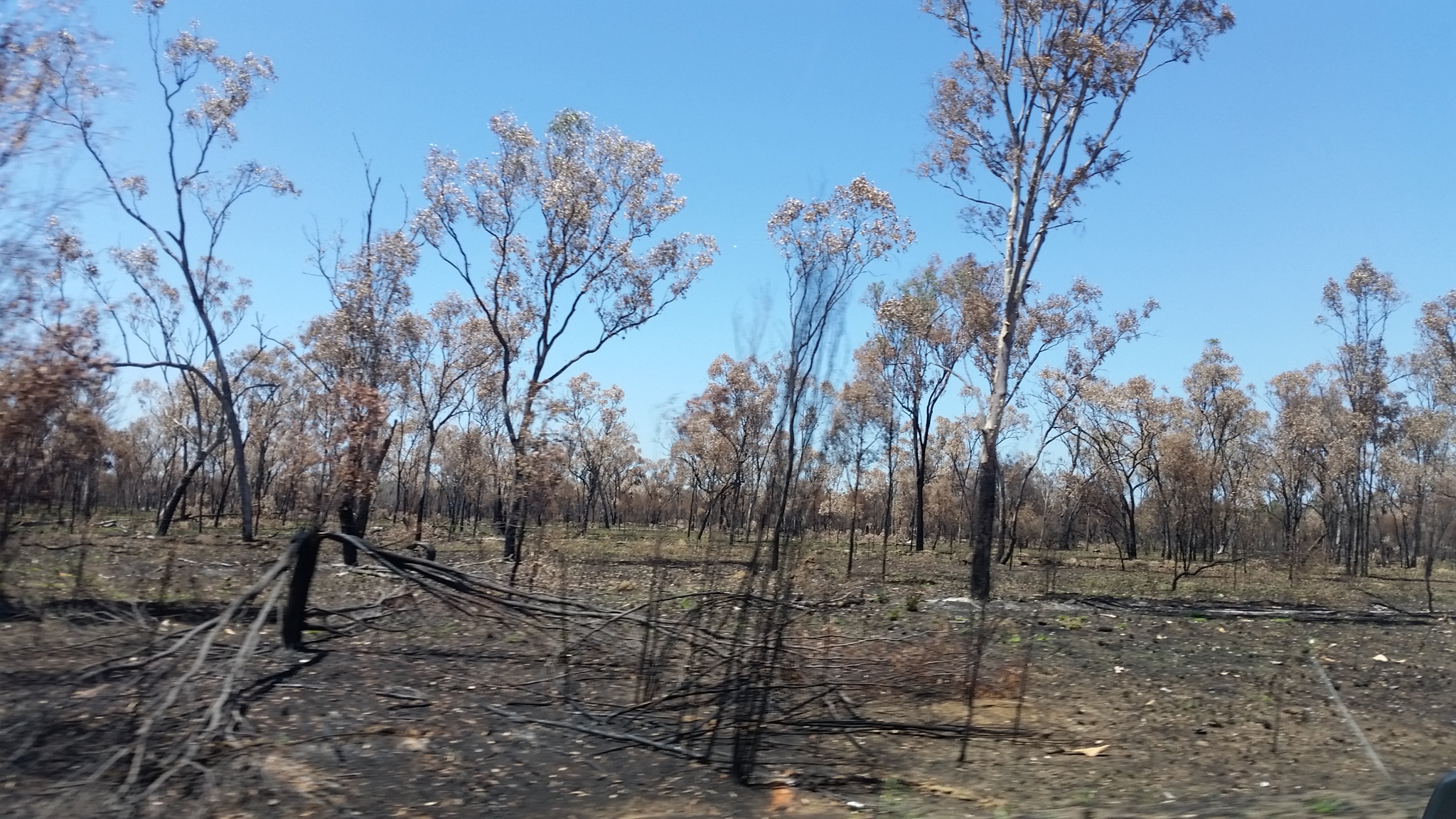
Bushfires and flooding plains – something for everyone
The ants are big out here
Time is on our side this trip so we make it a leisurely drive, enjoying a few of the sights with an overnight stop at Springsure. We hit Rolleston, a small township of maybe 40 houses, which is where we turn off the highway. It’s Sunday afternoon and the place is deserted. Glad we fuelled up earlier as the 24 hour servo is locked up as well. Was there anything else we should have got before we entered the National Park? Too late now; I’m not driving back over 70kms to Springsure unlike the unfortunate people we met later who were counting on that place as a fuel stop.
The final drive in; just need to dodge the cattle
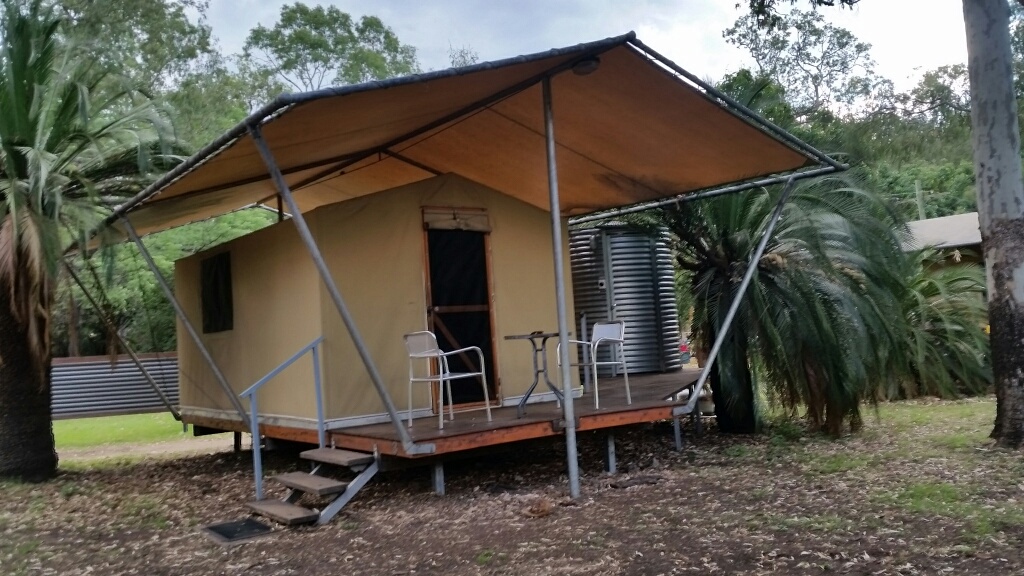
Glamping for 3 nights – En suite conveniently located in the corrugated iron tank conversion
Whether you are a pitch a tent type, or a full modern luxury style of traveller, Carnarvon Gorge seems to have something for everyone. We opt for a point in the middle which is a tent on a platform complete with fly sheet and best of all, en suite facilities. That rather small tin tank on the right of the platform houses a perfectly adequate shower, with plenty of hot water, and toilet.
The tent can sleep 5 people and apart from the beds, it holds a small fridge, a pedestal fan, a handy hat stand along with a broom and dustpan. All you need really! The fan was used on the rare occasions we were inside during the day.
Timing can be everything when you travel and sometimes you hit the sweet spot. The week before, some visitors chose to leave as the heat was unbearable at over 40 degrees Celsius. In the interim, there had been a couple of good storms and we arrived to hot days for sure, but everything was greened up, water was running and nights were comfortable with just a light bed cover and the windows and doors rolled up to let the cool air flow through the bug mesh.
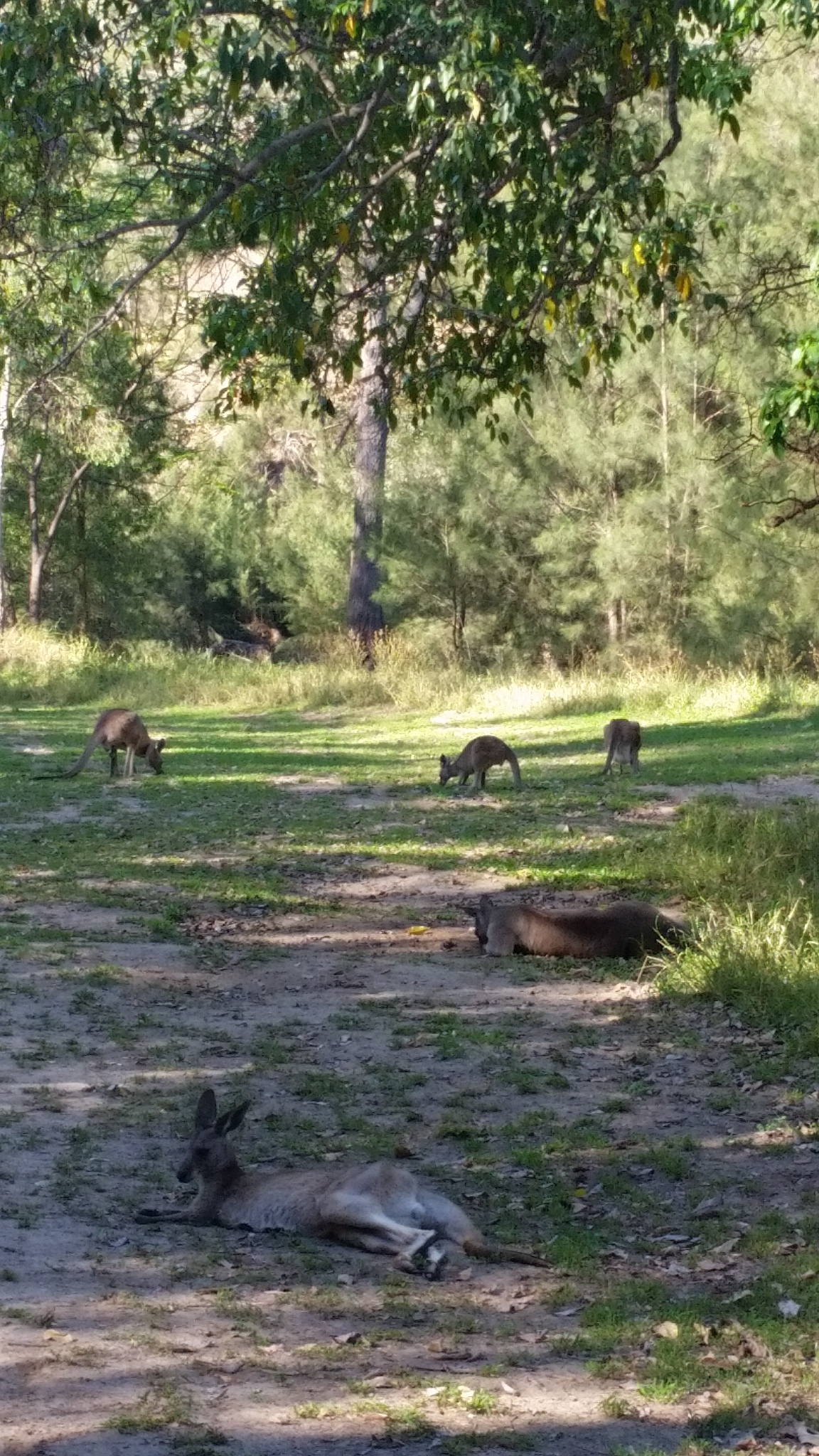
You don’t have to move far to meet the first locals
Our main aim at Carnarvon was to explore by hiking around, but what was so good about this place was that there was plenty to see and do for less mobile visitors. Kangaroos and wallabies everywhere, betong at night, active platypus in the creek, plenty of bird life and a bat colony – not totally welcome having relocated their roosting place a little too close by.
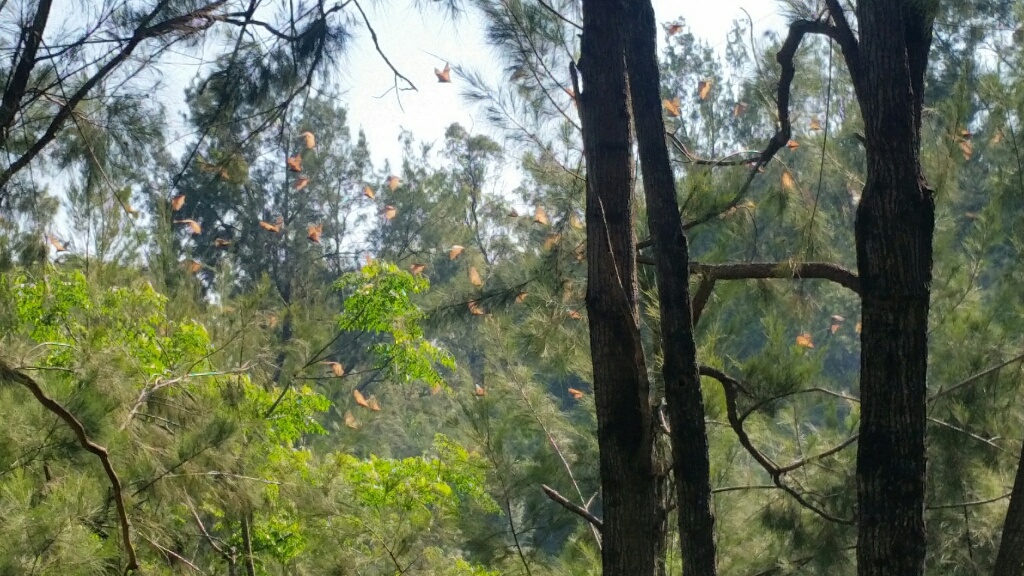
Bats on the move
We were told there was a colony of 100,000 bats resident nearby. I assumed this was a slight exaggeration but after watching (and hearing) them on the move, I don’t doubt the numbers. It was like watching a continuous wave flowing on and on through the trees.
Plenty to entertain even if you choose not to hike the trails
There are more than a dozen designated walks, some as short as under a kilometre and others around the 20 km mark return, though a lot longer if you walk in and out of each of the highlights along the way.
The trails are not difficult
Though some are less well-formed than others
The trick with the many rock hopping crossings is just to keep moving
A hot walk, but plenty of interesting places to cool off
New visitors rolled in every day to hear the valuable information sessions, mingle in the happy hour or enjoy the roast evening meal. Large camp kitchens with bbq facilities are located around the facility. The main danger of the camp kitchen area is the exceptionally gifted abilities of the kookaburras to steal food right off your fork. After surviving two evenings maintaining a watchful eye, I was caught out on the last night. I saw, heard or felt nothing apart from a slight brushing of wing feathers on my face as a vigilant kookaburra stole the last mouthful right off my poised fork. All we could do was watch as the bird “killed” the catch on the adjacent grass. That is one lethal beak.
Beautiful in the wild
But beware when eating a sausage!
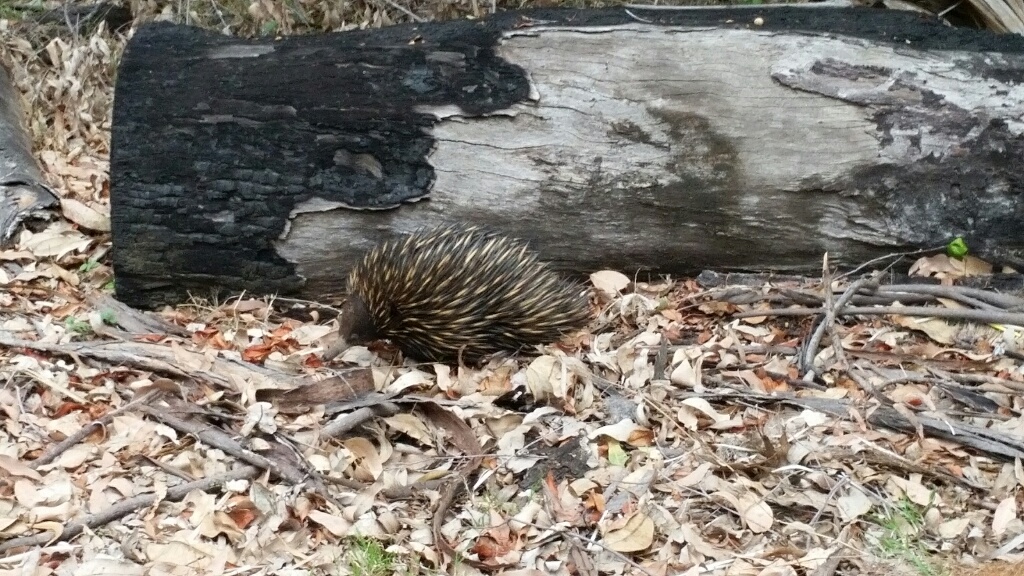
Echidna going about its business
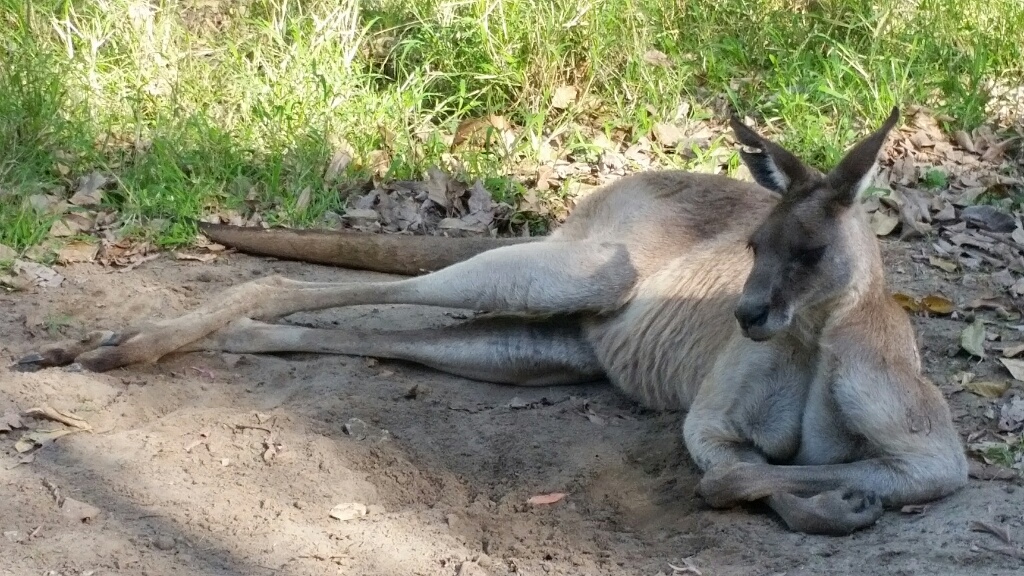
The sound of someone walking behind the tent in the middle of the dark night. A growling sound, neither a dog nor a possum. Another growl and I am wide awake. We have no really dangerous wild animals in Australia, apart from the odd venomous snakes and spiders so this was a wild animal sound uncommonly heard.
But I had once heard similar growling walking around one of the lovely bush tracks of Mt Majura in Canberra. There was a lot more intense growling on that occasion as two full-grown kangaroos fought it out in the late afternoon. Here, after only two growls and lots of silence I finally heard the definite thump, thump of a roo bounding away. The disturbed ground outside the tent in the morning provided evidence of the altercation during the night.
Could this have been one of big fellas during the night?
Hidden in the rugged ranges of Queensland’s central highlands, Carnarvon Gorge features towering sandstone cliffs, vibrantly coloured side gorges, diverse flora and fauna and Aboriginal rock art. This promo somehow seems understated and lacking in the drama and exhiliration after the real experience. Absolutely worth the effort of getting there!
Our guide Russell collects us and we realise with a silent Wow, this is just going to be the two of us with him for this adventure expedition. How brilliant is that? We collect a few final provisions and head off towards Puerto Rio Tranquilo and an amazing journey.
When planning a 3 month trip there are many things that have to be planned on the road. Or they just evolve. While it was low season in places like Machu Picchu, it was going to be high season in Patagonia so this expedition was one thing that was planned many, many months in advance.
Just one chance review I happened across in months of research led me to Rio Exploradores Laguna San Rafaeland what a gem of a trip that has turned out to be. A total stunner!
Timing hinged on the flight out of La Paz to Santiago going without a hitch. We needed to fly out of Santiago south to Balmaceda airport in Patagonia the very next day. Now I’ve seen people on various forums angsting about an unbelievably tiny window, maybe a matter of hours, between an international arrival and an onward flight but that is so not me. Even with 24 hours or so to play with, I was on tenterhooks on and off over the entire trip hoping that everything would go according to plan. It did!
Tantalising glimpses from the air
Walking in to Balmaceda airport you stop wondering how to make the 45 minute journey into Coyhaique, our real jumping off point for this Patagonian expedition. Several different company representatives are strategically positioned in the arrivals area frantically waving tickets begging to be allowed to drive you direct to your hotel.
Coyhaique was a surprisingly happening place for a Thursday evening with a troupe of acrobatic buskers entertaining the reasonably large crowds of people thronging the Plaza and streets of this small place. I remember this is high season so there are plenty of tourists around, many of them appear to be Chileans. An excellent meal with good old-fashioned service that night sets us up for the first of four very big days in Patagonia.
From the first I found the scenery compelling
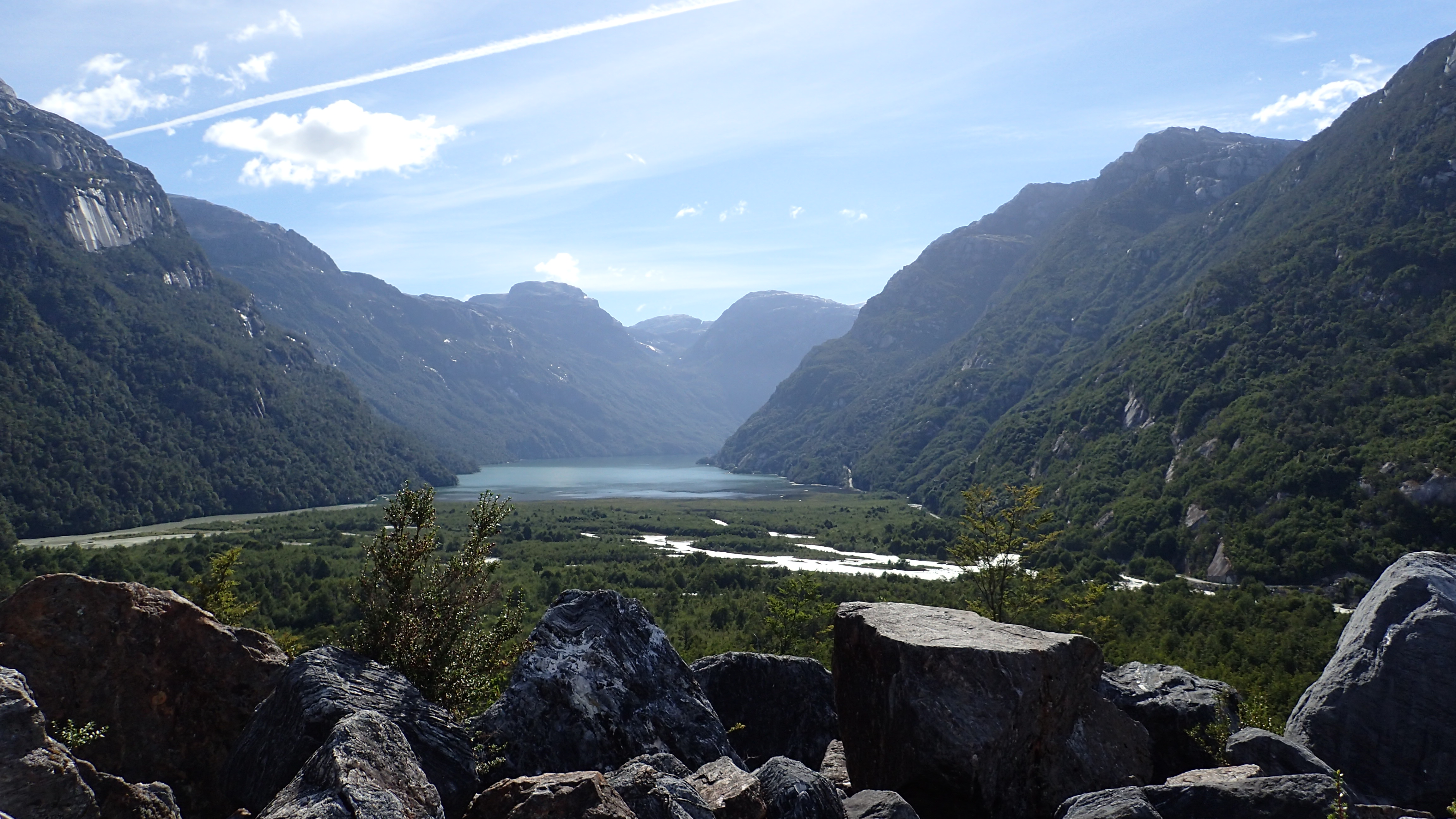
The scenery is ever spectacular. All those snow-capped mountains I have tried to snap with varying degrees of success over this last few months through dirty bus windows was so unnecessary. Everything is larger than life and immediate here. There is a never-ending feast of mountains, rivers, lakes, waterfalls and stunning scenery.
After driving for about 90 minutes we reached the end of the sealed road and stop for an excellent lunch break at Cerro Castillo. Those country Chilenas make a mean soup. From here on, we will either be only be on roads that are dusty, narrow or corrugated or a combination of all three, or, on a boat of some description.
Over the four days we total maybe 1,000 kilometres. Hard work on unsealed roads, but unfailingly awesome at every turn. Not as hard though as for the many cyclists we see who are doing over 1,000 kilometres from Puerto Montt to O’Higgins on the Carretera Austral. The corrugated roads, the dust and the narrow sections in some parts make this a journey strictly for dedicated cyclists only. Plenty of hitchhikers as well doing the trek.
Hand knitted slippers for the wooden floors
It still feels quite early in the Chilean daylight saving hours when we reach Puerto Rio Tranquilo. Not a lot of time to savour the luxury at the gorgeous Hostal El Puesto where shoes are dispensed with and woollen slippers are provided to walk around the wooden floors. We are soon heading off to tour the marble caves on Lake General Carrera, the second biggest lake in South America after Lake Titicaca. Another silent Wow as we realise what a jam-packed agenda this is going to be. Excellent.
Again it is just the two of us who head down to the picturesque little dock on the lake and head out at speed across the water. The caves and formations are a truly stunning marvel. The boatman is addicted to taking photos for his passengers it seems and snaps us at every conceivable angle at every opportunity.
Puerto Rio Tranquilo
Marble caves
Marble caves
Marble caves
Marble caves
Marble caves
Marble caves
Marble caves
Marble caves
Marble caves
Marble caves
Marble caves
Marble caves
It’s a small flat-bottomed boat and that’s how our rear ends feel after the trip back. The wind has picked up in the late evening and with it a pretty good swell. Our only option is to clutch the plank seat for grim death and just go with the exhilaration as we bump back over the choppy water.
Puerto Rio Tranquilo is a tiny town only 4 blocks square, but the food at El Puesto is a gourmet delight.
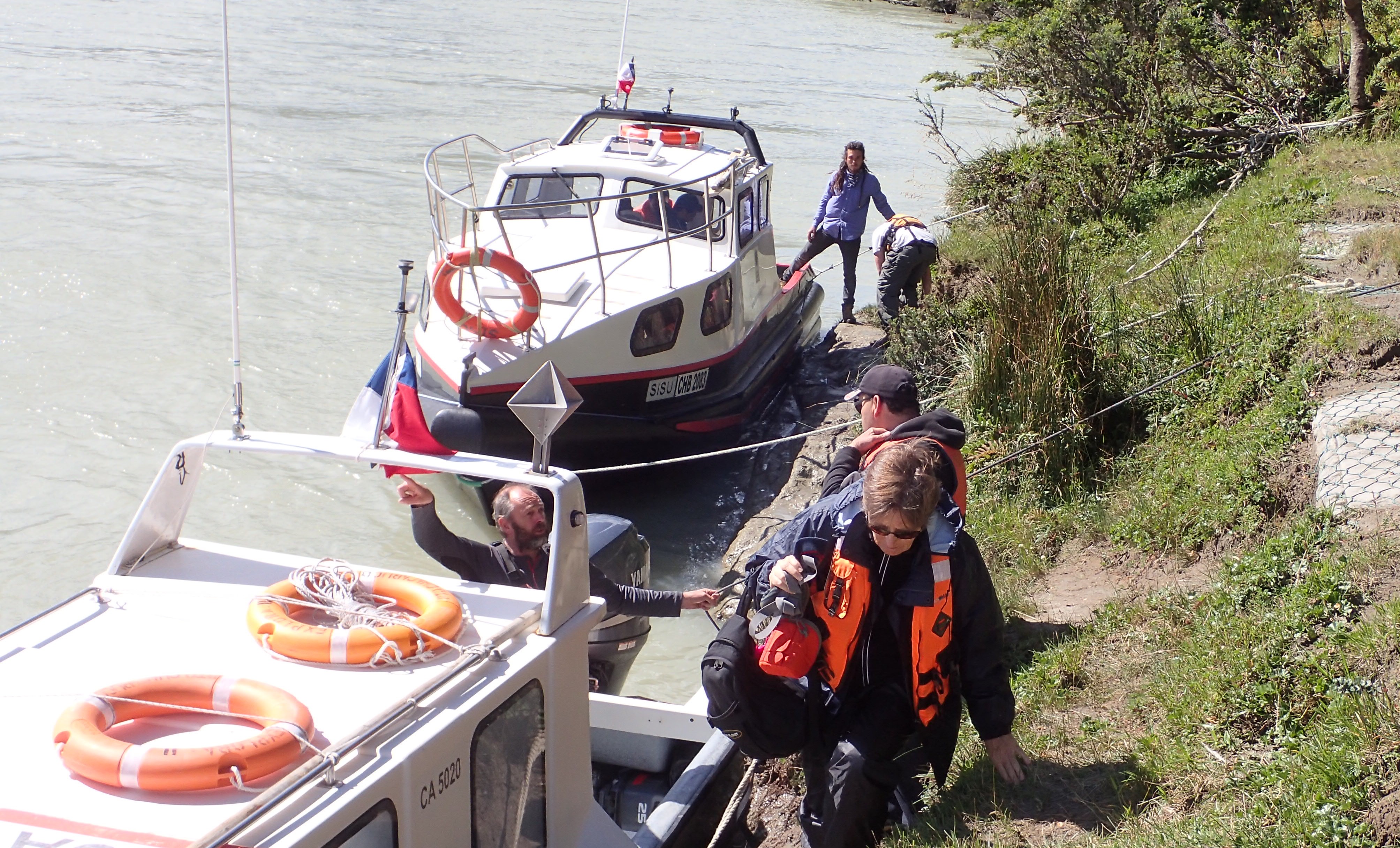
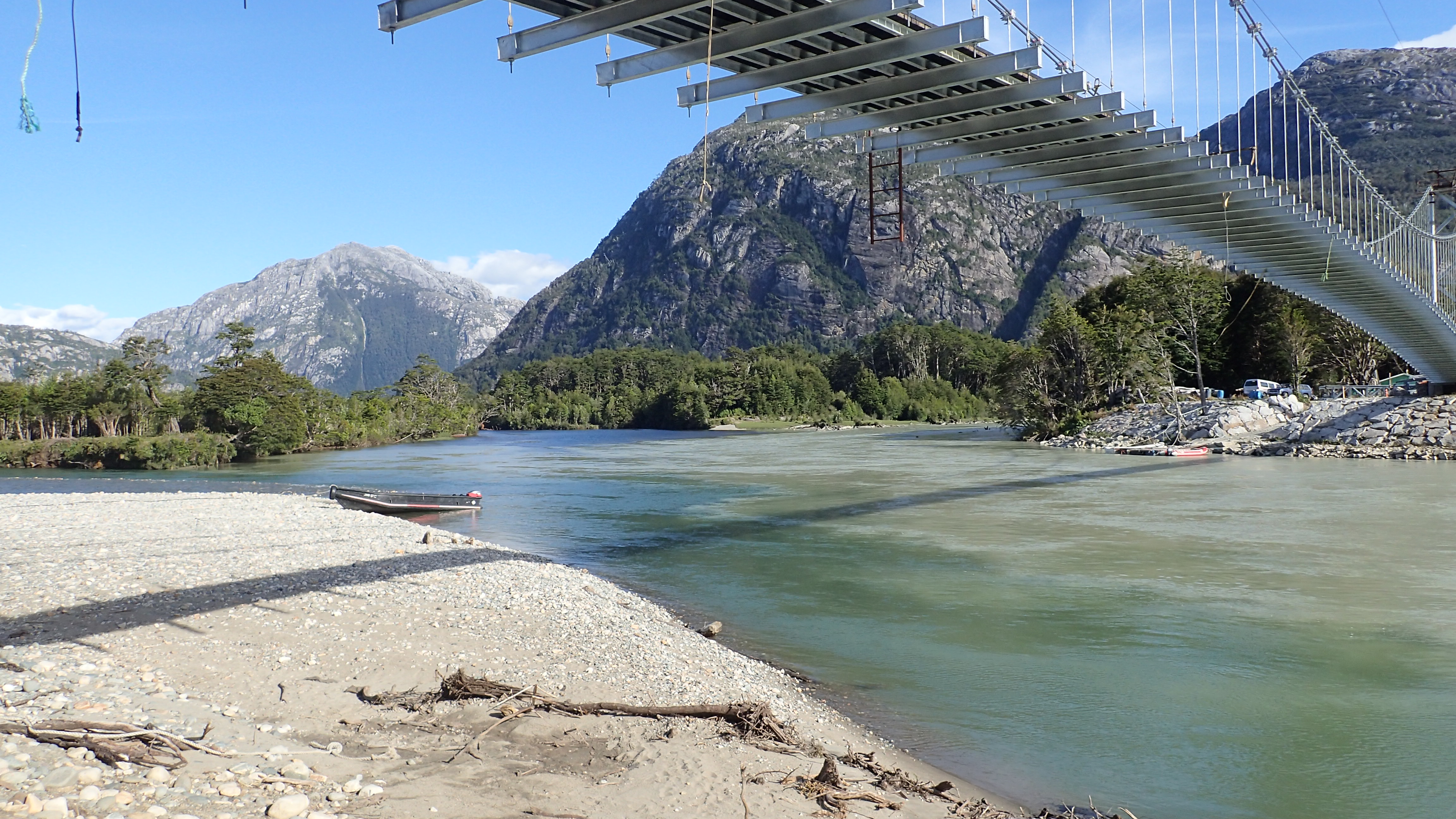
Preparing for the river crossing
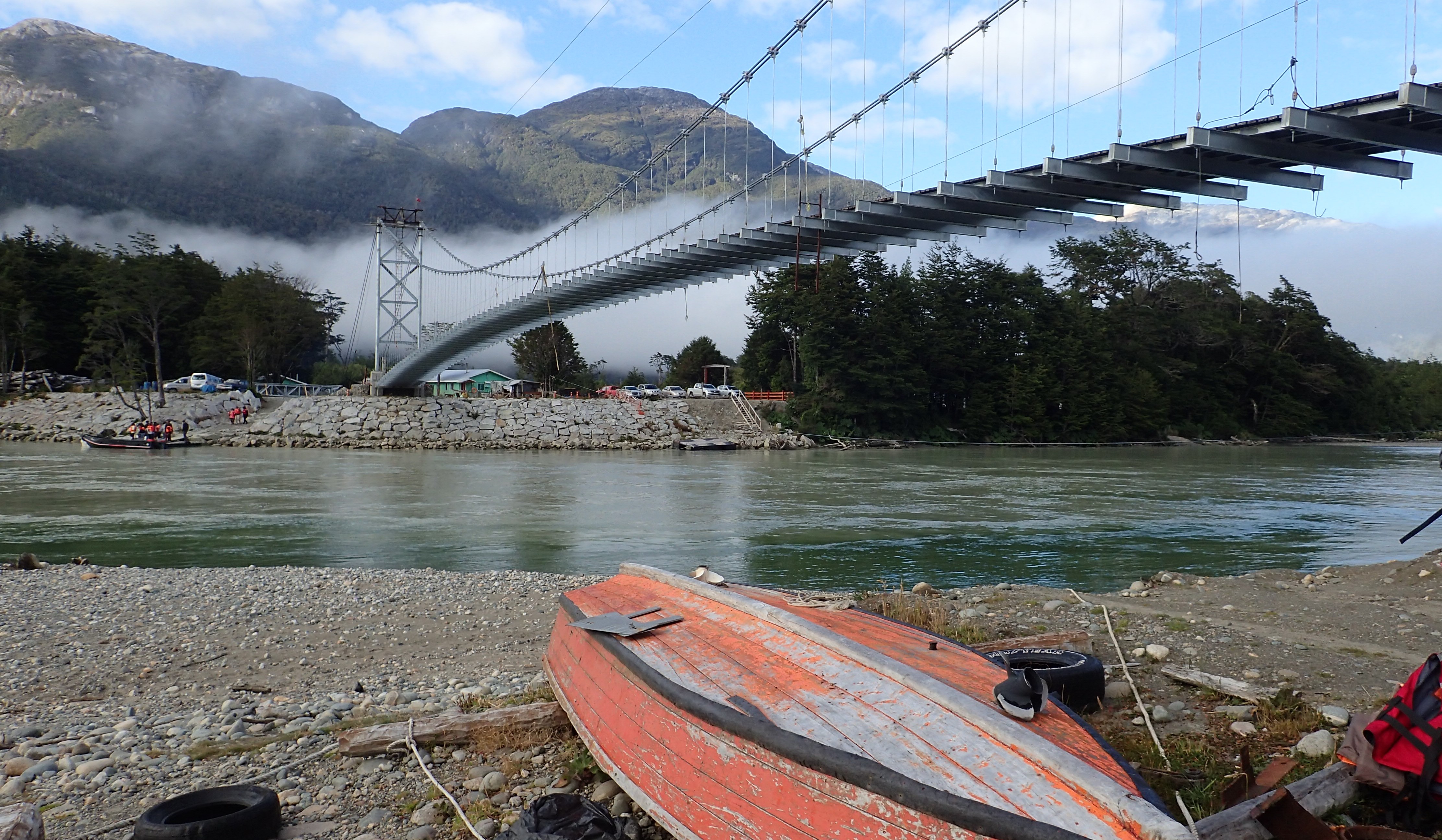
Sadly the bridge will soon mean an end to the boat crossing
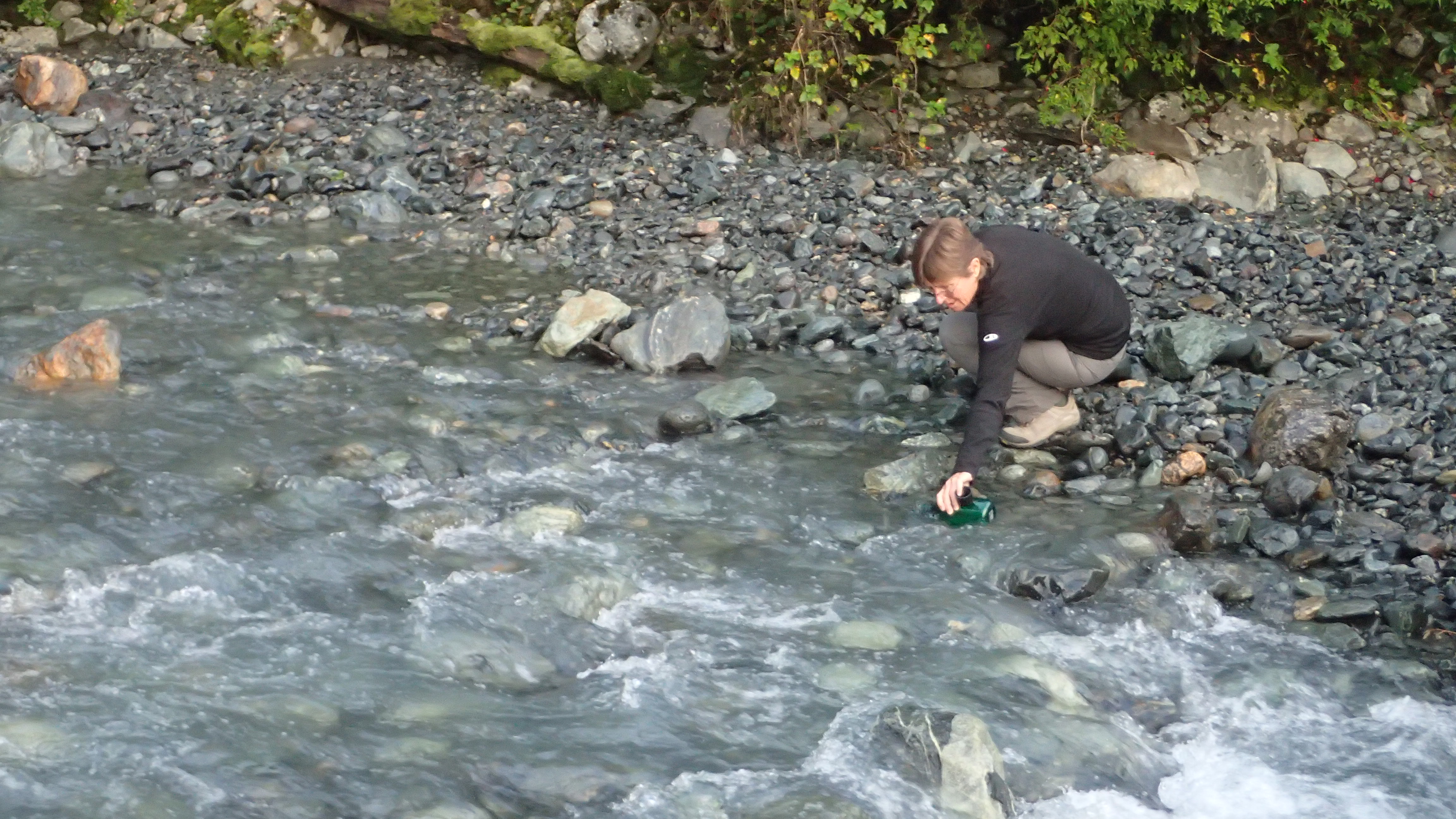
An early morning start as we have to be at the river crossing by 9am and it’s another 90 minutes on another dirt road to reach the river. Russell makes it all feel so relaxed though especially with a great Playlist to choose from. There’s always time to stop at a particularly spectacular spot for photos, to watch Andean condor soaring, or to fill our water bottles from the pure water pouring down a mountain side. We drink water that has probably rested up there frozen for thousands of years. Just hard to beat.
Thundering volumes
Crashing down to the road
The most delicious water
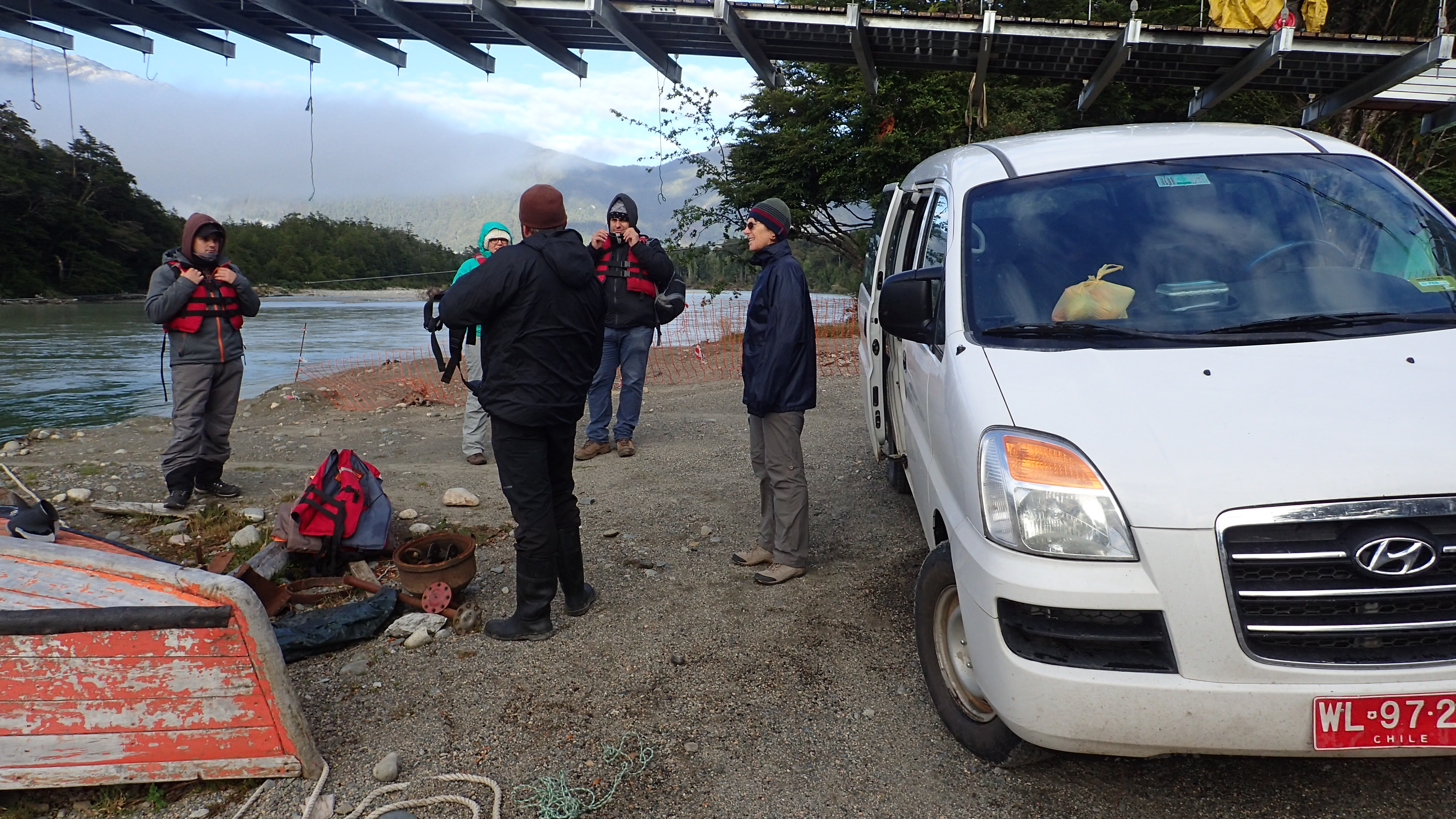
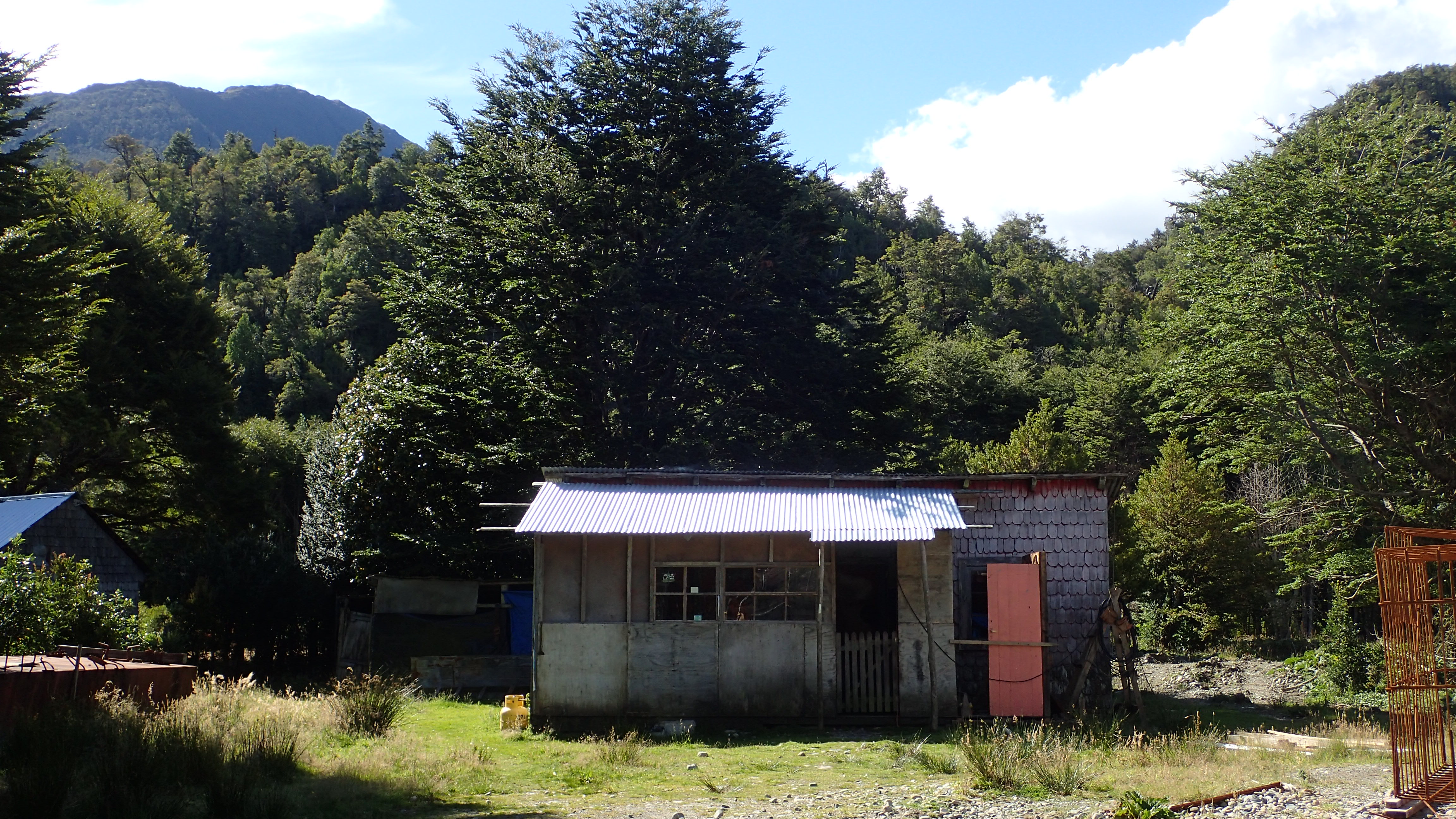
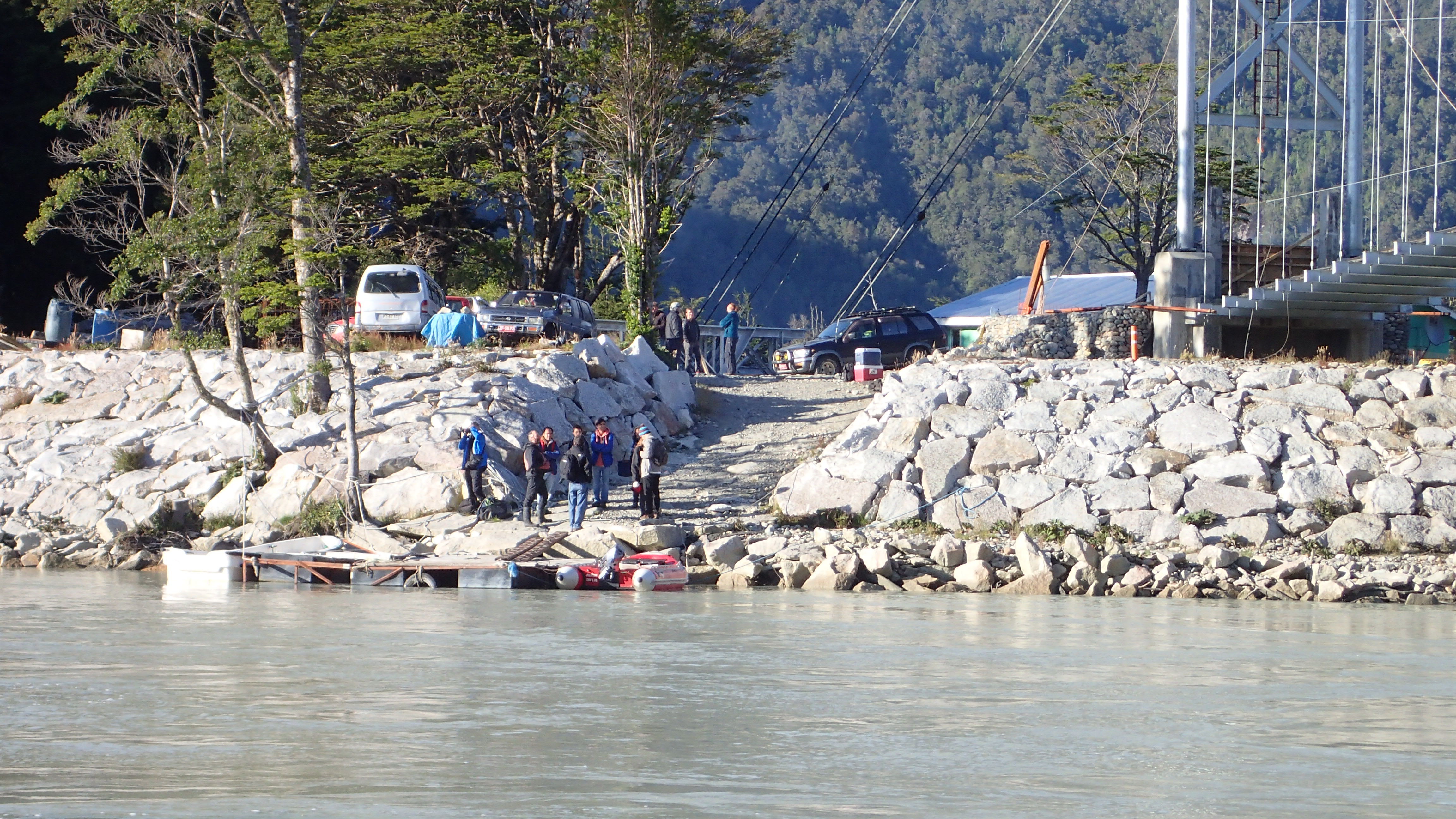
Night two was going to be camping out but an unusually wet summer means Ian from the company Rio Exploradores has had to come up with plan B. We reach the river crossing and meet Jaime the boatman and Rosa his wife. Their old house, a very rustic cabin, will be our home for the night so we dump our bags at their new, slightly less rustic home and hit the road in the van kept on the other side of the river. Today we are with seven other travellers, still a pretty small group. We’re off to the glacier and Laguna San Rafael.
Our little cabin
Home for a night
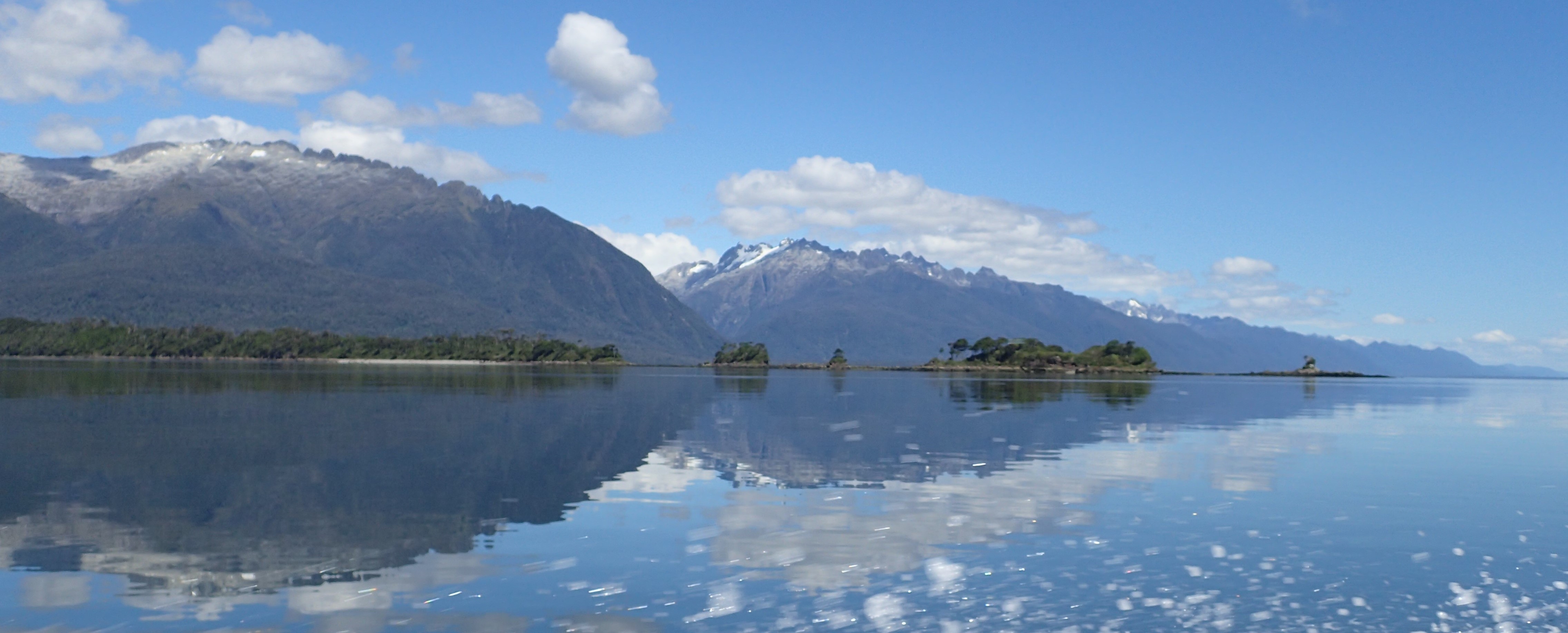
The weather is perfect after many inclement days. We feel unbelievably lucky at the momentous timing choices made at least six months ago. When we finally reach the river there is no wind so with a surface like glass, the boat journey is maybe only two hours to the glacier.
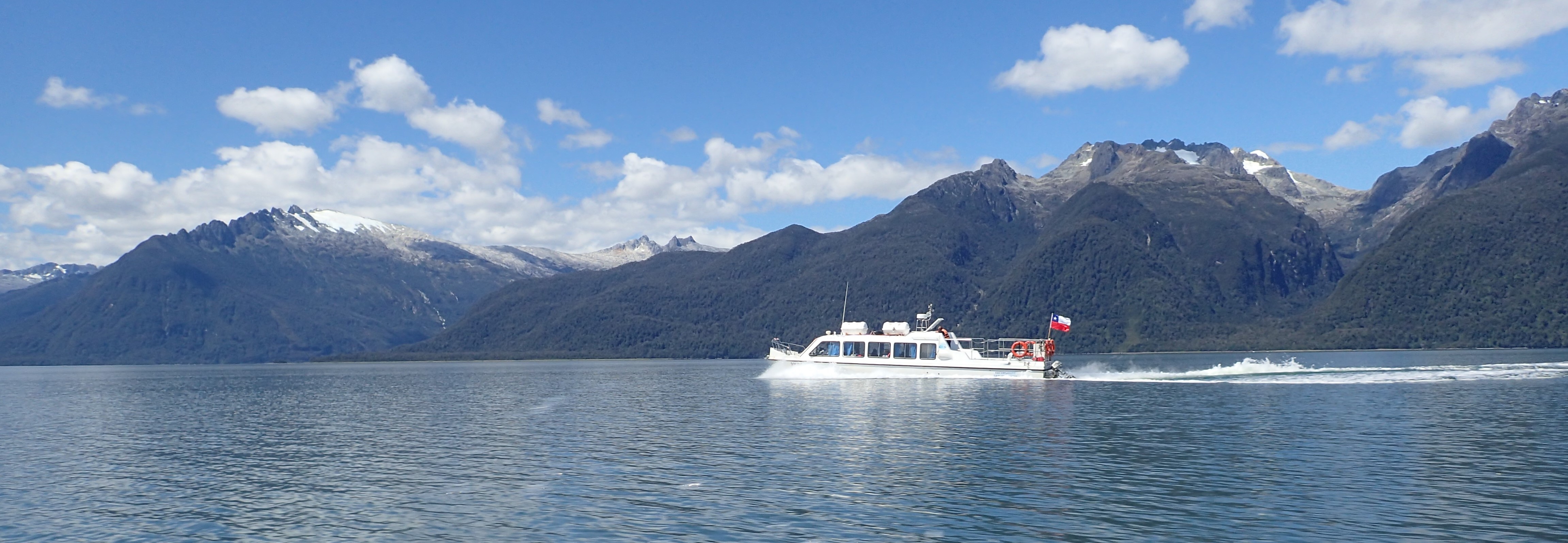
Our transport to the glacier
The boat is small and fast with a cabin just big enough to protect our small group of passengers should the weather be inclement. All that thermal gear we carried for 3 months around the Galapagos and everywhere else we have been is finally having its big day. We can rug up enough to be able to sit outside for as long as the skipper allows, virtually the entire 2 hours there and then 2 hours back again.
It is such an amazing, special experience that I don’t want to miss a minute sitting in the cabin.
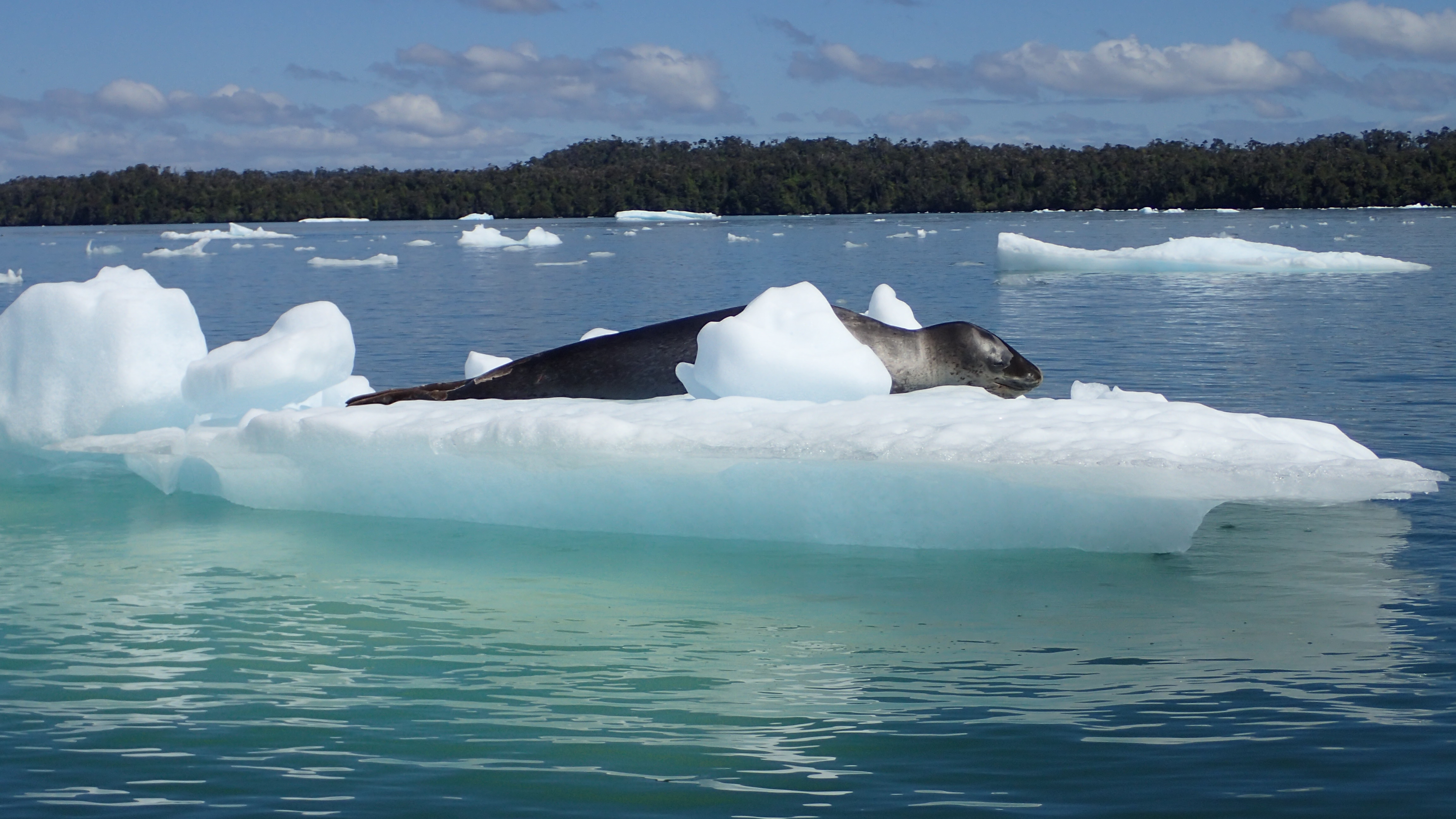
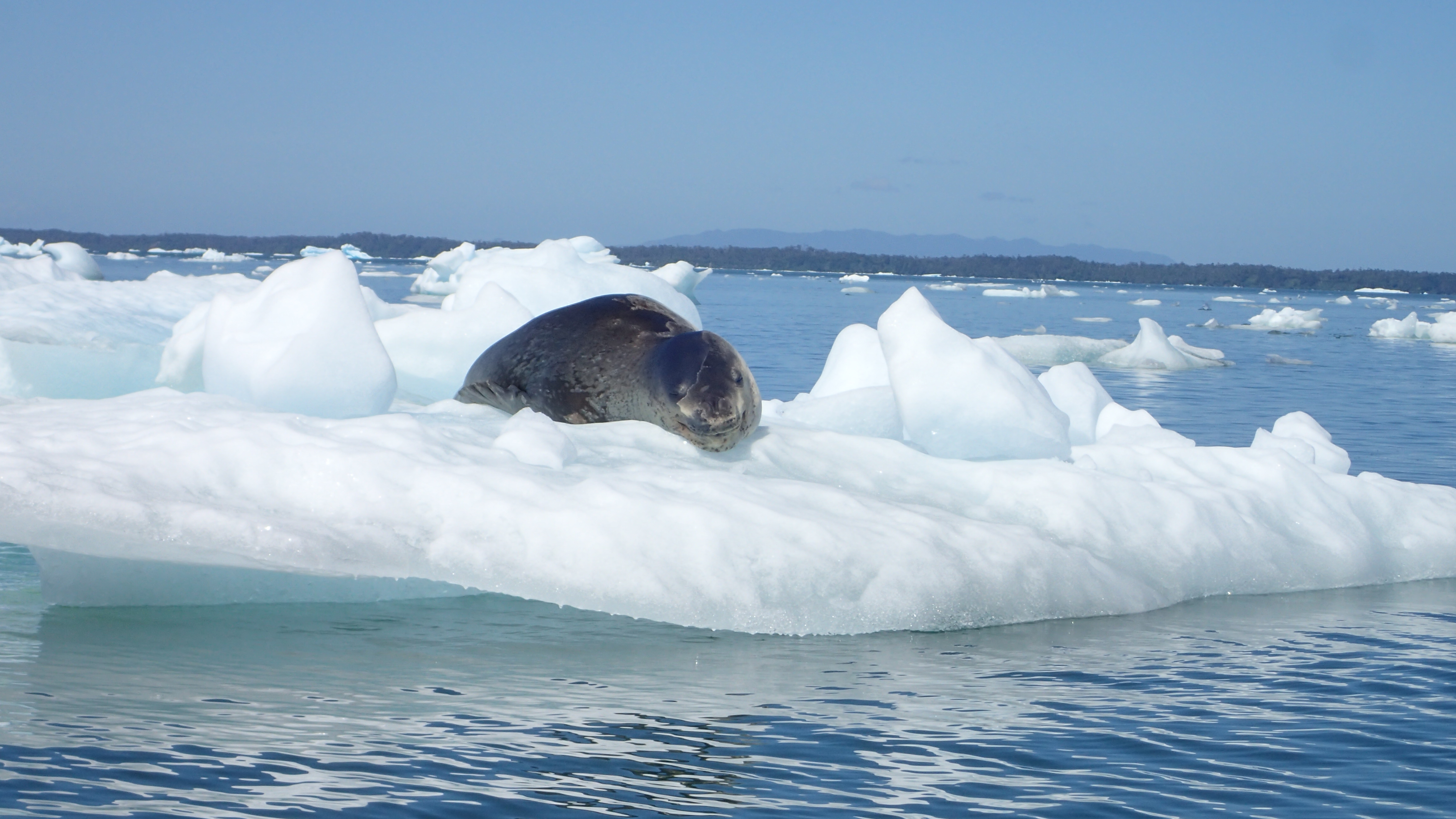
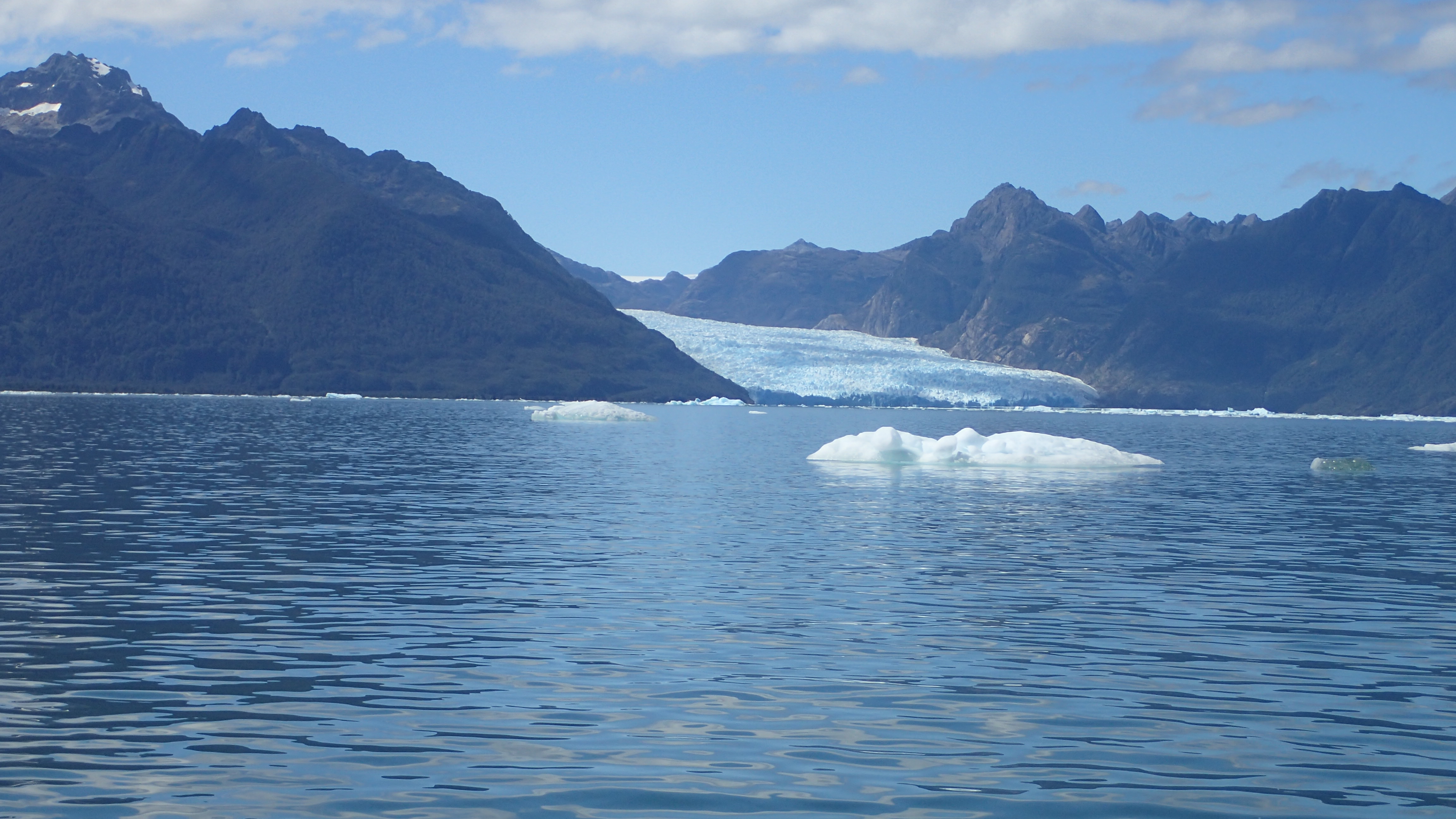
The journey starts in the river and then we move into the fjord. Mountains reflect in the water, there are hanging glaciers, birds skim at speed unbelievably close to the water surface, then we see some penguin. After some time, ice floes appear just dotting the surface initially, increasing in size and number. A massive Leopard seal suns itself on an iceberg. Our small boat means we are able to manoeuvre to get close views to the apparent disinterest of the enormous creature.
Just chilling
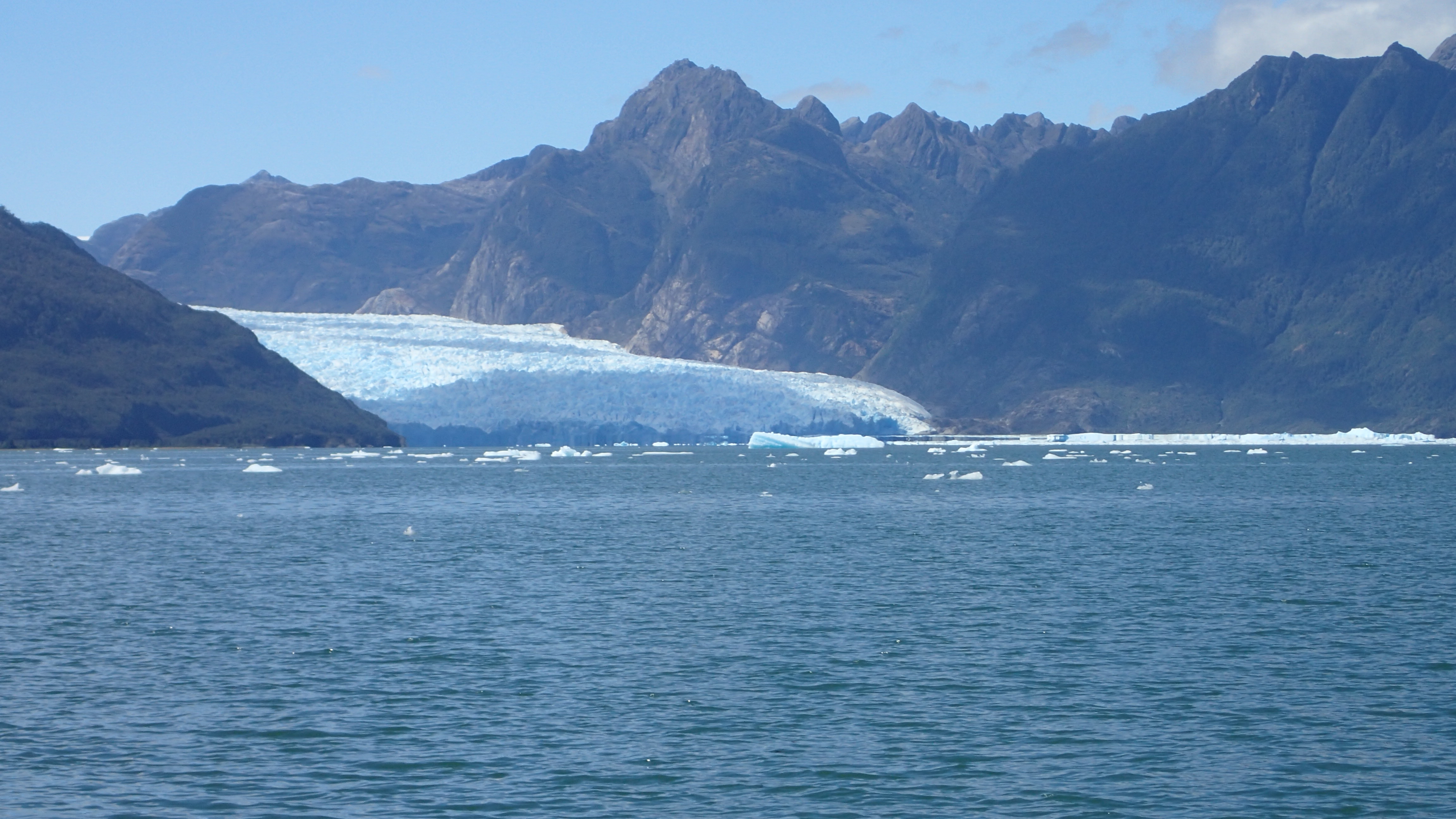
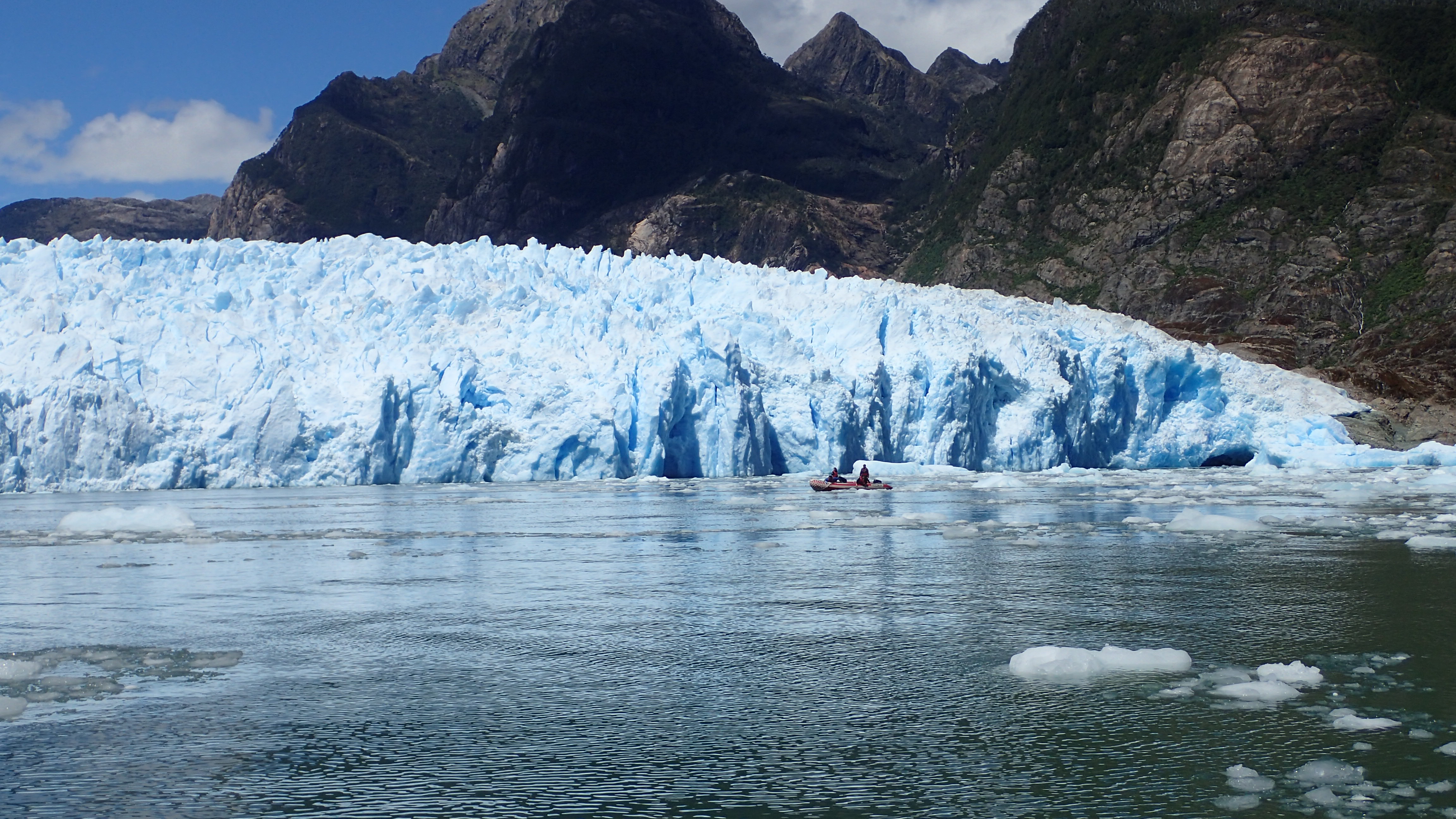
Finally the glacier proper appears broaching down into the water.
Getting closer
Even from far away it is impressive
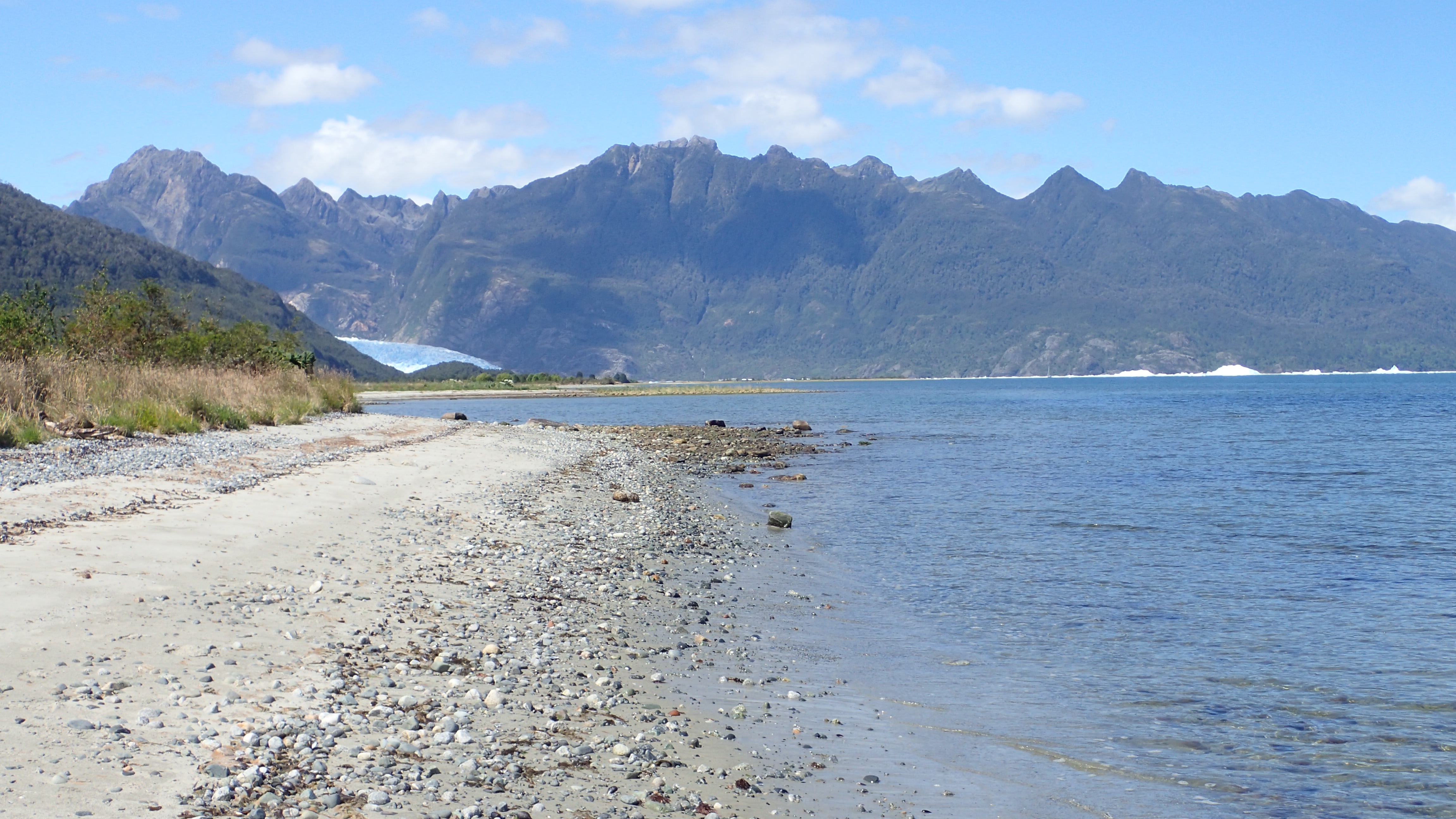
Lunch first though in the national park, a gourmet picnic complete with a shot of Pisco. We walk along the shore and see the spot where a hotel once stood to take in the glacier views. The glacier has long since retreated far, far back from this spot.
Hotel location with a glacier view illustrates glacier retreat over the last 5 or 6 decades
Plenty of icebergs
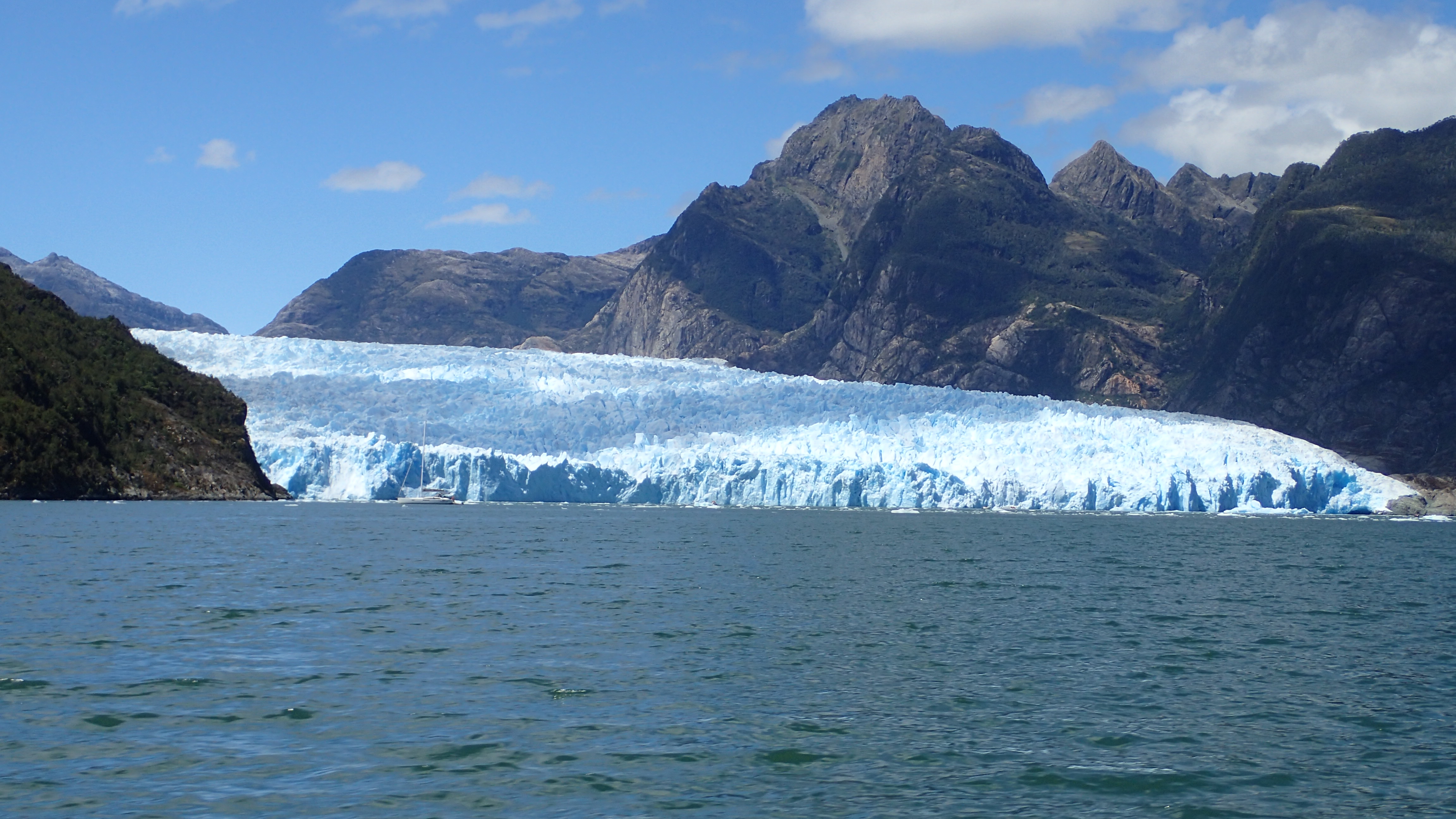
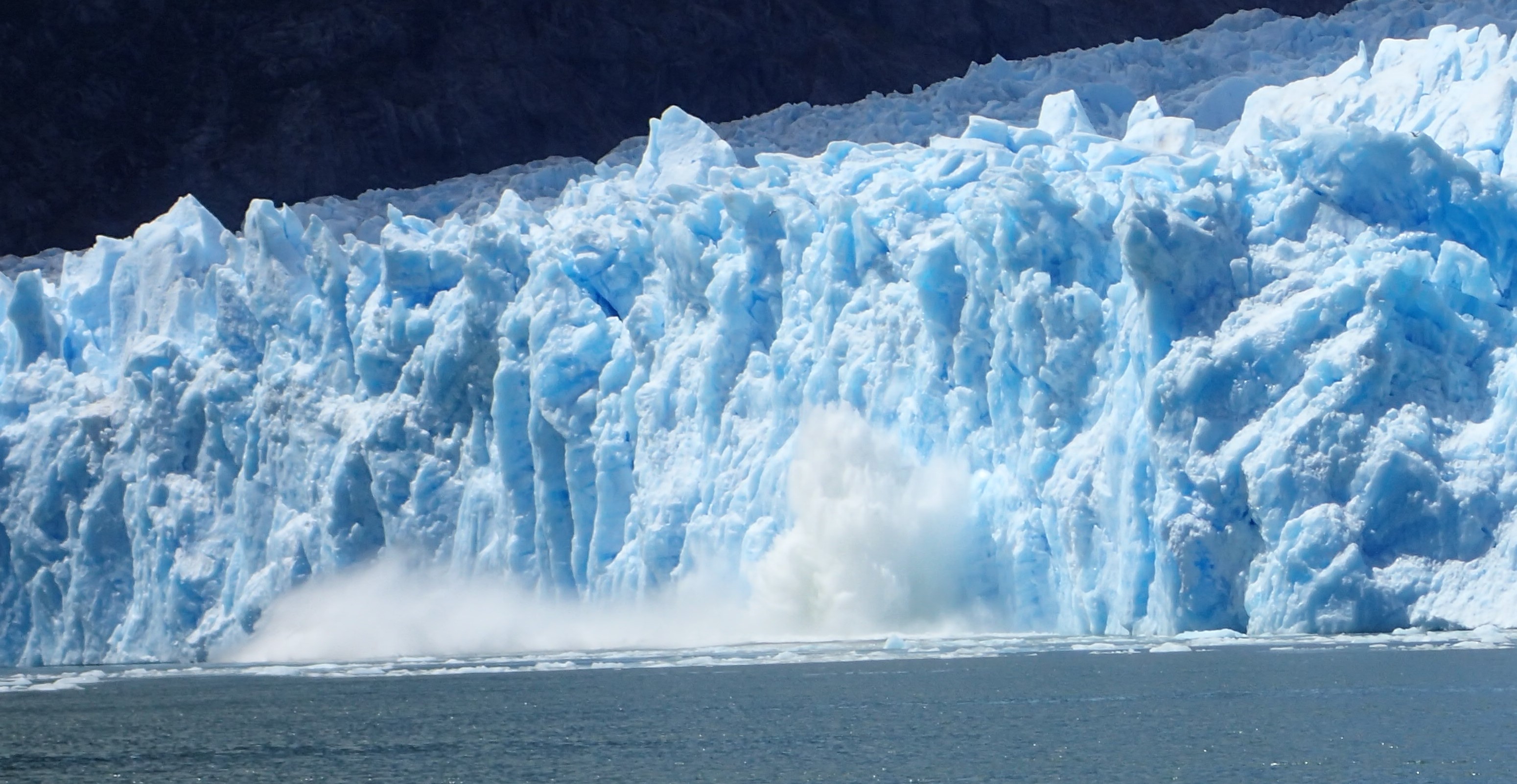
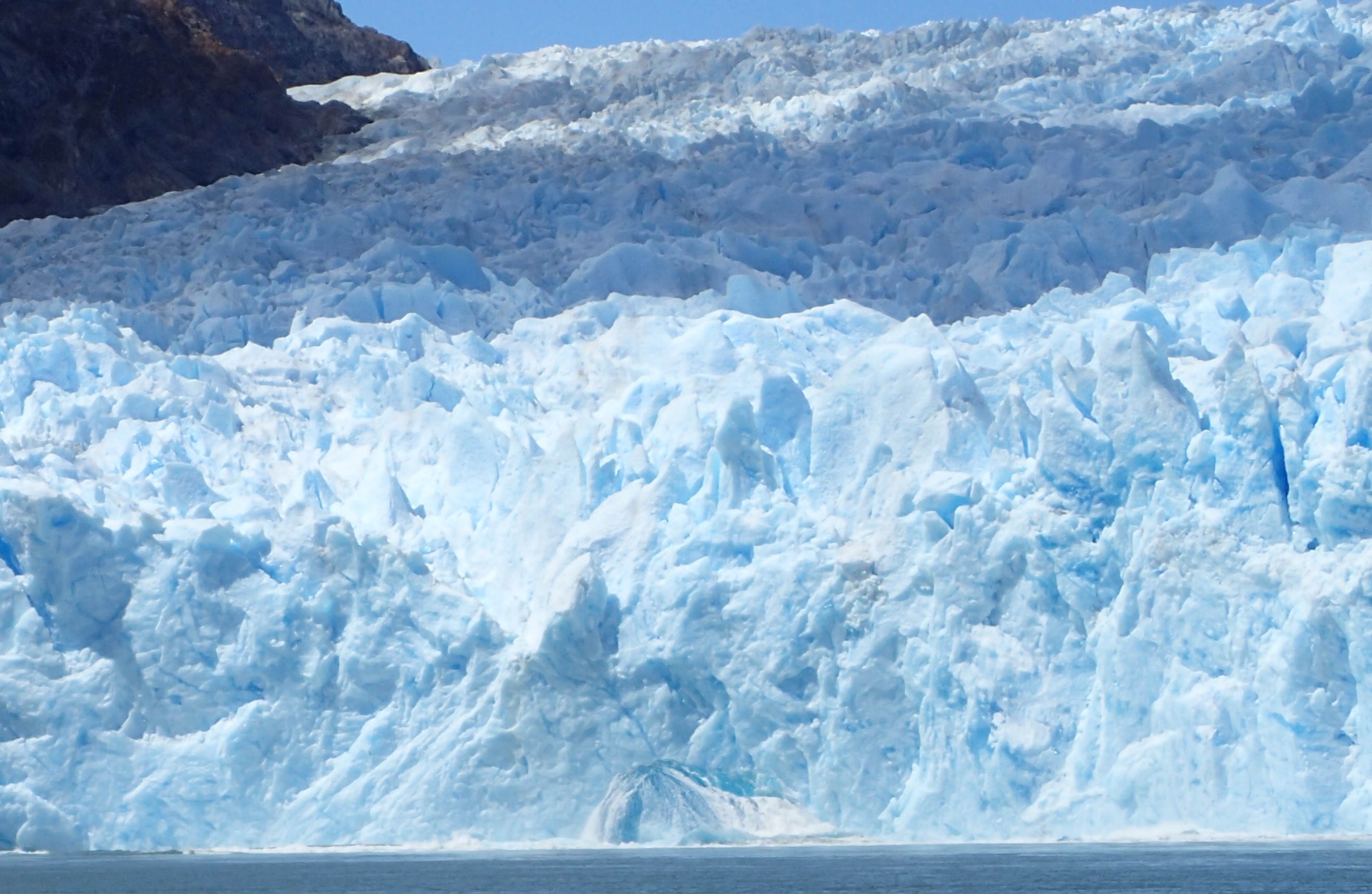
The glacier is still a majestic wonder of nature though. Two kilometres across and 250 metres deep at the entry point into the water, it cracks and growls, the noise resounding like cannon. Every time there is another enormous crack I look expecting to see yet another giant slab breaking off, but this action is back in the body of the glacier amongst the crevasses as it relentlessly grinds and moves like a living beast.
Calving
Clear highly compressed ice visible as it pops back up to the surface
Several enormous pieces do calve off though thoroughly spectacularly. There is an enormous splash as the giant ice slabs plummet down only to rise and submerge and rise again.
Some visitors take a few more risks than we do
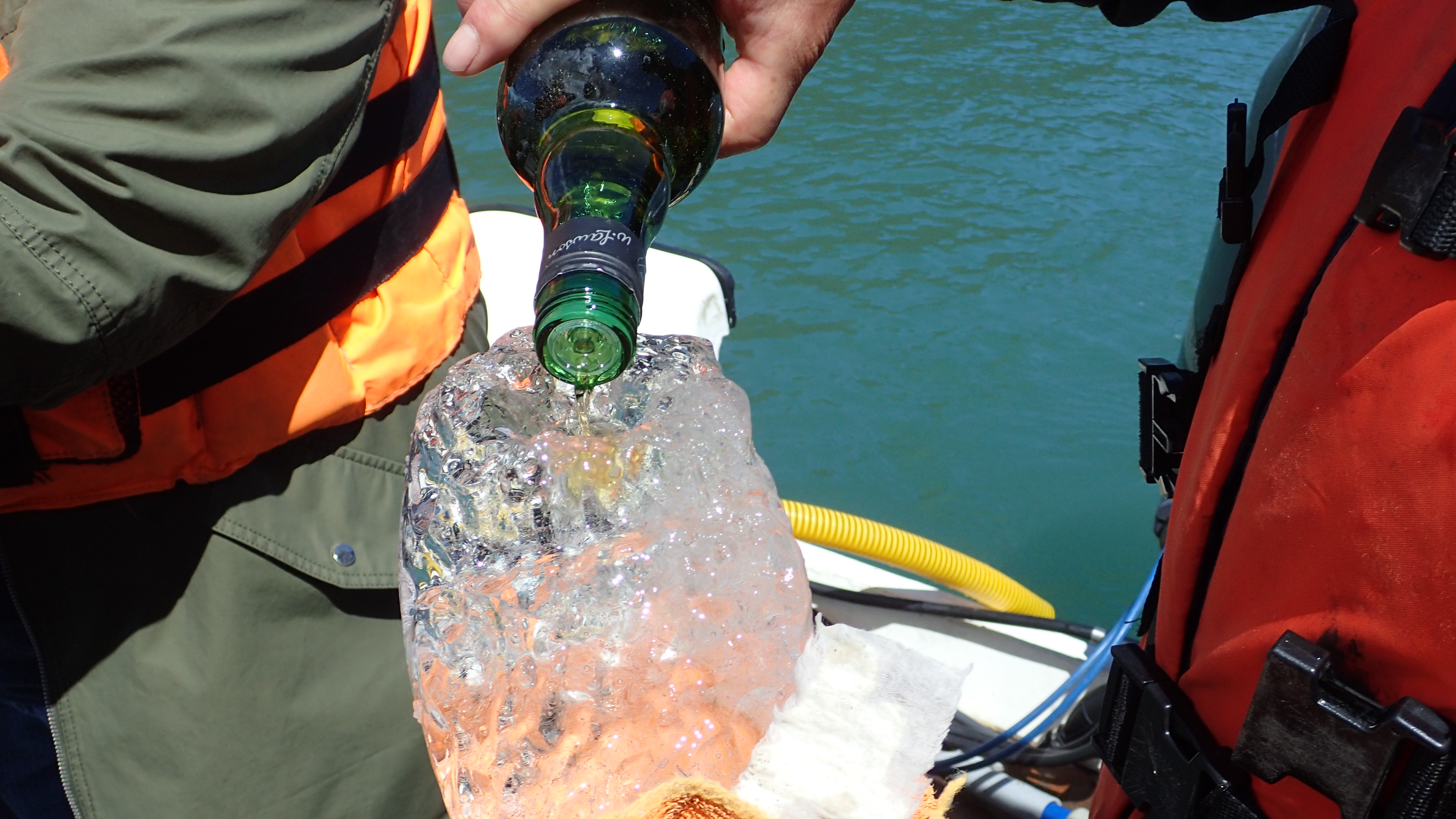
A ritual of the glacier visit is to have a shot of whiskey, or Pisco, in a piece of glacier ice. A highly compressed solid piece of ice is ideal otherwise the alcohol quickly runs through. Luis fishes with a boat hook for the best slab he can find in the water nearby, carves a well in the top with his knife and then we sup our alcohol in turn.
The whisky tradition
Two hours back on the still glassy surface and I greedily drink in every moment of the journey out in the open back of the boat. Who knows when I will next do something like this again?
Heading back on a gorgeous day
Only a relatively few small excursions
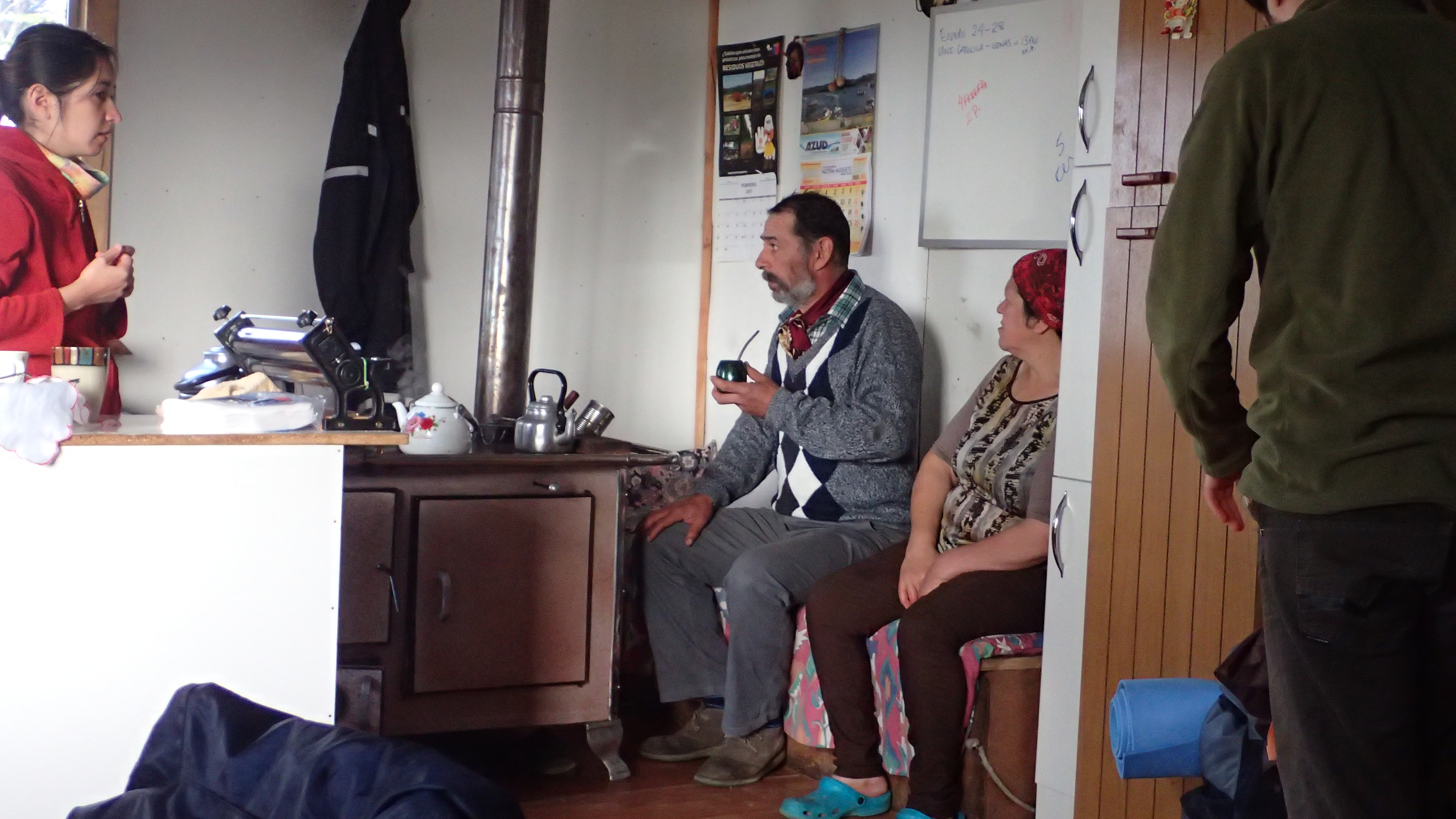
There’s still a van ride back to the river crossing and our cabin for the night. Rosa prepares a dinner of Chinook salmon from the river and Russell appears with a bottle of red. For an isolated place it is pretty convivial as people knock on the door of Jaime and Rosa’s cabin to share in some conversation or to participate in the mate tea ritual.
Sitting close to the kettle makes it easier to keep topping up that mate cup that does the rounds. Rosa and Jaime in their kitchen
The night sky is amazing and the morning light beside the fast flowing river is beautiful. We can relax at the kitchen table looking out at the river because Jaime has his work life balance well in order, the first crossings don’t start before 9am. Time to just sit right on the river edge and meditate on the beauty as cars and people start to gather on the other side waiting for the boatman.
The morning view
Waiting for the day to start
Plan B means we will go to the Rio Baker Confluencia today. We don’t know what we have missed due to the weather enforced change of plans, but it seems you can’t go too far wrong in Patagonia. We are in for another stupendous day.
Hiking to the lookout
From the top
San Valentin
Trekkers set out to walk up there
We are just in awe
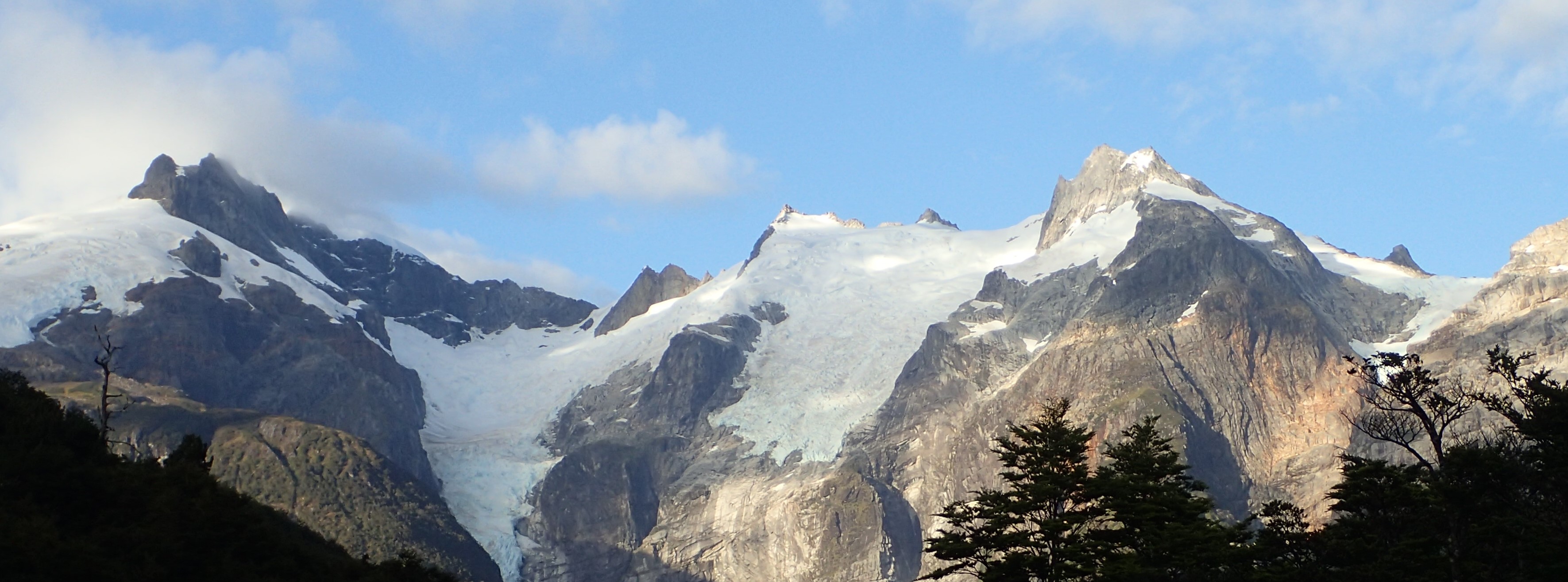
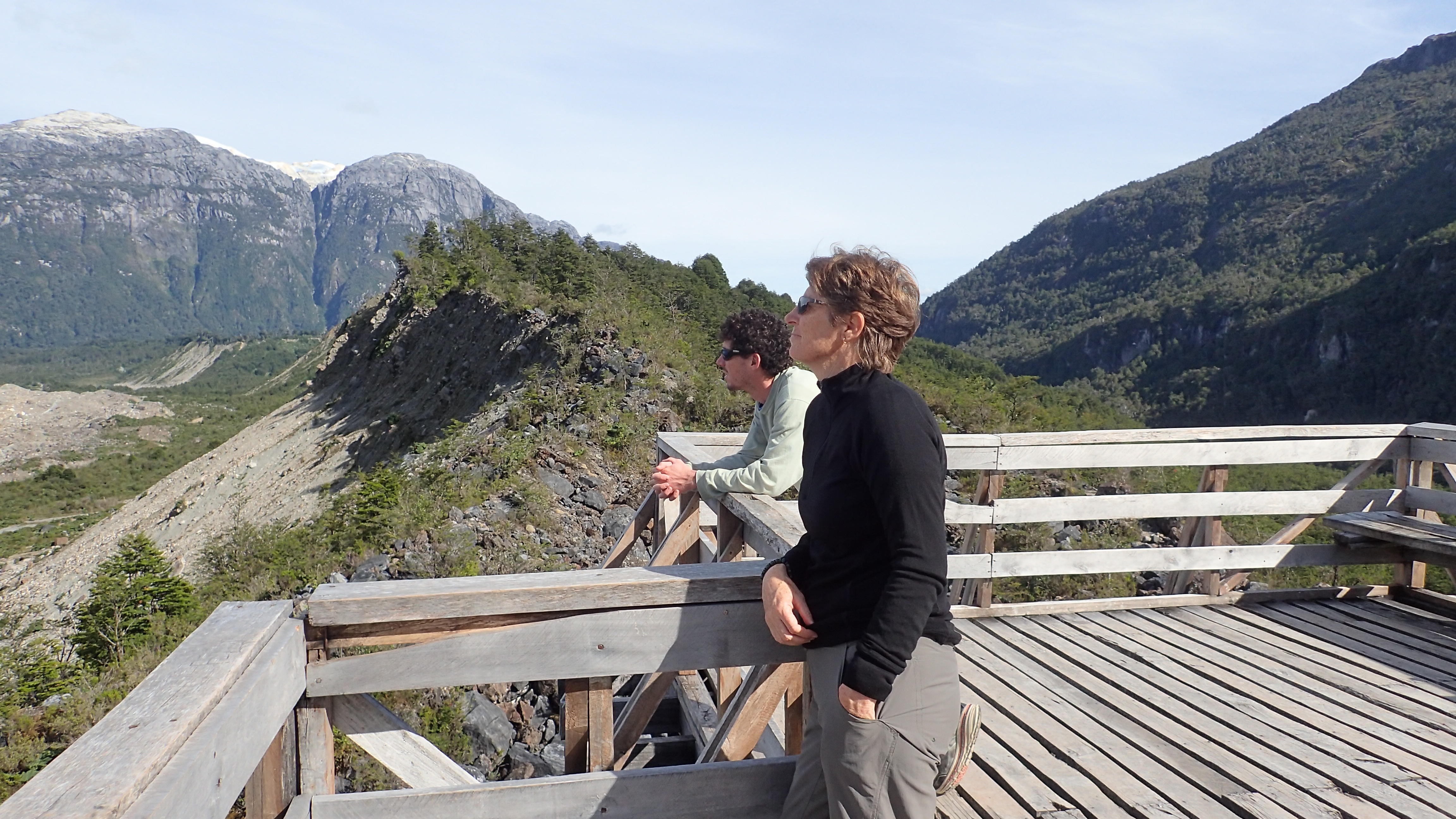
First stop is the lookout we missed on day one. It is a pretty decent hike uphill again but after weeks at altitude climbing daily, this hike basically at sea level is a snap to reach the viewing point over the Exploradores glacier and the north face of San Valentin, Patagonia’s highest and possibly most dramatic peak. It is a stunning outlook over the glacier and mountains. Several groups far below us are heading out for a day trek over the glacier. So many young Chileans are enjoying their country.
Fiesta
It is a Sunday and we stop at a small village on the river where a Fiesta is under way. The asada has been well attacked and the revellers are dancing to the music, playing bocce or just relaxing on the river bank. Feels like a good time for an ice cream.
Back on the road and we finally start to follow the Rio Baker. The colour is the most stunning turquoise blue. Just extraordinarily beautiful. The viewing spot is on private property but the generous owner allows public access to what is for me, one of the top highlights of the entire 3 month trip.
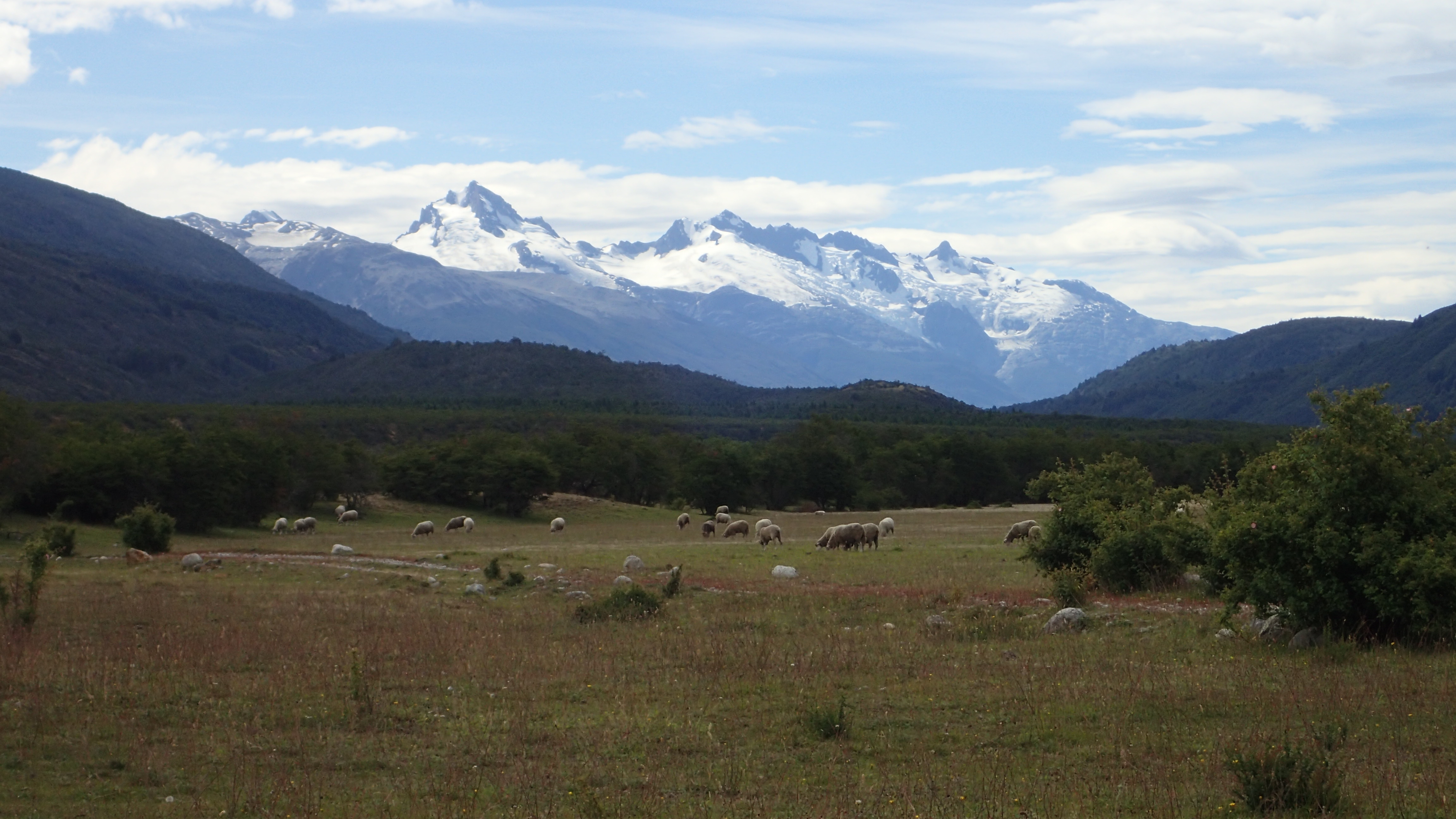
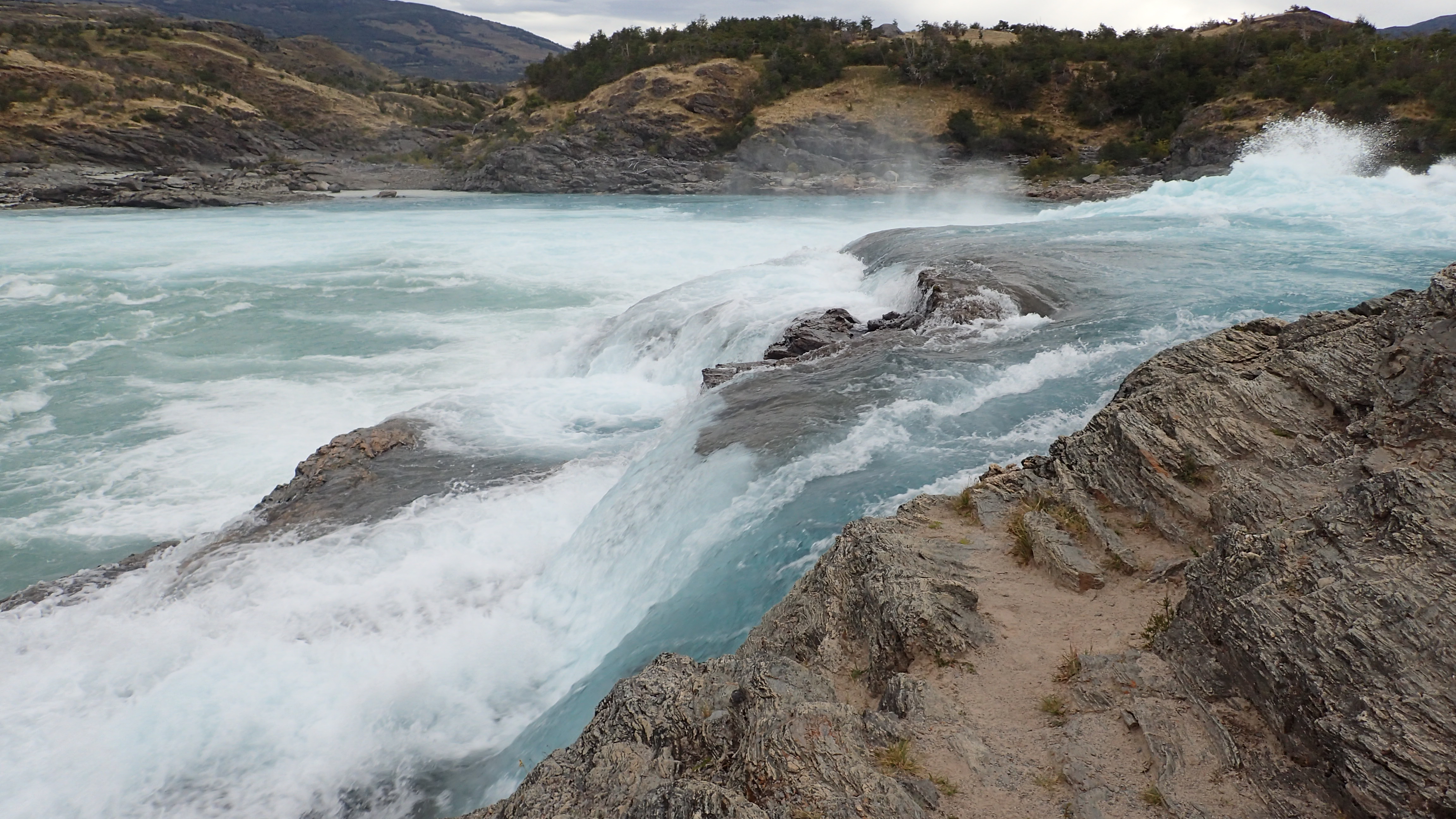
Again a good hike in, about 700 metres. The sheep pastures with the mountain backdrops we pass by at the start of the trail are a bit reminiscent of New Zealand. We hear the thundering noise first and then finally the majestic sight is revealed -the enormous “Salton” waterfall at the confluence of the rivers Baker and Neff.
Kayak exit point
The stretch of river leading up to the Salton is a popular kayaking or rafting spot. A couple leave the water just as we arrive in such a calm and beautiful little bay only metres from the thundering drop. Again, we almost have the place to ourselves to explore this wonder from different vantage points.
The sight is compellingly mesmerising as we watch that mass of water thundering over the rocks with such a consistently strong volume and force. Thankfully a move to dam and flood the entire valley was thwarted. I hope this beautiful part of the world remains intact.
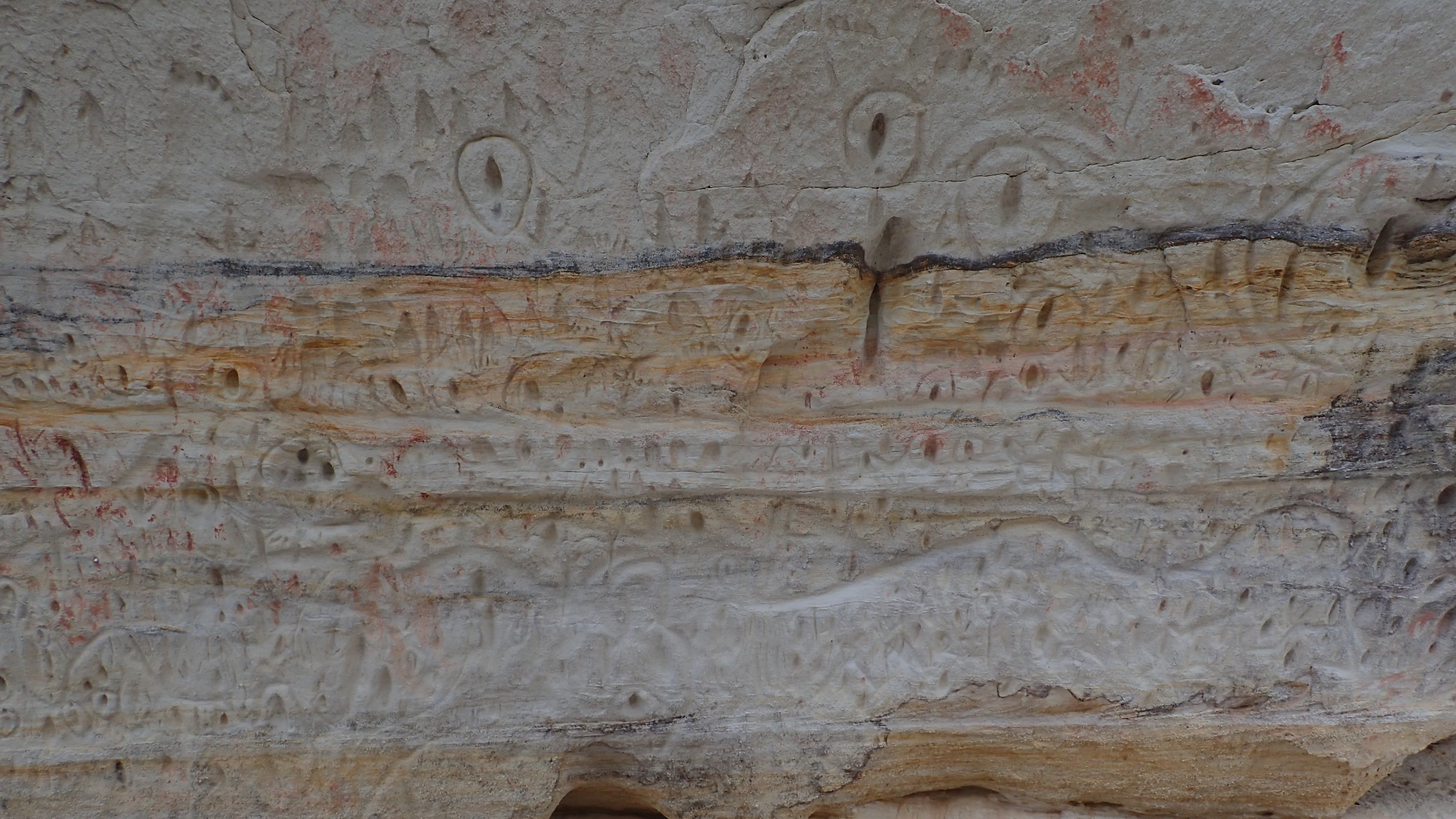
The day is not over yet. We drive to the location of ancient rock paintings, mostly hand outlines, up on a massive rock face.
Rock paintings
Rock paintings
Cliff
Just a small section of Patagonia was all we managed to explore in a jam packed four days, but it was such an amazing adventure with nature really. Lakes of so many different colours seemed to be around every corner, the amazing rivers, glaciers, waterfalls with the majestic Andes Mountains as an ever present backdrop.
Three different lakes, three different colours
Unable to resist that beautiful icy water
I loved every minute of this trip as you may be able to guess and a return to Patagonia has to be on the cards in the not too distant future.
For days Lake Titicaca has been our companion and now we travel out of Puno alongside it towards Bolivia.
This is a walk over border from Peru to Bolivia and of course it is up an inevitable hill, still at altitude. Makes me recall the range of different border crossings I have ever made.
Peru Bolivia border
The main thing is that this for me is a legal crossing so I record the event. In 1974, Australians needed visas all through South America, but we were assured in Brazil, no problem, no visa necessary. Perhaps one of those Austria / Australia problems.
Anyway after a week on a river boat going up the Amazon doing the hammock on the deck thing, followed by another 5 days on the Rio Madeira, a tributary of the Amazon, we crossed into the wilds of far northern Bolivian at Guajara Merim. Sans visa like innocent babes in the woods.
An unshaven rough looking man with a large pistol very obviously bulging in his back pocket accosted us in the hotel asking for our passports. In the face of our understandable reluctance, a tall American with a monkey on his shoulder (dead set true story) strolled by as if on cue and suggested we comply because this unlikely looking character was the chief of police.
Long story short, we didn’t end up in a Bolivian jungle jail for not having a visa. In fact we became the new best friends of the police chief for the week we were stranded there waiting for transport out. He very generously took us out to lunch but somehow made the American rancher from up river pay the tab.
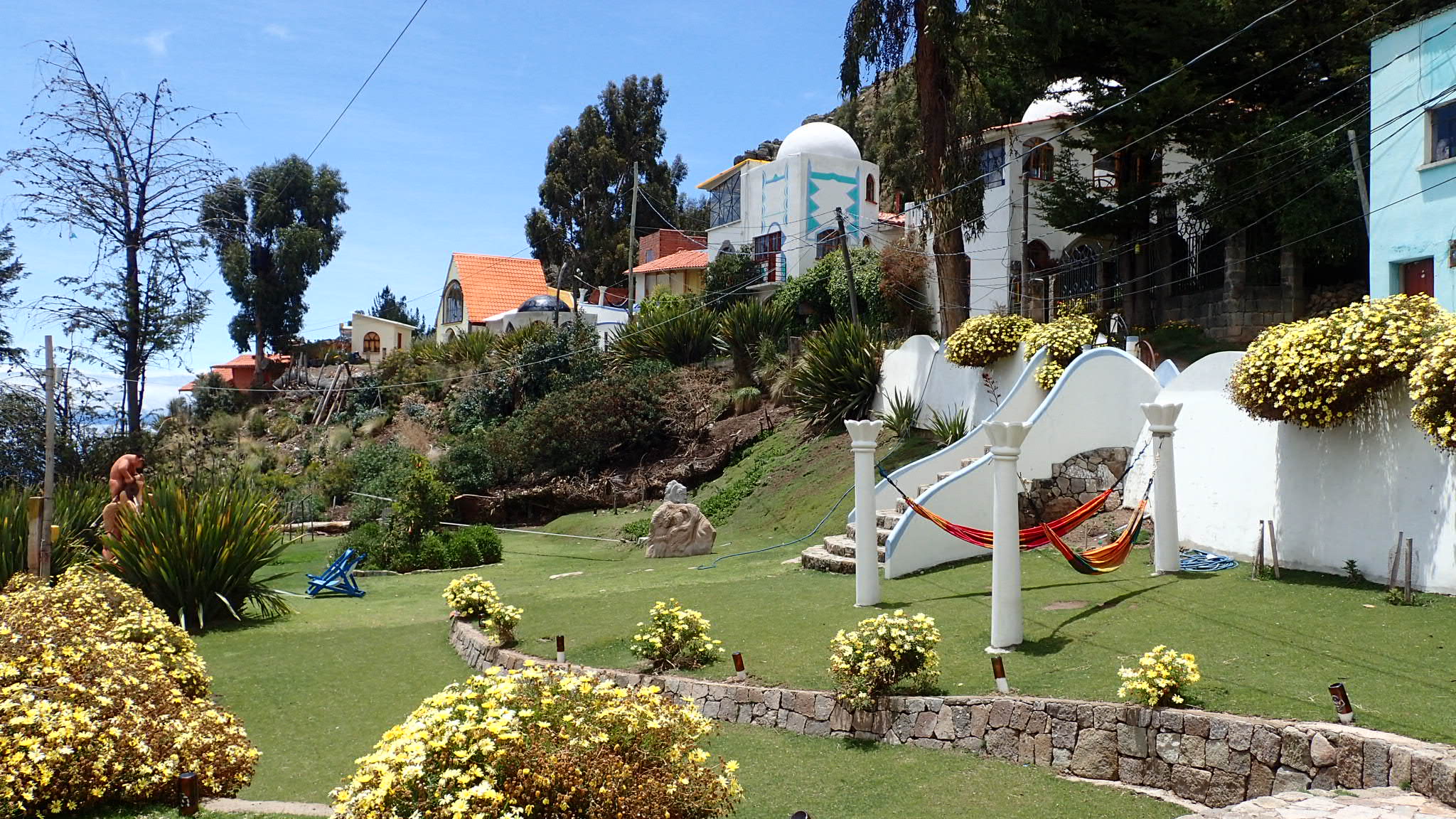
La Cupula Hostel
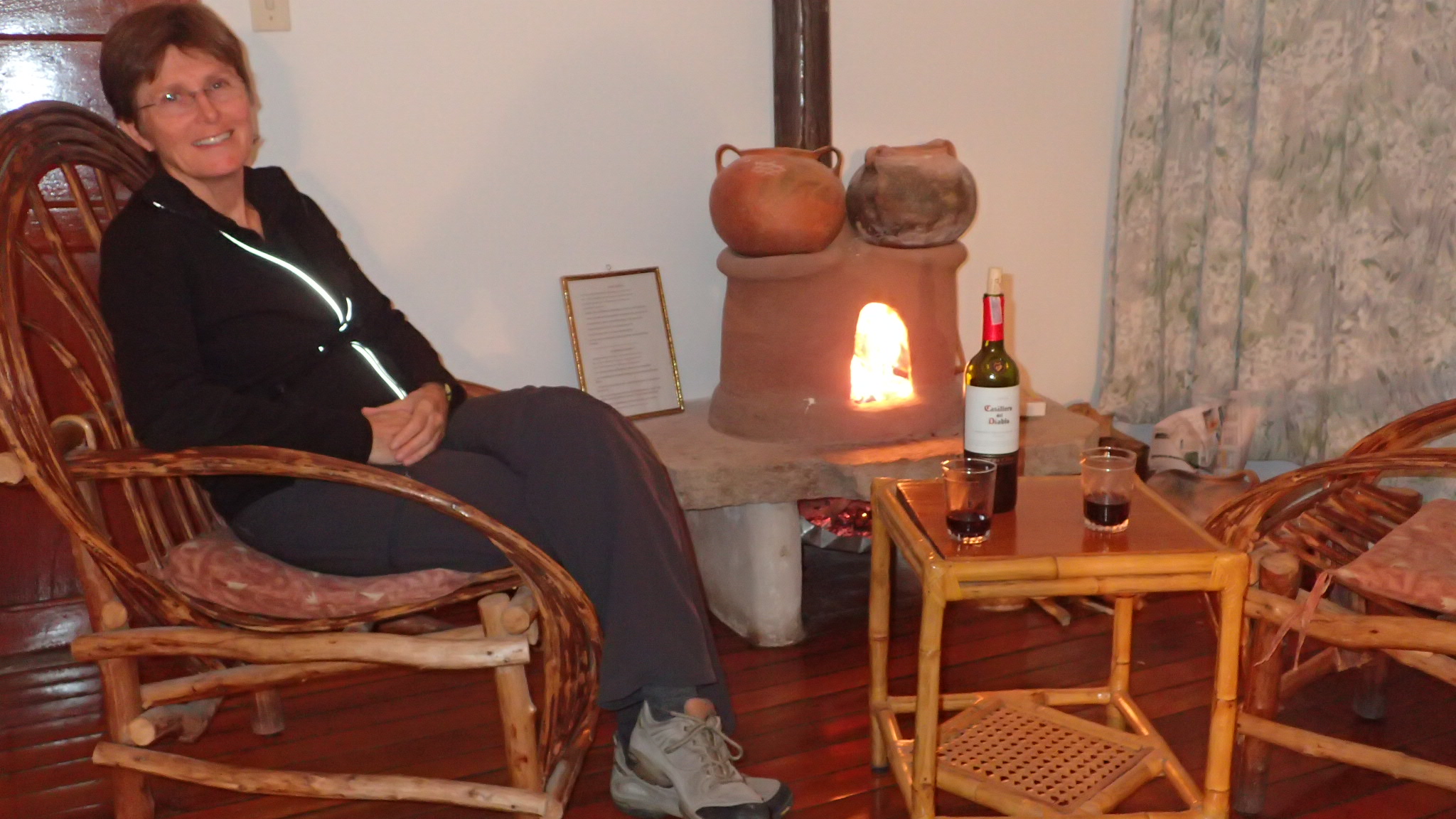
Pretty cosy room
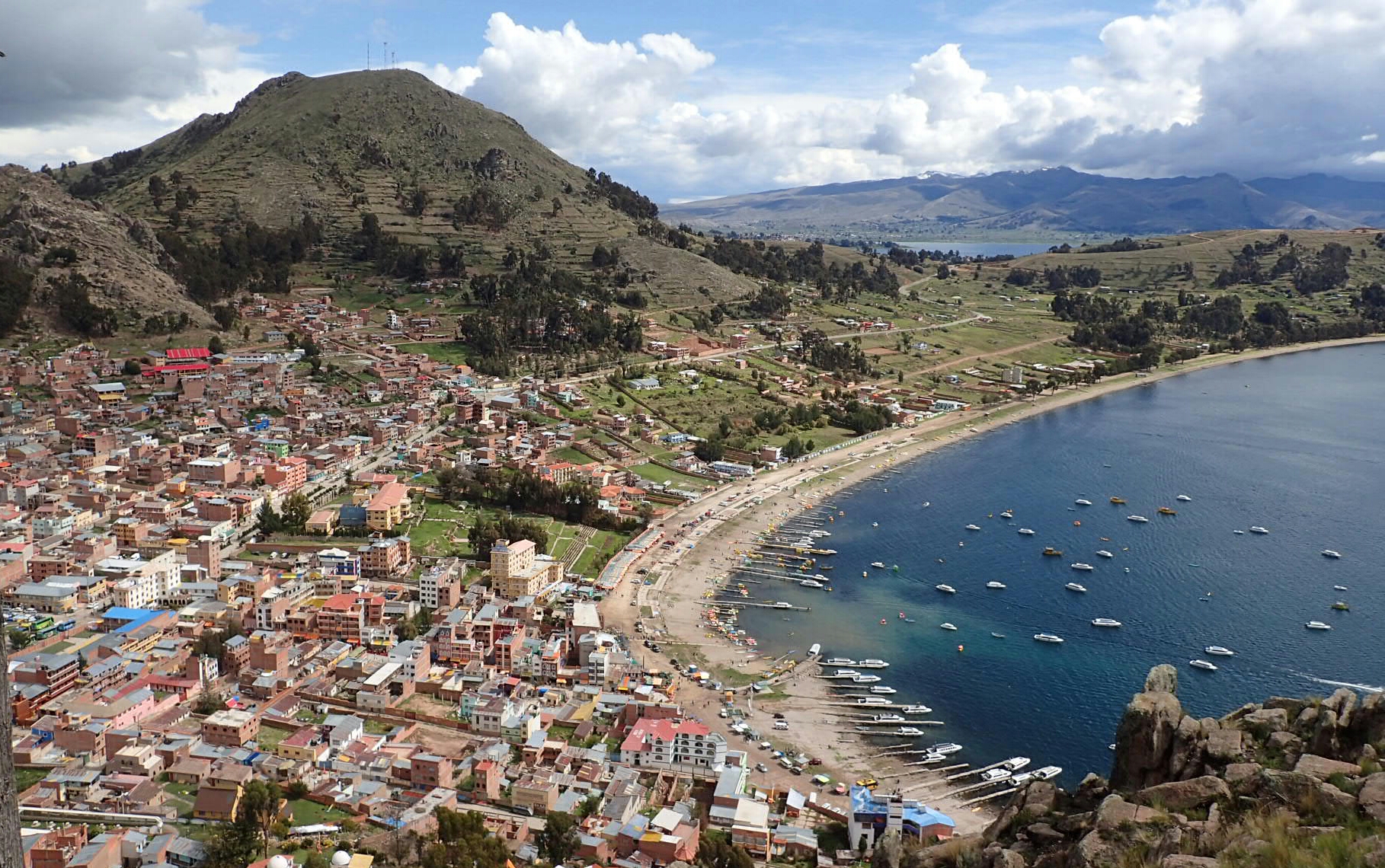
Back to this trip, Copacabana is just over the border in Bolivia and here we stayed for 3 days in a fabulous hostel, La Cupula, with our own fireplace in the room and stunning lake views. Two alpacas were also permanent residents in the beautiful gardens.
One little strip of street in Copacabana is home to every traveller who passes through. Backpacks, beards, and long hair from one end to the other along with the odd buskers and travellers selling jewellery presumably to fund a bit more travel. Restaurants, tour organisers and shops selling woollen garments, jewellery and knick knacks line the street which leads down to the lake.
In spite of the freezing water, the lake is alive with activities for young and old and one hardy gent even takes a swim.
Great place to chill and relax for a few days – apart from the hill climbs of course.
Lake Titicaca
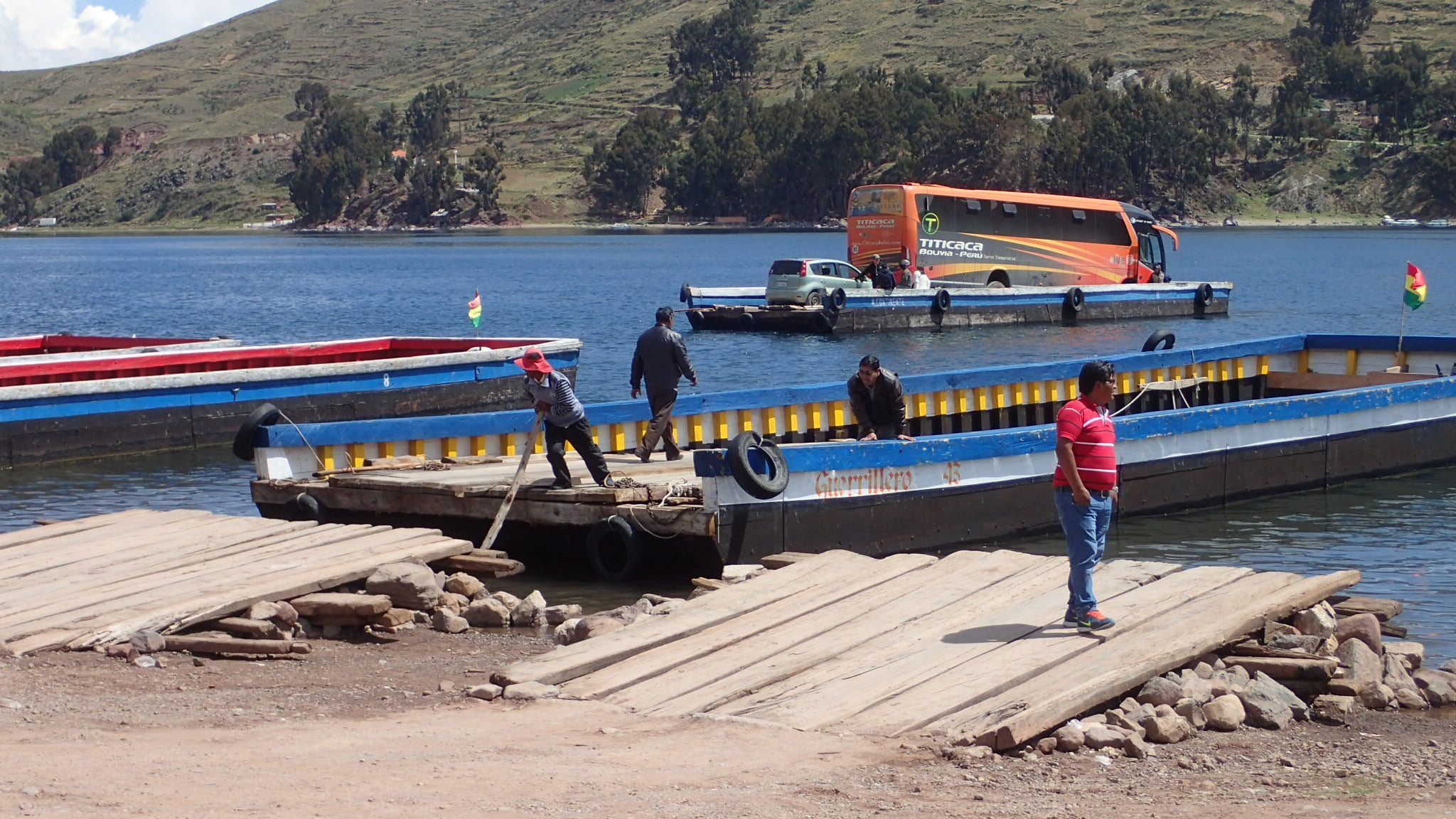
We have an international connection in La Paz so a deadline approaches and we are back on a bus. At a point where the lake pinches in, there is a barge crossing. We need to cross the lake to get on the highway to La Paz so passengers are offloaded and the bus goes onto a barge with several cars. It takes us bus passengers a little while to realise we have to buy a ticket and hop onto a small motor boat replete with copious fumes to meet the bus.
Lake crossing en route to La Paz
After so long with the Lake as our companion, I miss it when we finally part ways and keep looking thinking I see it. The biggest lake in South America and such an iconic travel destination, for me at least.
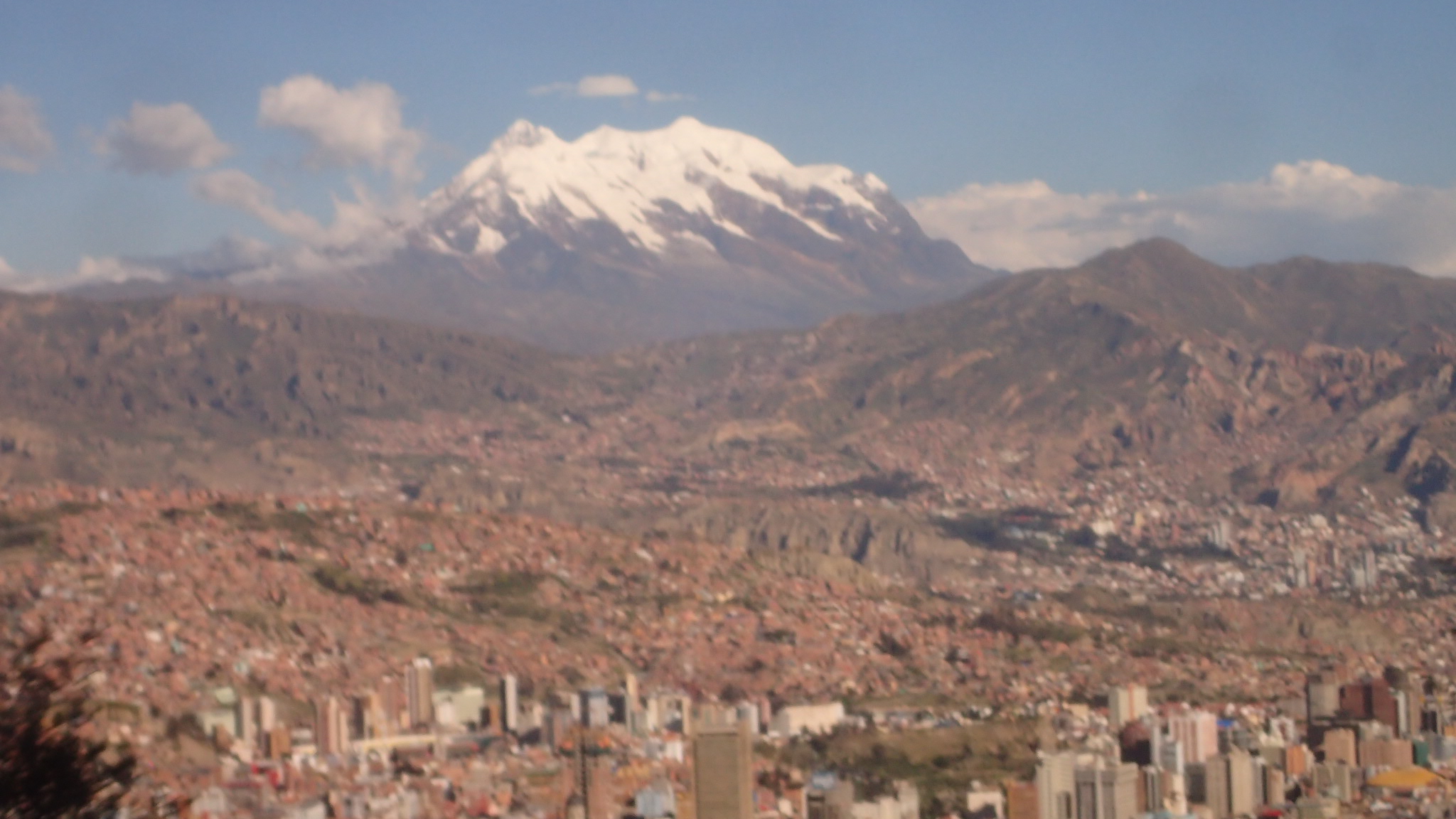
Before we reach La Paz we have to negotiate El Alto, a city on the plain high above La Paz. This stretch of road in is an unbelievable nightmare section, totally congested as every car, truck and bus going in about 5 different directions on the dusty unmade road converges and no one wants to budge from their position. This is all a totally normal driving strategy, it just doesn’t work here because there are huge mounds of dirt where presumably there may have once been a bit more room to manoevre. Somehow we make it through eventually taking about 2 hours to do 60kms but the first sighting of La Paz itself makes it all worthwhile.
Approaching La Paz – by bus
La Paz is in a spectacular setting
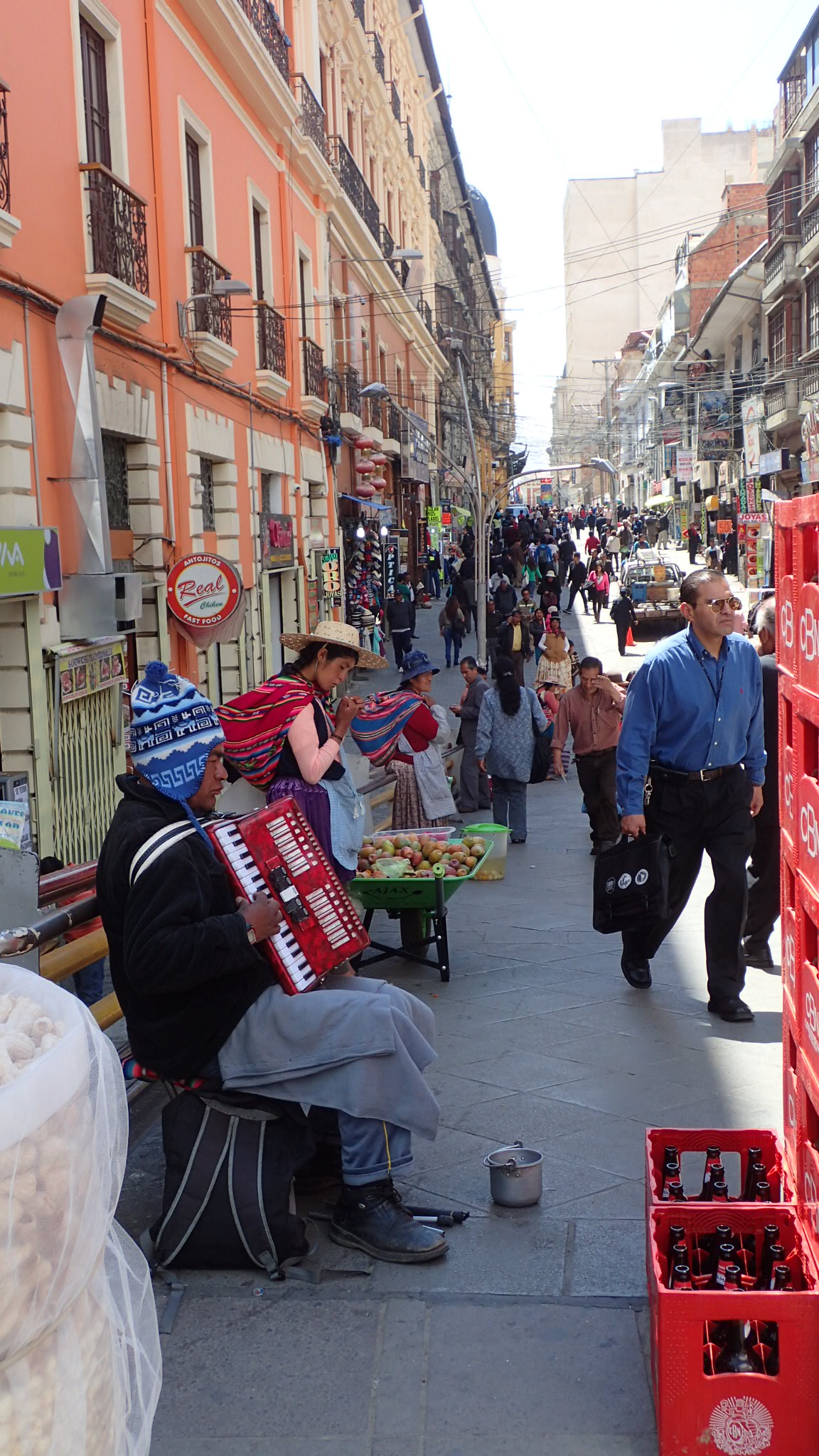
The city sits encased in a deep valley in the mountains and is quite spectacular. Once you are down in the city though, the streets are the inevitable steep hills to climb no matter where you want to go.
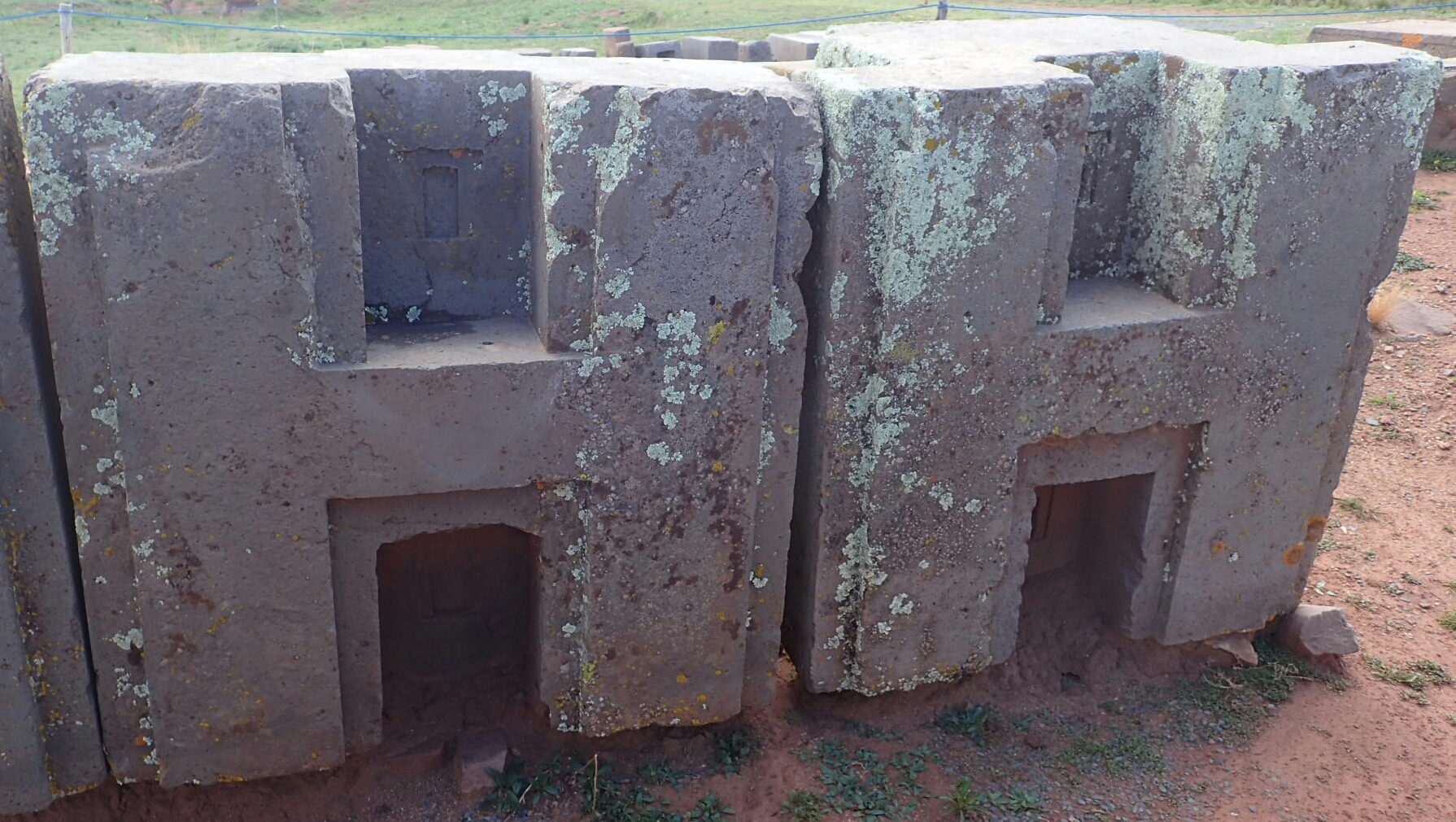
Just a very short stay but we want to go to Tiahuanaco or Tiwanaku, a pre-Incan civilization almost all the way back to Lake Titicaca but in a different direction from where we have just come.
Tiwanaku
Sunken temple where the giant monolith was excavated
Scores of unique heads
Such a contrast to Machu Picchu in terms of visitor numbers, it is fabulous from our point of view with so few people venturing out here. One of our few tours, it was very modestly priced for a very full day and just so worth it.
Almost the very first thing you see in the first of two museums is a monolith of staggering proportions, 7.3 metres high. In spite of having resided outside a sports stadium in La Paz for 70 years in all sorts of conditions, ironically photography is now prohibited. Just a stunning spectacle.
The Sun Gate is the other famous work standing out in the ruins. As with many places both here and in Peru, many of the ruins are roped off.
Sun Gate
Pumapunku, Bolivia
Back in La Paz, there are many museum possibilities but not enough time so we opt for the musical museum. Great choice, it was so excellent.
It’s an early morning trip to the airport but the day dawns bright and clear yet again. As the highest international airport in the world at just over 4,000 metres, we traverse one last time the steep climb up out of the valley to the flatter El Alto. The tightest connection of the trip because we need to fly south the very next day from Santiago to Patagonia but I need not have worried. Having prebooked the more expensive national carrier throughout, the strategy appears to have paid off.
Experimenting with the multi city bookings helped to keep it a bit more economical and made a framework we had to run with. Turned out to be a good thing in the end I think with just 3 short months to play with.
All 13 LATAM flights have been on schedule, staff have been helpful and our luggage has always been there. Pretty good even though the in flight offering on an international flight would disappoint most. I’m used to not being able to eat most airline food, so no dramas for me.
La Paz
LaPaz
The inevitable hills to climb
Barely a week in Bolivia. It was added in to the journey more as a logistical tactic to get back to Santiago, but provided a few special experiences and a nice opportunity for reminiscing on my youthful adventures.
Road washout between Cusco and Chivay. We either abandon Colca Canyon altogether given our time frame, or take the expensive option and fly into Arequipa. Colca wins so we book another flight.
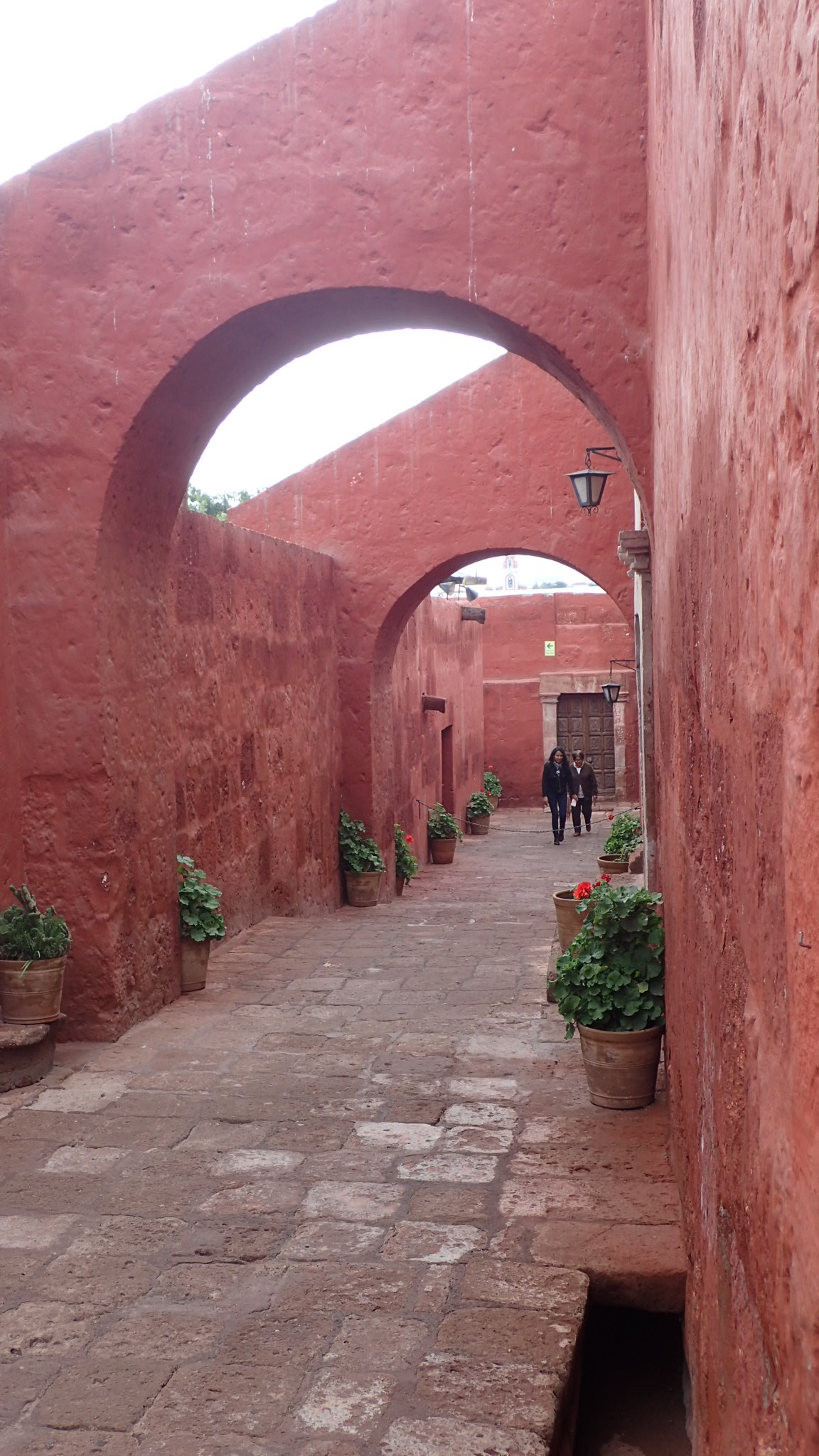
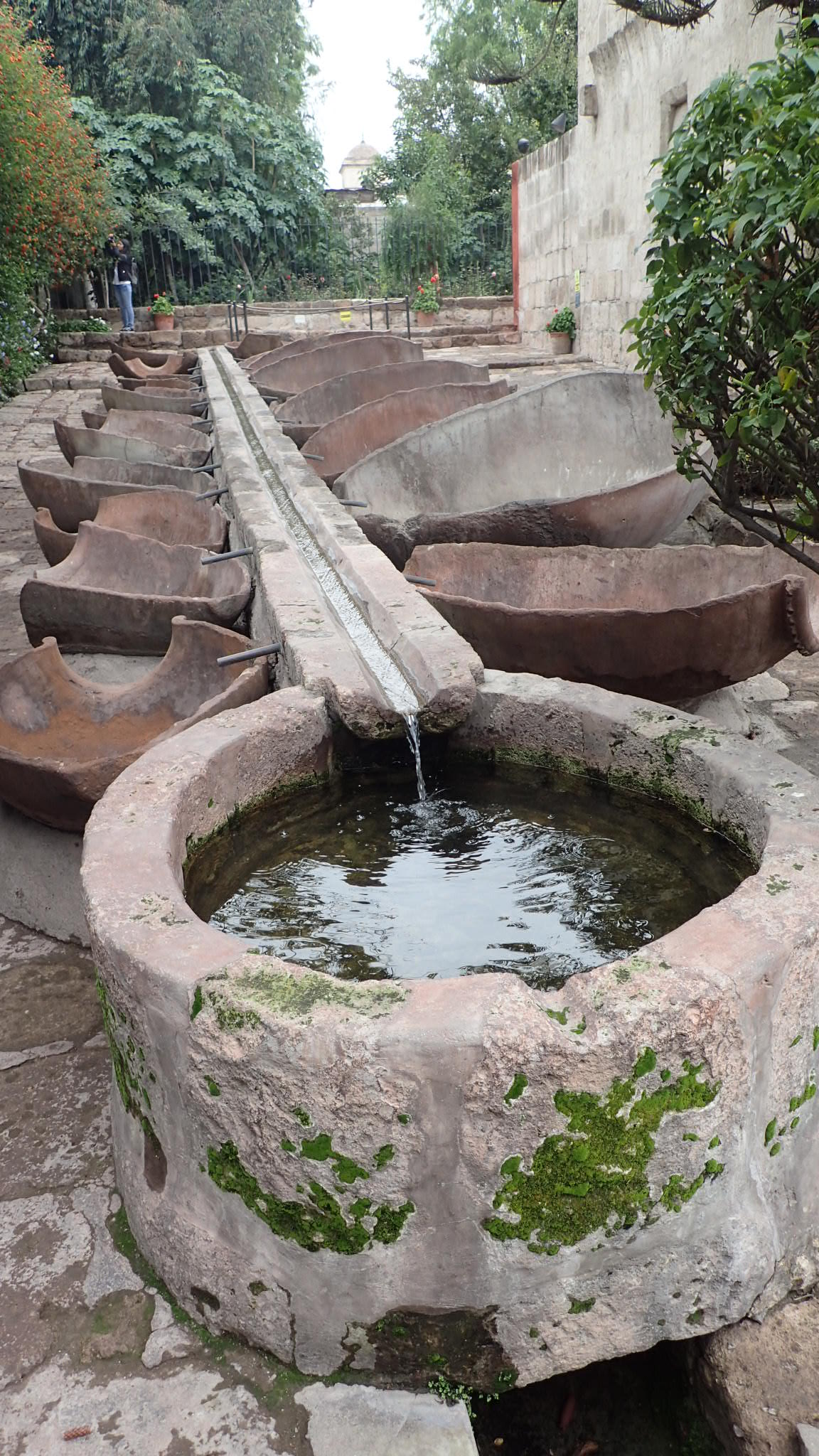
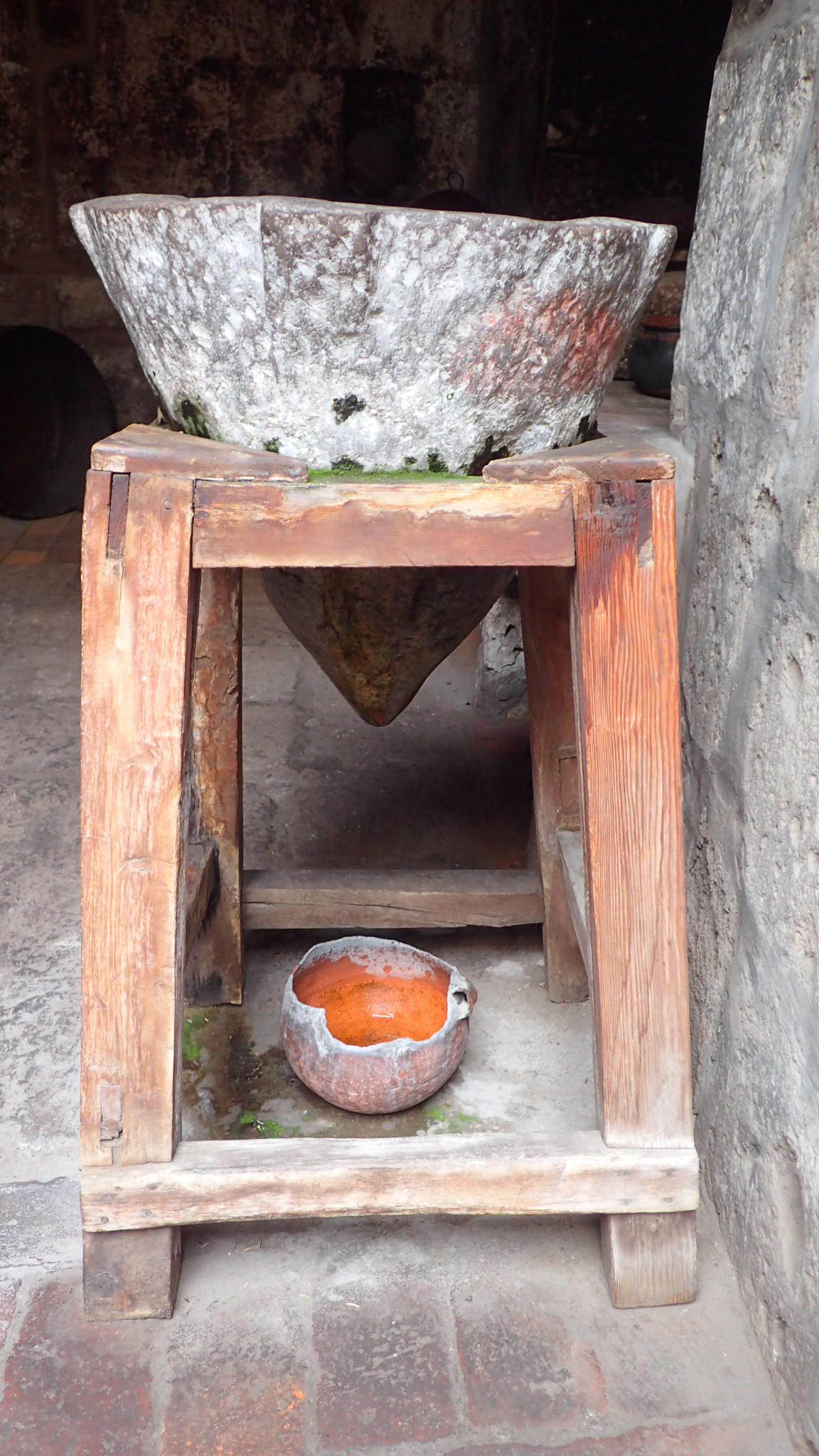
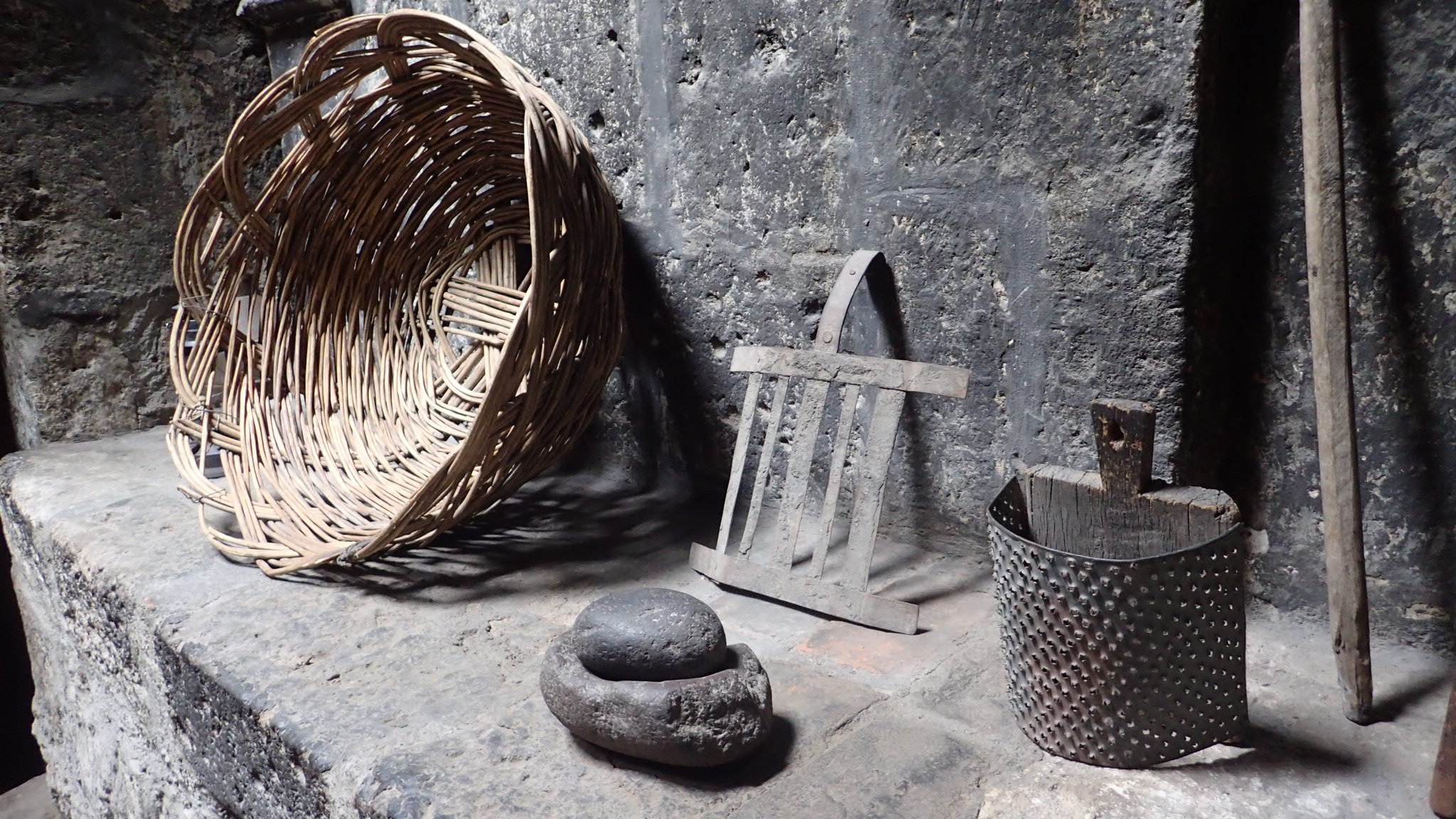
Before we leave Arequipa we visit the Santa Catalina Convent
Laundry
Water filter
Each cell occupied by a nun had a massive impressive kitchen
Just a 1 hour hop in the plane through the Andes. As we approach Arequipa, Colca is right there out the window and we seem to be not much higher than the snow caps. Very spectacular.
Arequipa is a bit lower in altitude than Cuzco but we will be ascending even higher again over the next couple of days
Colca
Heavy fog covers Arequipa as we head out on a pretty dodgy long detour. So lucky to fly in on time early the day before. The fog and cloud continues for several hours as we slog up the mountain behind slower vehicles. Next to nil visibility means passing is impossible.
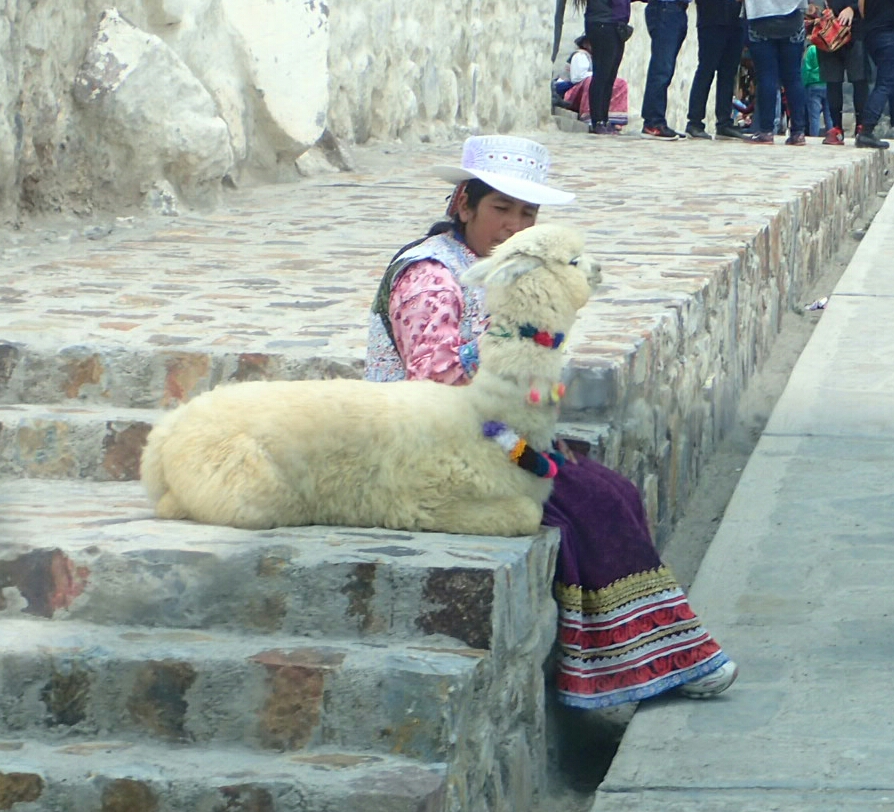
Headgear worn by the women in these parts consists of beautifully embroidered white hats. Many women wear blankets wrapped around over their other clothes. The clouds close in again and as we stop to pick people up on the side of a hill, snow is falling.
This is the coldest it’s been so far and condor sightings are really looking a slim possibility in this weather – we do know we are in the wrong season but there’s always a hope.
After a barren landscape covered only with rocks, small bushes and spiky grasses that look like an army of smurfs positioned between the rocks, we finally start to get some canyon views.
When we do eventually get to Chivay, we are grateful to be going direct to our ultimate destination of Cabanaconde because the bus is full and everyone getting on at Chivay has to stand for quite a while.
Sitting on the right side of the bus is pretty important as the aisle full of standing people out of Chivay means there is nothing visible from the left.
Spiky grasses
In spite of fogged windows with droplets running down, the compulsion to snap away is strong. Plenty of alpaca are around and many are in such a picturesque landscape. Some good views of snow caps as well.
Only about an hour late into Cabanaconde but safe and sound after a fairly arduous weather impacted drive uphill, up mountain really, most of the way. I spot our hostel as we drive in to the tiny village in the rain and dark, but someone is waiting to meet us anyway.
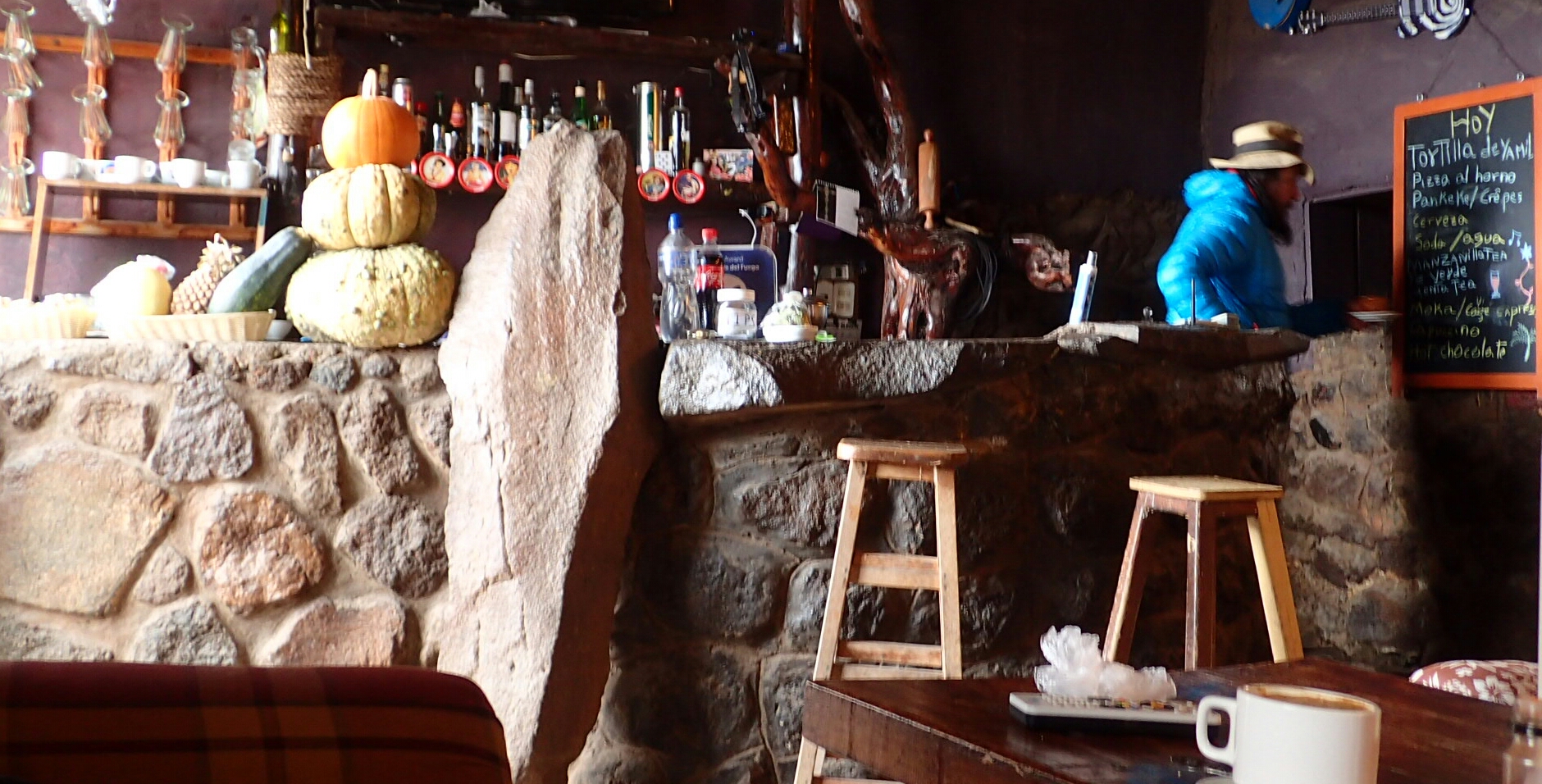
We park straight in the restaurant close to the wood fire pizza oven to indulge in a glass of Argentine red and a very welcome huge meal, alpaca and pizza respectively.
Pachamama dining area was pretty cosy with the wood fired pizza oven going
Coffee break in Cabanaconde
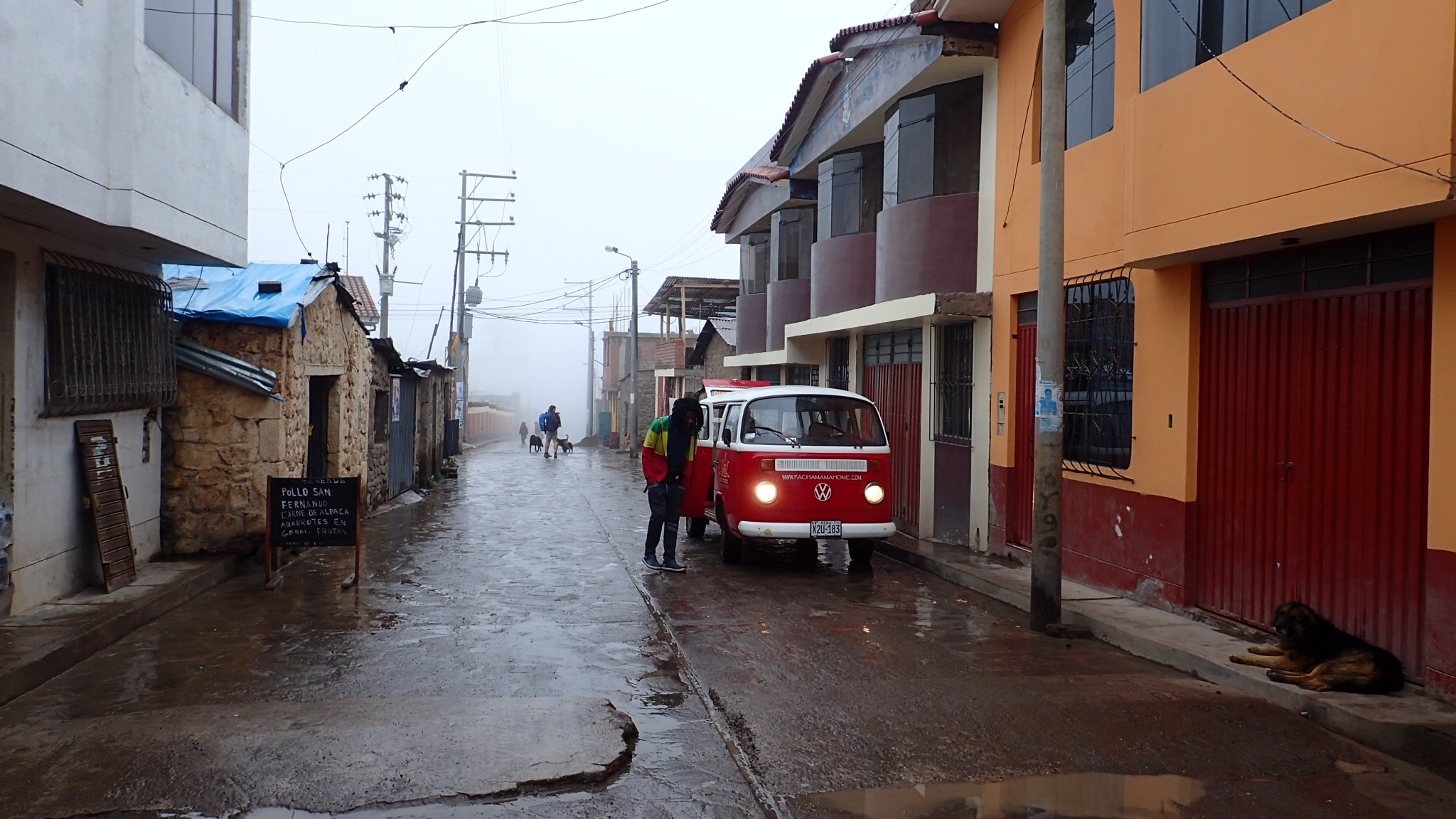
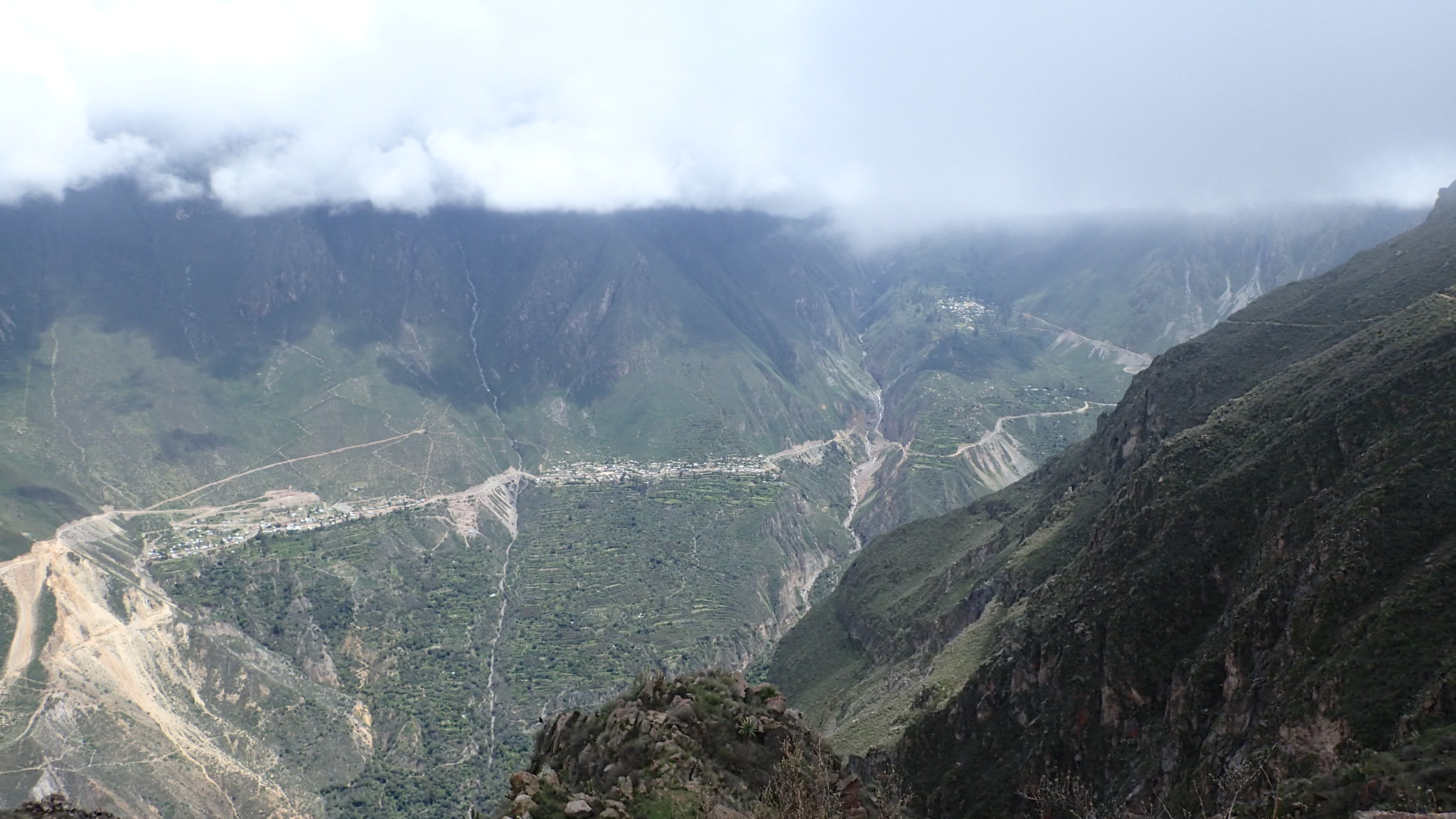
In spite of an obvious zero chance of condor sighting, we break out the thermals and head out the next morning in the Pachamama kombi van to the main viewing spot. We are practically the last to leave the viewing site because it is so beautiful in the clouds. There are two other viewing spots, again no luck, but some spectacular views. It is now possible to see the trekking paths down the valley and up the other side, along with villages on the other side where the trekkers stay overnight.
Kombi ready for the road. Check out that January weather
Colca on a very foggy day
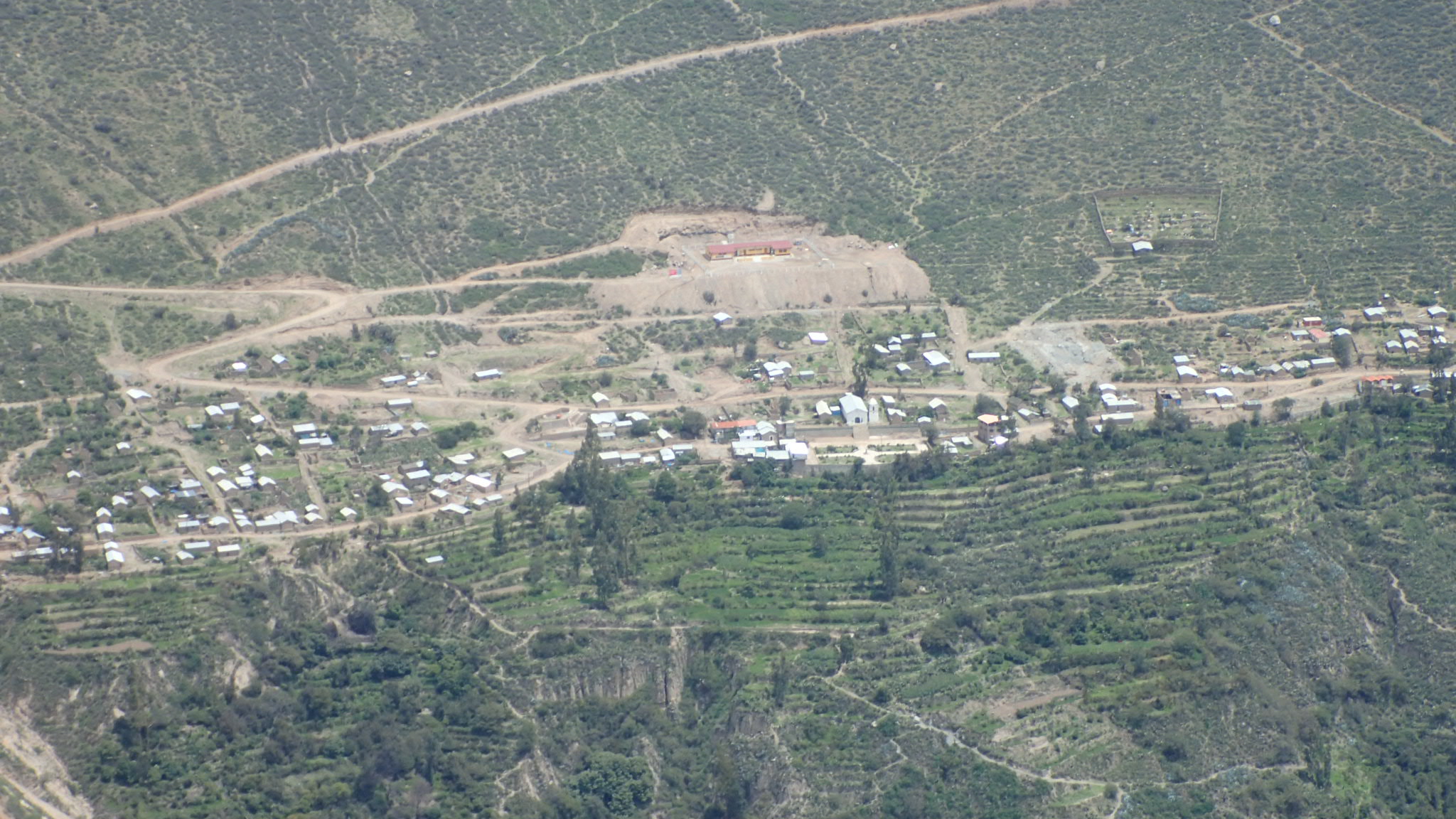
Back in Cabanaconde, we are perhaps the only tourists in town not trekking for 2 or 3 days, but we head out on our own mini hike. Valley views are beautiful and in the far distance there is a waterfall pouring out with tremendous force.
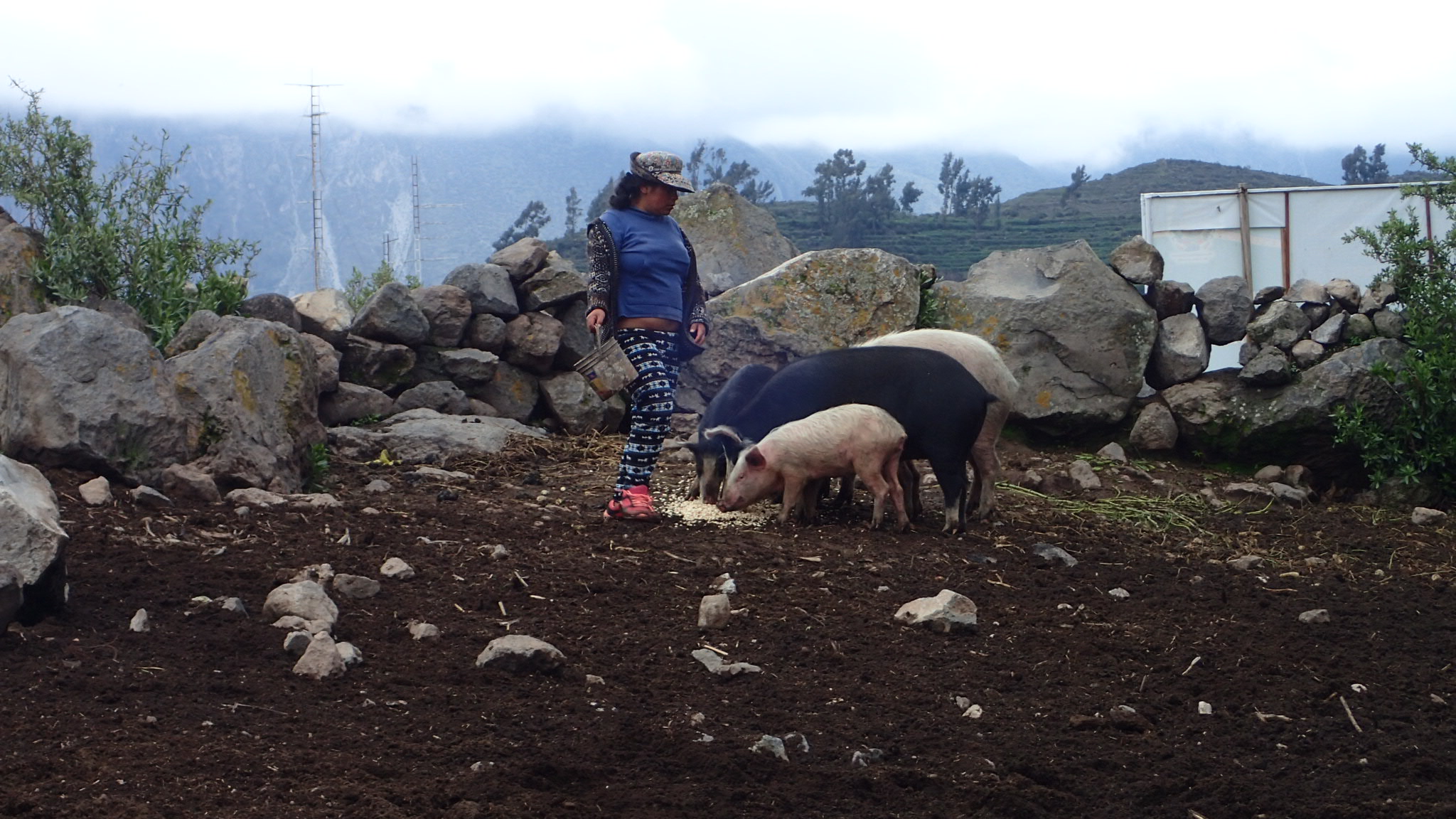
Plenty of livestock to be seen in rough stone pens and the valley below is just covered in a patchwork of farms. A woman who has just fed her pigs is keen to have a little chat.
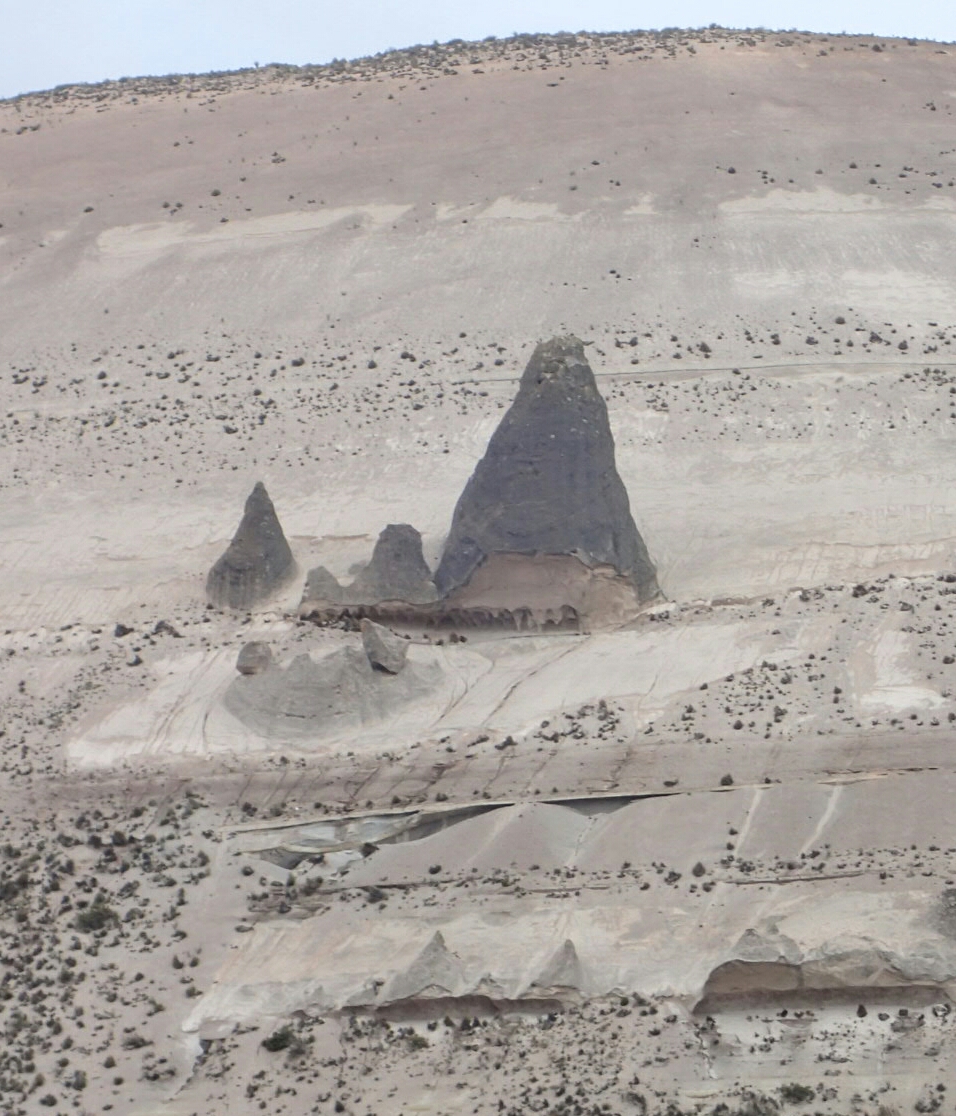
Like a mini Goreme landscape
Tourist snaps, not a condor
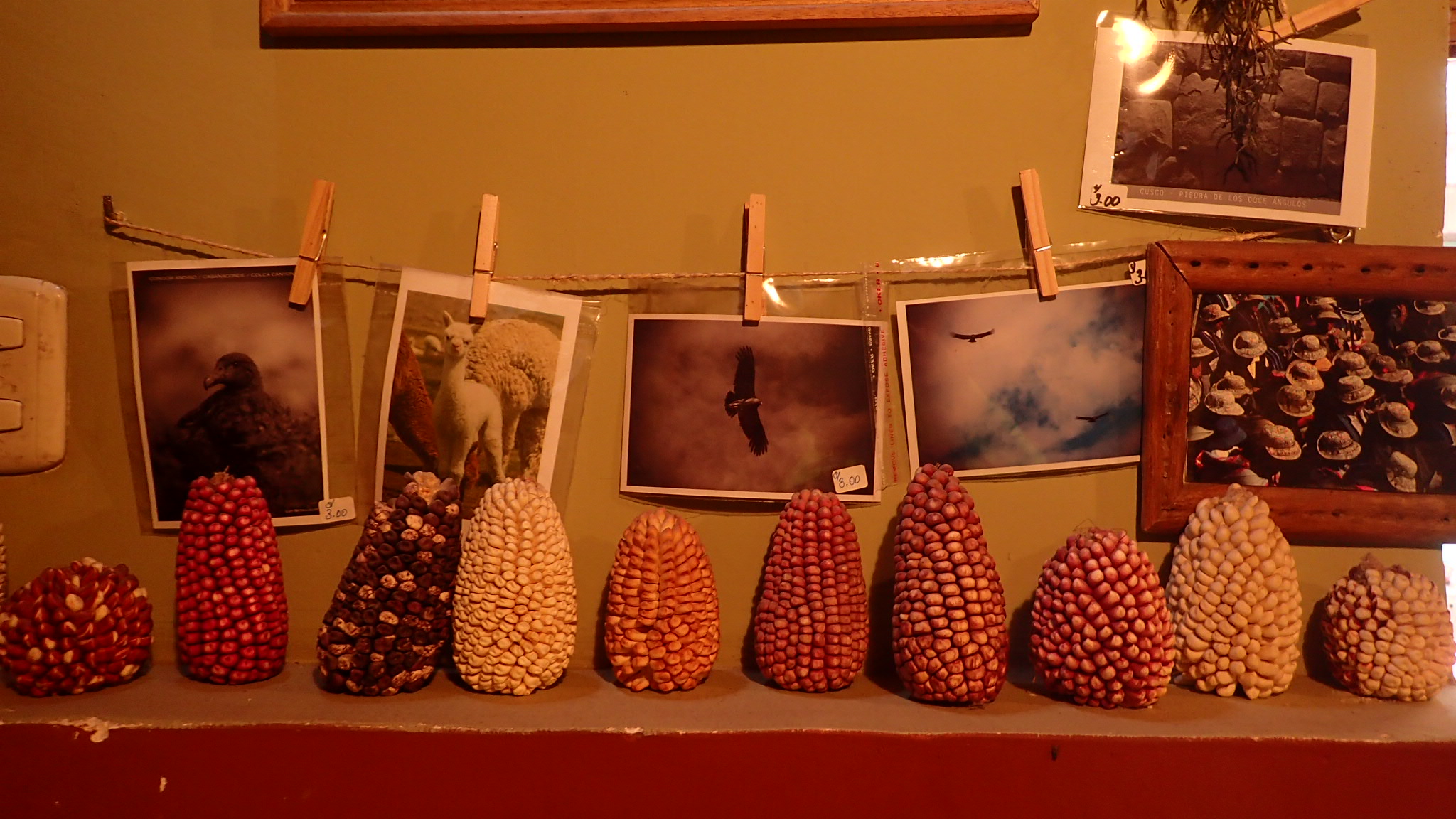
Cabanaconde has obviously attracted a few characters. We find a food spot that looks interesting and get a couple of great coffees from one such character.
Banana late lunch on the terrace of Pachamama watching the ever changing clouds hiding and then exposing the mountains surrounding us. Yet to see the volcano but who knows what tomorrow will bring. It is an amazing part of the world.
Looking down on Cabanaconde
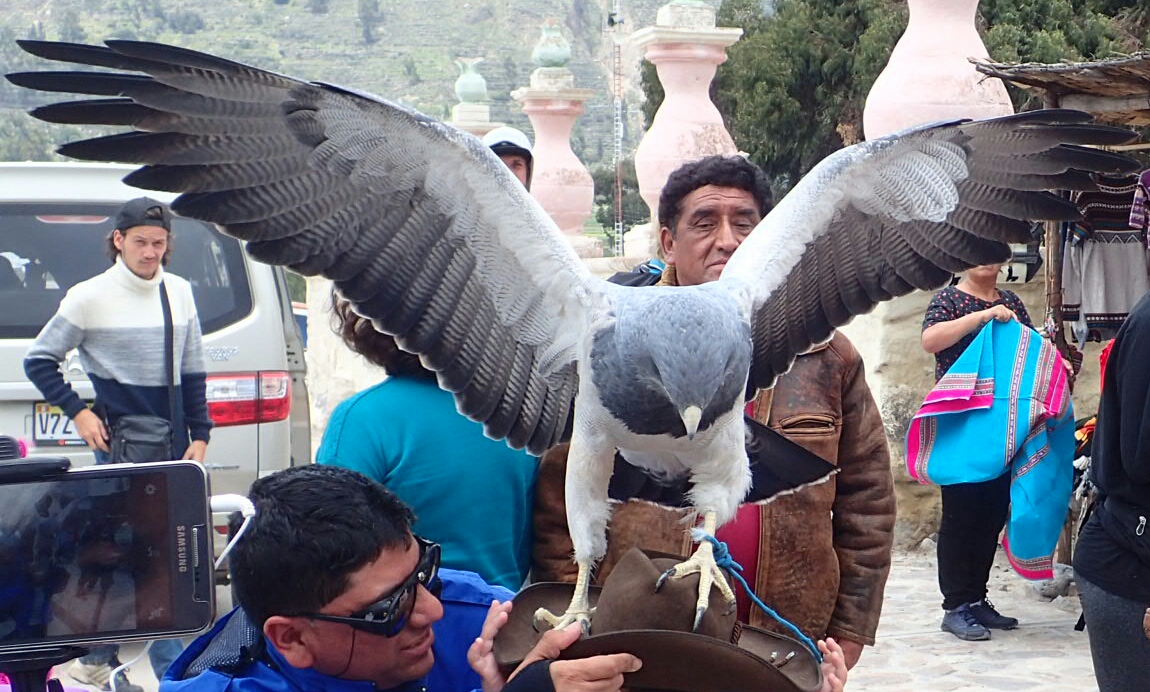
The road to Puno beckons and yes, we do end up seeing both the volcano and the condor. A phenomenal performance from several of the massive birds as if tracking us on the road and then swooping right alongside our viewing point.
























































































 Lorna On The Loose