


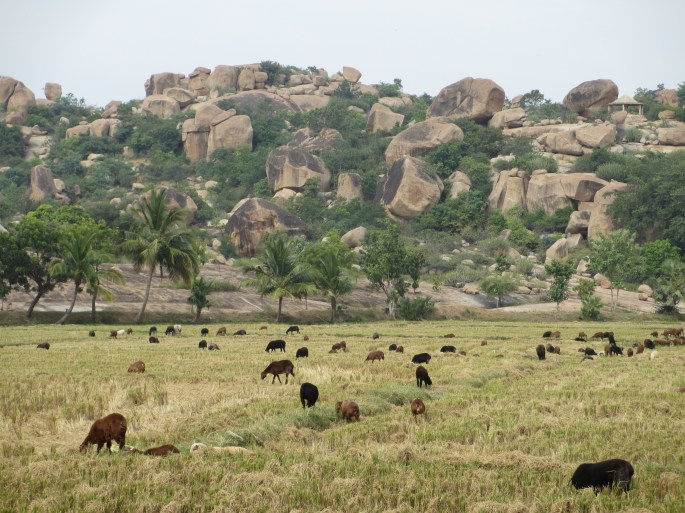
With a nice long time frame to play with on a trip to southern India, I decided this was a destination that was going to be worth the effort. The descriptions were tantalising – forlorn ruins…an unearthly landscape…charismatic…unreal and bewitching. The UNESCO World Heritage Site of Hampi in Karnataka state was definitely beckoning.
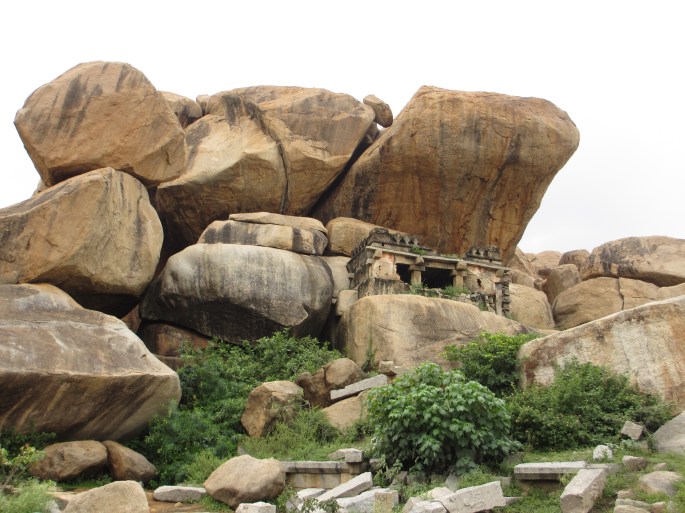
To be totally truthful, it is possible to get to Hampi in less than 12 hours. But if you choose not to fly, with still several more hours of travel by bus, or, like me do not want to double back on the itinerary, Hampi requires some commitment.
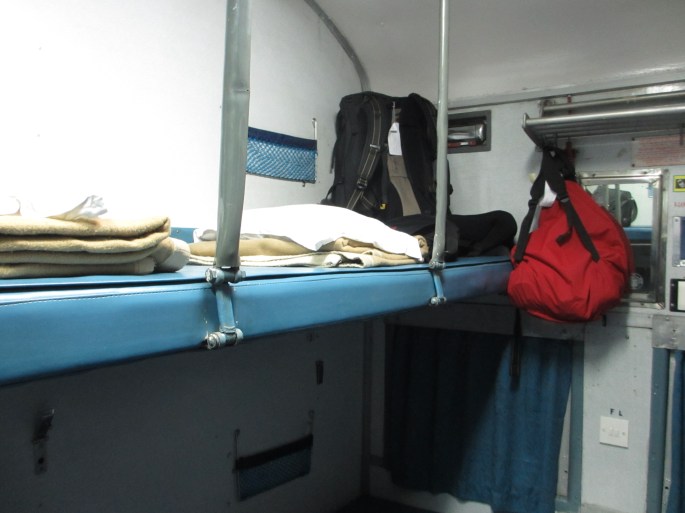
Overnight on a flat bed in the top deck of a bus is possibly something I will only ever do once per visit to India – a sleepless night is guaranteed. Your face is is in close proximity to the roof of the bus, baggage jams your feet preventing a fully stretched out position; the journey is punctuated by blaring horns, rough roads and the driver careens at what feels like a suicidal rate around every corner. A catapult from bed across the body of the bus seems inevitable .
So that only left overnight on the train as an option. Comes with its own set of challenges but doing a train journey in India is not to be missed.

Surely an auspicious welcome to Hampi to meet Lakshmi the sacred elephant. She was completing an early morning river bathe before heading back to the temple to fulfil her blessing duties.
This is an ancient place. A Portuguese traveller recorded river crossings in coracles here 500 years ago. “…People cross to this place by boats which are round like baskets.Inside they are made of cane, and outside are covered with leather; they are able to carry fifteen or twenty persons, and even horses and oxen can cross in them if necessary..”
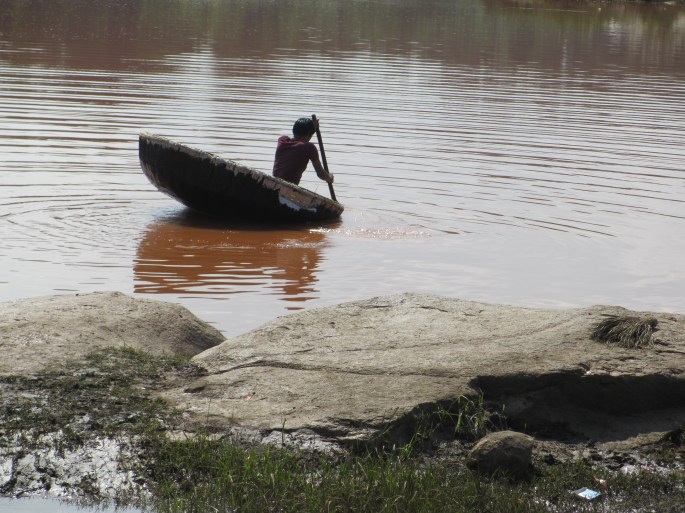
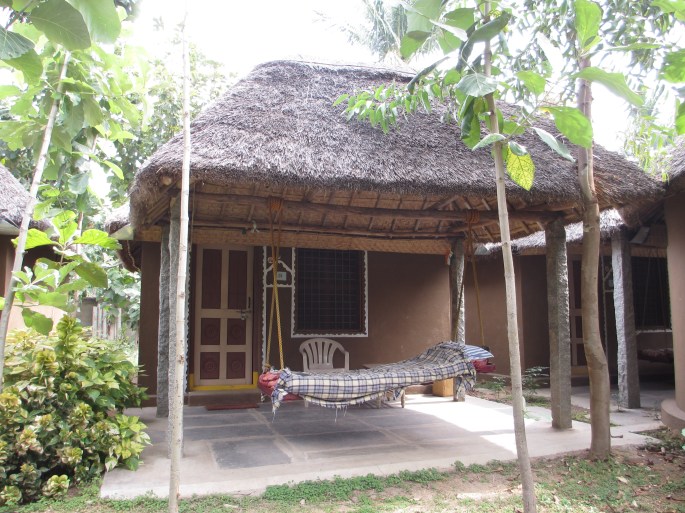
The coracles are still here but we chose a slightly more conventional ferry to cross to our cute thatched cottage. Staying on the other side means a ferry dependence but for me at least, the other side is an infinitely more attractive option.

The magnificent 15th century Elephant Stable was one of my favourites. Definitely fit for the state elephants. Eleven domed chambers (cover photo) are interconnected and are palatial and grand in their own right..
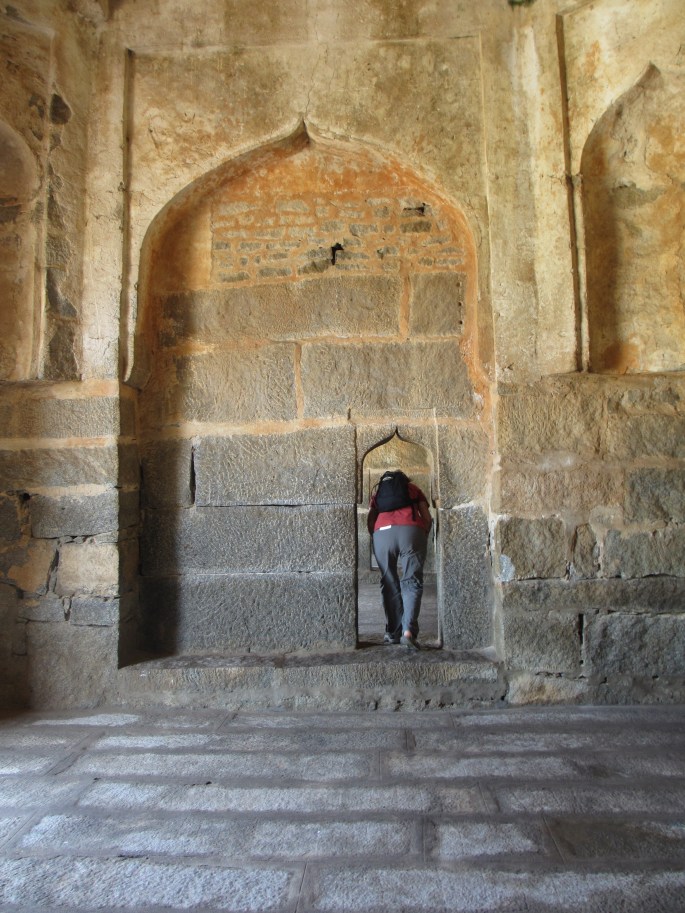

So nice to have plenty of time to just relax and enjoy Hampi at leisure. There is much to see in this 25 sq. km site and the surrounding countryside.
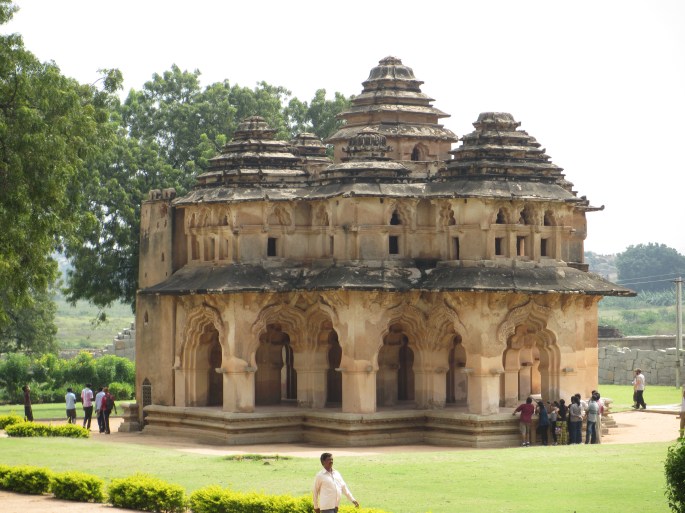
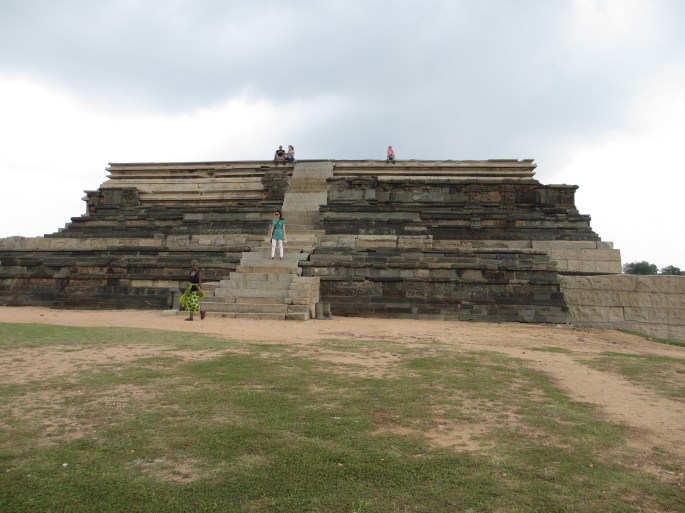

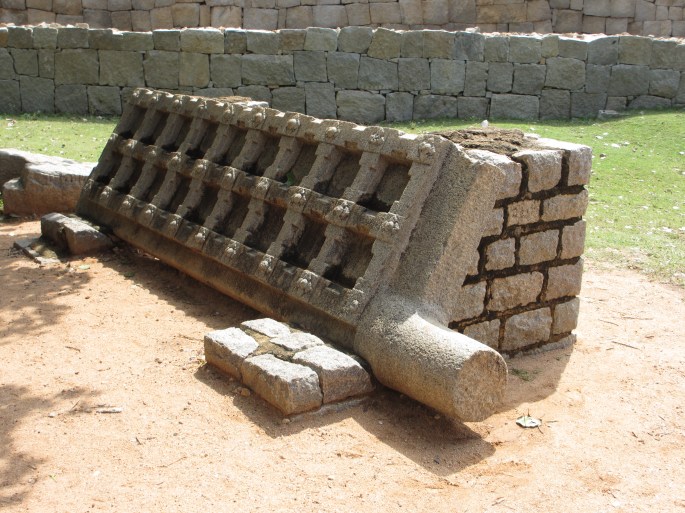
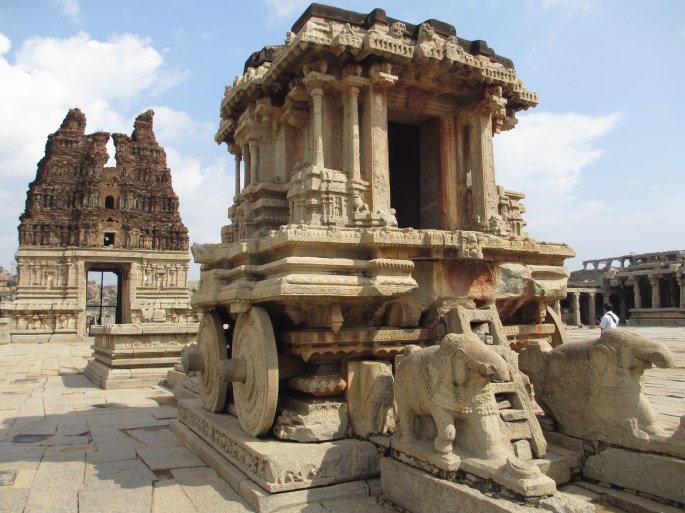
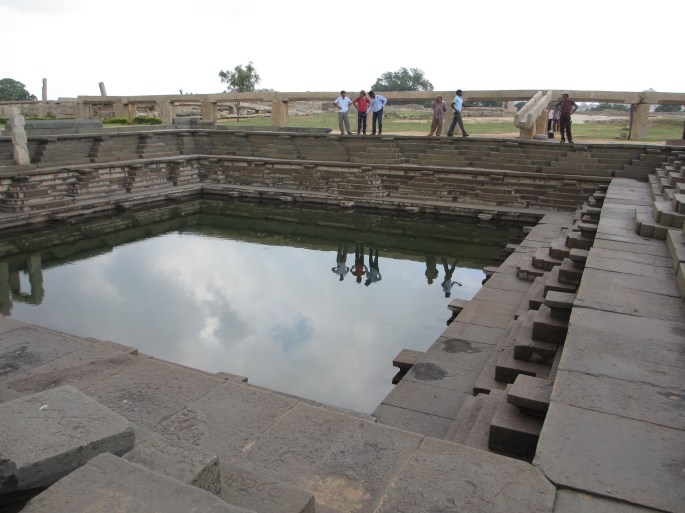
Not only is the architecture from this great Hindu Kingdom stunning, the sophistication of the stone water channels crisscrossing the site is impressive.

An Ayurvedic massage seemed like a sensible diversion on the day of a torrential downpour. It was impossible to do anything but wade to one of the selection of venues along the dirt track that passed for Main Street. Beautifully trained Kerala specialists wove their magic. Time stretched and the mind blissed, blotting out the dingy confines of the simple structure and the rain pounding down outside.
Climbing 570 steps to the top of the whitewashed Hanuman temple site is not ideal in 30 degree C (or more) temperatures. The steps relentlessly zigzag up the hill that is believed to be the birthplace of Hanuman, the monkey warrior god. The sense of achievement at reaching the top of the steep climb is high, only matched by the stunning views.

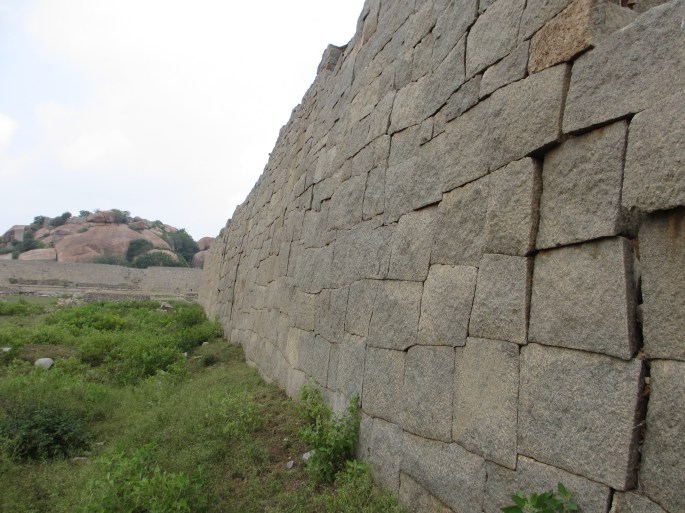
There is a suggestion that Hampi and Machu Picchu will establish a link as sister heritage sites. Great idea as how much better known is the amazing Inca site in Peru? This is a Hampi stone wall. Not as fine or impressive as those in Machu Picchu but there is plenty in Hampi to captivate anyone who wants to see more of the fabulous reminders of civilisations past.
 Lorna On The Loose