We were sad to leave our lovely Casa in Playa Larga but it is nice to be back in Havana after two weeks on the road. Maura greets us like long lost members of the family.
We head out on the now familiar streets where the vibrancy and energy, the smells and the sounds of the city tantalise our senses. People rattle small musical instruments to draw our attention to their tiny shop, otherwise missed in the mass of other sights crowding our vision.
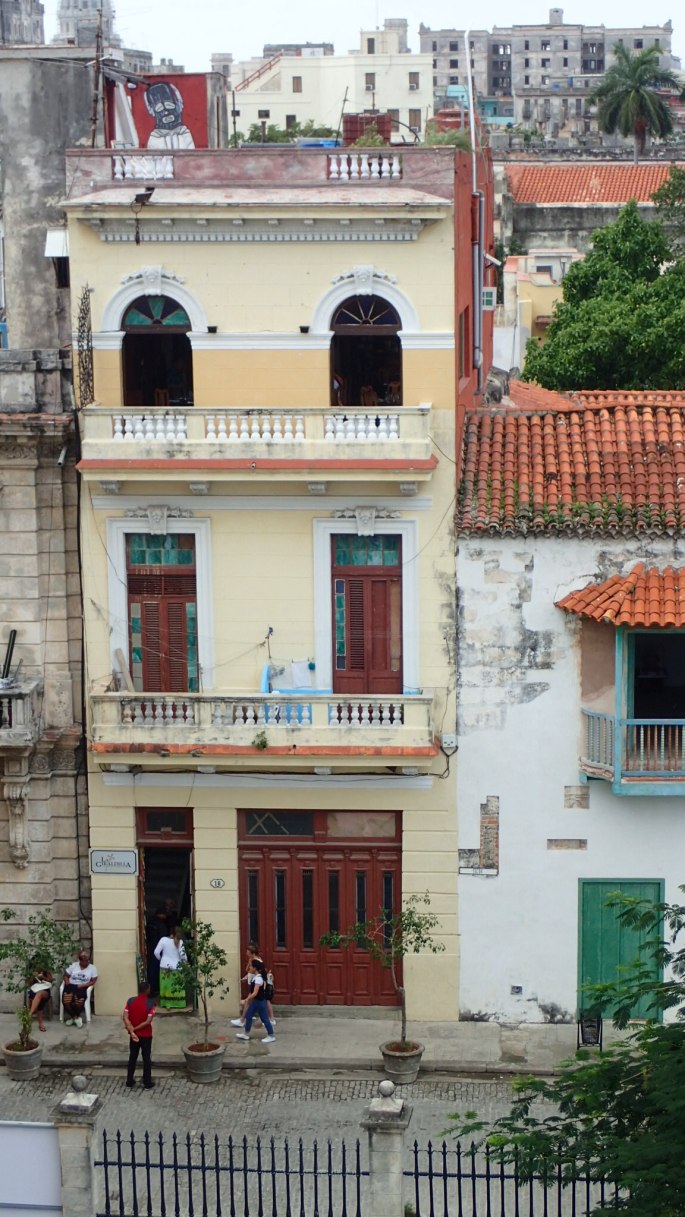
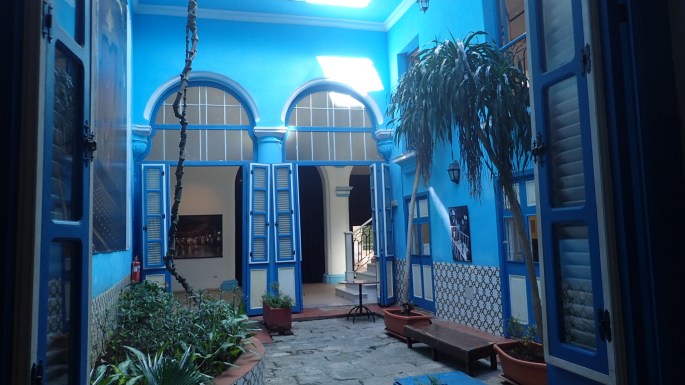
A beautiful old building housing a gallery is worth a look. Attendants wave us in but soon make a feeble attempt at guiding us round the art in hopes of a tip.
A young man claiming to be a Canadian Punjabi attempts to befriend us as we sip our generous limonade frappes. His English is perfect and his spiel is beguiling but I am sure it is a scam of some kind so we deter him from joining us. I had seen a man claiming to be a Mexican try the same thing with two other foreign women on our first stay in Havana.
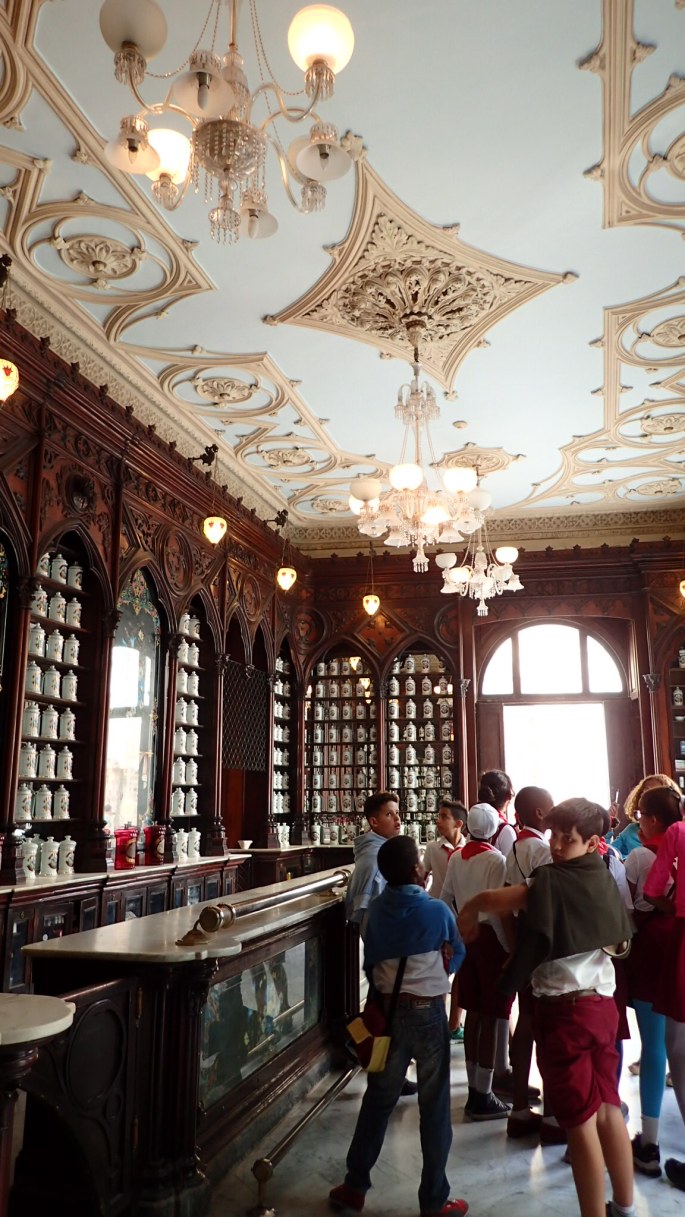
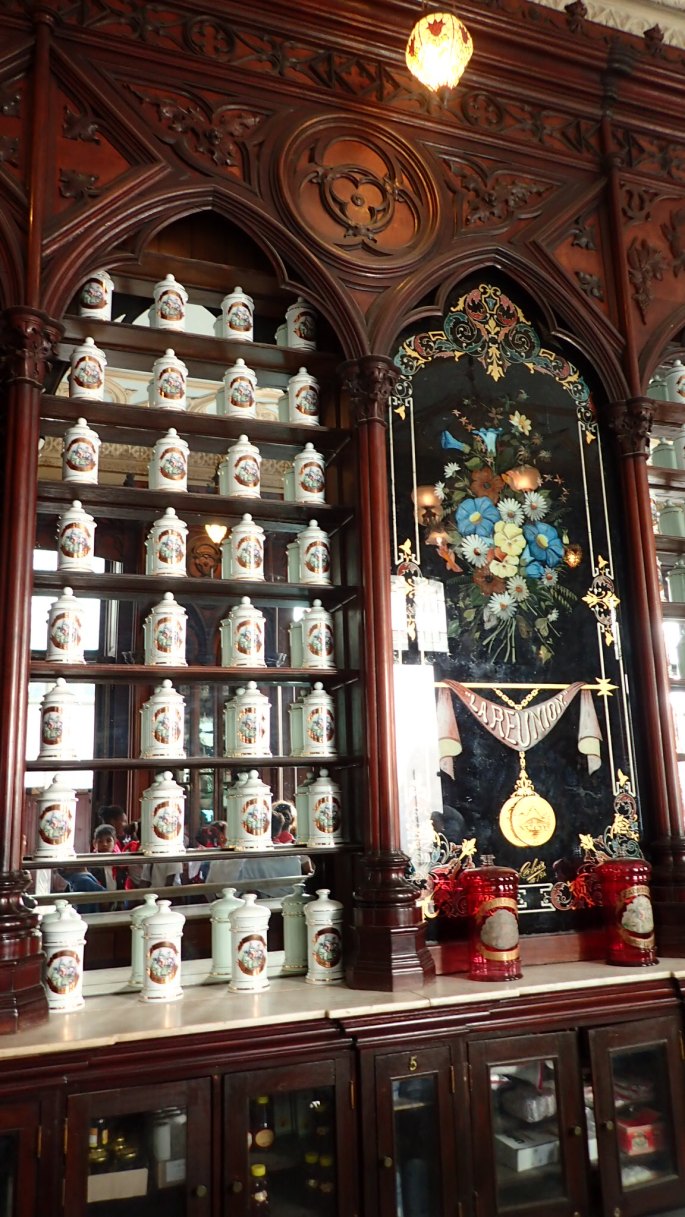
Beautiful old pharmacy, Havana
The local young men trying to befriend and help you are much easier to spot but it does require persistent head down walking on to deter them. Do not engage, is my catch phrase for these occasions.
We meet so many wonderful people though, generous, helpful, happy in themselves.
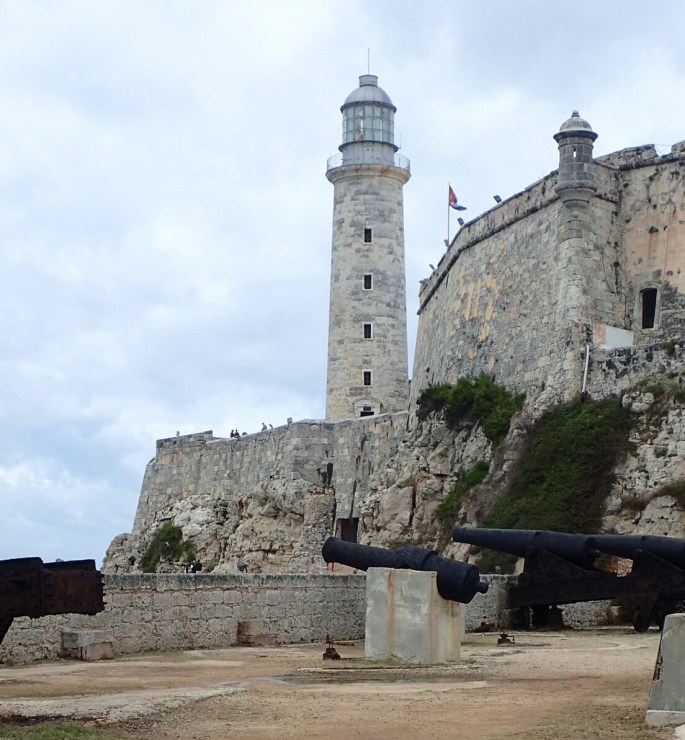
El Morro
Our last full day is finally the excursion to El Morro, the massive fort on the other side of the channel entrance to Havana Harbour. Built in the 16th century to try to protect Havana from pirates not to mention the French and the English invaders.
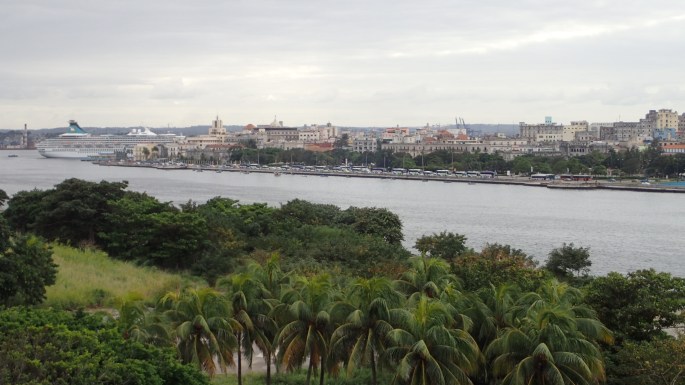
Havana skyline from El Morro
We walk in the footsteps of so many in this long history of Havana. Those who tried to protect the city and where fierce battles were engaged, but also where many more friendly visitors came to visit the massive fort and to admire the Havana skyline from the other side over the centuries.
El Morro from Havana
In a bookshop in tiny Remedios, I found a book called Travelers’ Tales of Old Cuba. Fascinating letters and diary entries the first being from 1678. There are many descriptions from travelers in the 19th century most of whom include their visit to El Morro.
Cuba has a rich and often bloodthirsty history. The original trusting inhabitants were wiped out. It was the haunt of pirates and the location of a slave trade triggered mainly for the sugar plantations.
The English finally took El Morro from the land side in tne 18th century after failing to breach it from the sea. There is a very good history of that bloody battle located at El Morro itself.
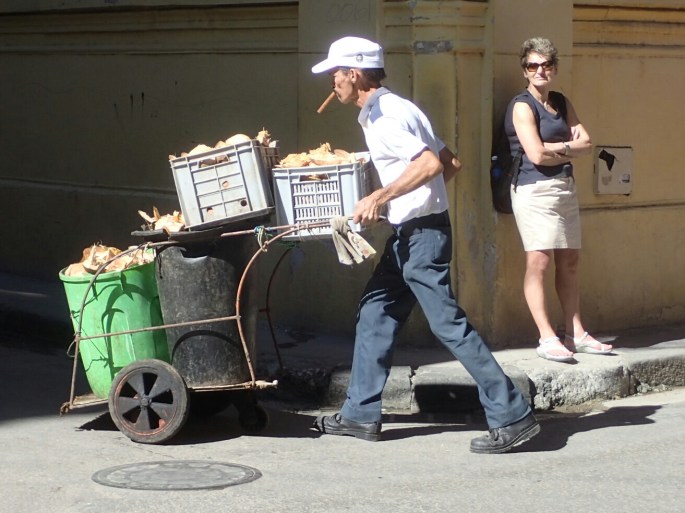
There are so many memorable things about Havana and Cuba. At dawn, men call out in the street, sometimes with a whistle in the city to attract attention, selling fresh bread and other produce. The jolt to your senses as the cannon belts out its regular 9pm round, so loud from where we are staying in Havana Vieja.
Patience is the word here for so many things. I love the road courtesy, seeing no evidence whatsoever of road rage. A horse and cart or a bicycle taxi blocking the way is no problem at all, no matter how long it takes to pass safely.
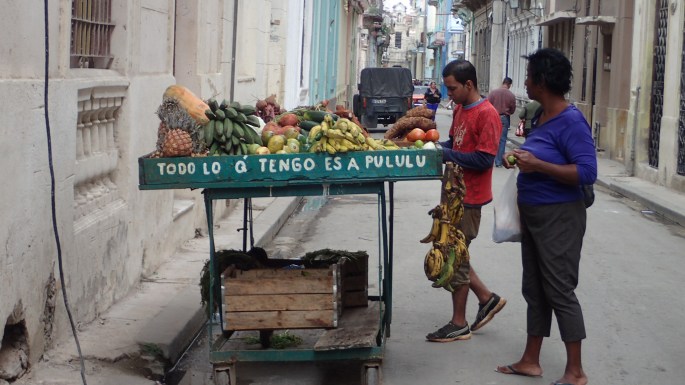
Life has freed up in the last 7 years or so and in general many people have a little more than they did. However it is expensive and still hard to get many things. Absolutely anything could be repaired on the street by someone in Havana is my memory from 10 years ago. Now it is rarer to see a repair man on a pavement stall.
Street repairs
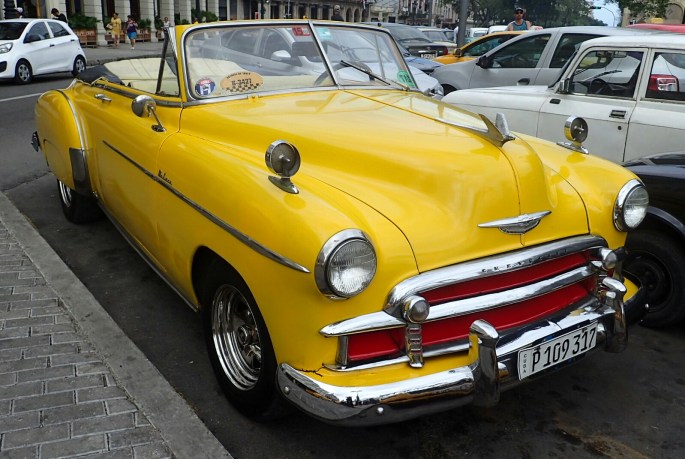
We met Antonio working one of his three jobs as a carpark attendant who was struggling to make ends meet. Another lovely man, a Doctor, waiting to collect tourists with his beautiful 1951 classic car, shared a little about his life. No matter your occupation, everyone is paid the same, so any connection you can make with the tourist dollar will help to make life easier.
The breeze off the Atlantic Ocean is brisk but pleasant in the warm night air as we take our first evening stroll along the Malecon. We are in Havana.
A warm introduction to our home for 6 nights. Si, we would like a Cuba Libre. How pleasant sittting out on the 2nd floor balcony with our Casa host, Maura, sipping drinks and enjoying a lively conversation in broken Spanish and not bad English from her. We talk about everything from sharks to life in Cuba.
After barely any food all day, the Cuba Libre starts to make my head swim so we head out for a meal about 9pm.
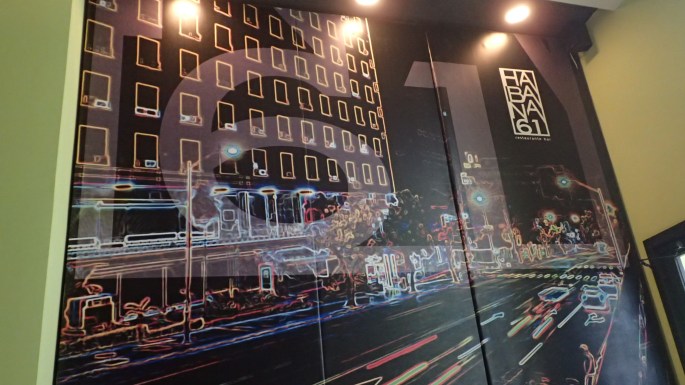
Wow! Cuba has changed in the 10 years since I was last here. The restaurant Maura has suggested is totally trendy. Habana 61 sits on a little cobbled street a few minutes walk away in our neighbourhood of Old Havana or Habana Vieja. The decor, the staff, the food – none of it would look out of place in the latest Sydney venue. The only difference – it is at a fraction of the price.
Habana 61 feels a bit special seeing as we live right by Habana in Mackay.
In the main tourist area, home to the larger hotels, prices could be twice the price and more of the restaurants close to our lovely Casa. Local food would be vastly less expensive again but we are enjoying this really top quality food for a few days.
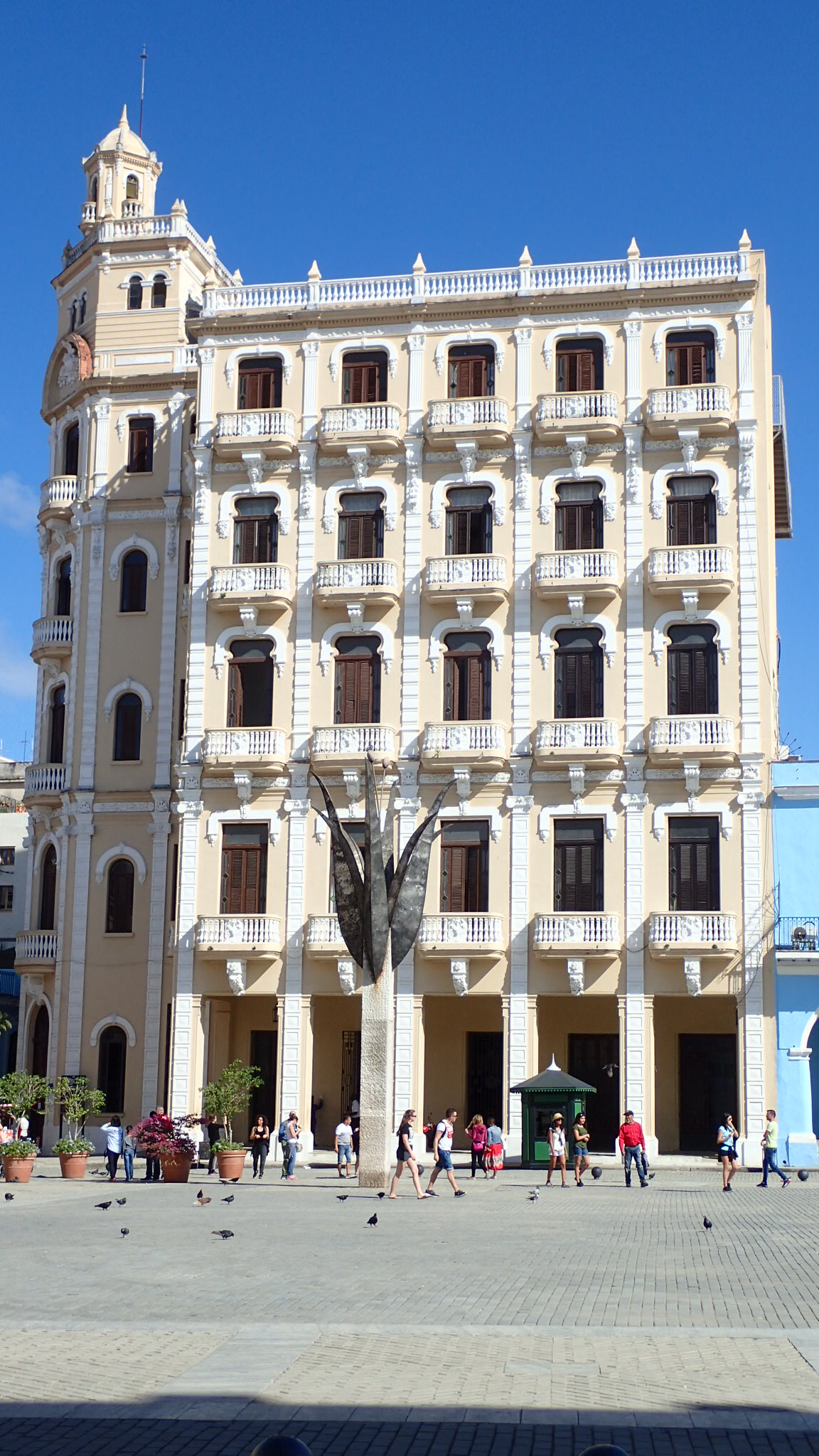
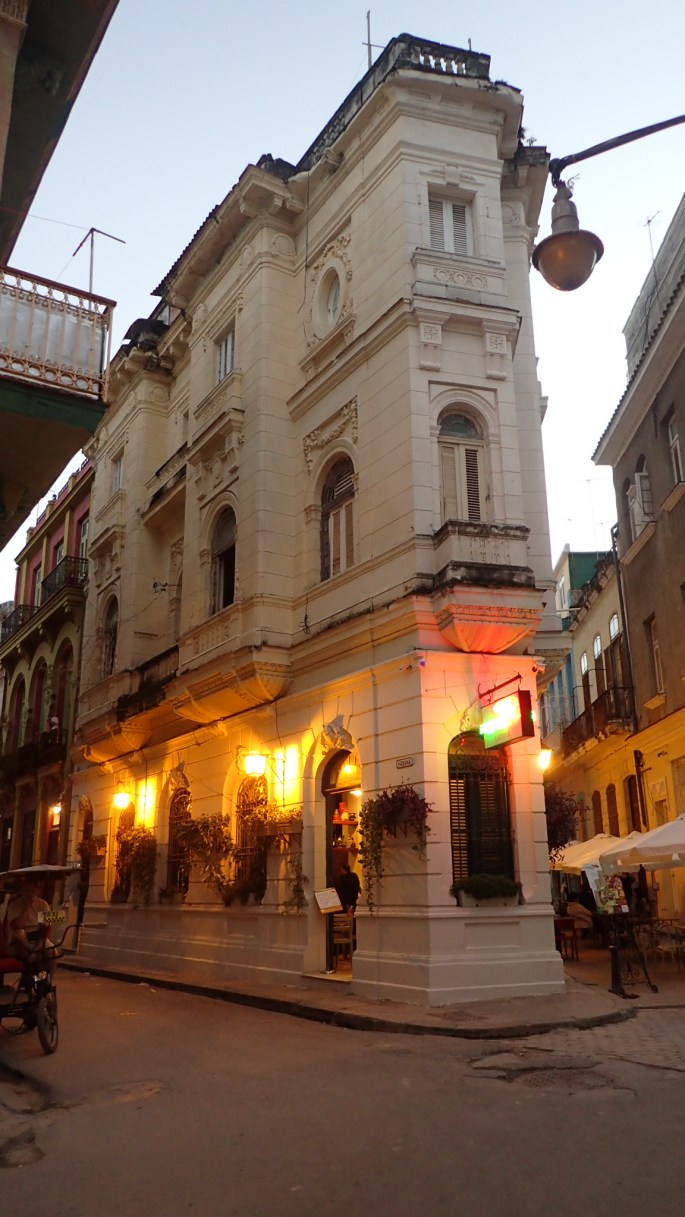
Walking the streets of old Havana is an architectural pleasure. No work has been done on many buildings since the revolution. However a surprising amount has been done. Change is under way in Havana. Buildings have been cleaned and restored, others demolished to make way for new hotels, occasionally with what was once a fabulous facade retained. Clearly it will look magnificent if restored to its original glory. Some of the newly cleaned buildings have not had their decorative features restored. The colours and other features that can still be vaguely observed in the old, crumbling untouched buildings are missing, rendering a more stark structure that has lost that fabulous grandeur of once what was.
This place would have looked mind blowingly amazing in the 1950’s and prior decades.
5 Corners, site of a popular restaurant
Los Nardos opposite the Capitolio provides a memorable lunch experience. We share an enormous plate of meats grilled Cuban style with rice, black beans and a plate of salad vegetables in a very atmospheric restaurant. Two fabulous operatic tenor voices resonate throughout the high ceilinged room adding to the cultural experience and thoroughly enchanting the entire restaurant.
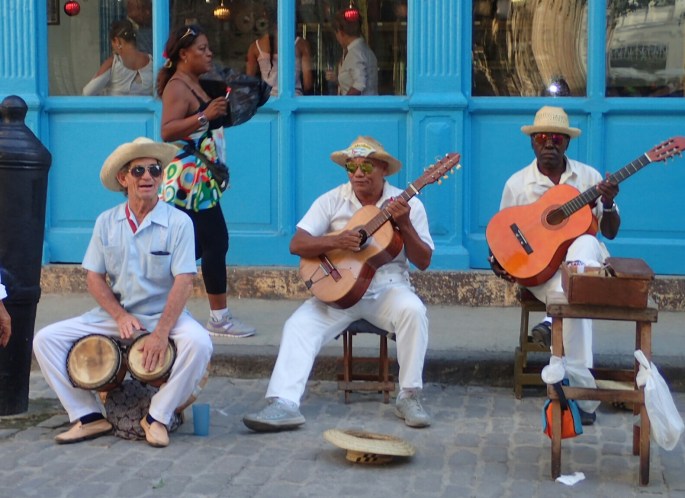
A bride is led across the cobbled Plaza to the Cathedral. Men who drive fabulous old American cars offer us a taxi service. At the other end of the scale, we could opt for a horse and cart, or a ride in a small buggy pulled along by a bicycle, a bicitaxi. Women dressed in traditional style brandishing giant cigars tempt the tourist cameras, musicians play lively Latin music – all in search of the tourist dollar on the promise of an exotic photo to take home.
We prefer to walk and observe. The Hemingway bar is teeny, tiny, and packed with maybe only a dozen people trying to drink a presumably outrageously expensive cocktail, musicians crammed into one corner. We squeeze in and then move back out again into the narrow cobbled street.
Casa Victor Hugo is a beautiful old building housing a photographic exhibition of the Paris Dance company.
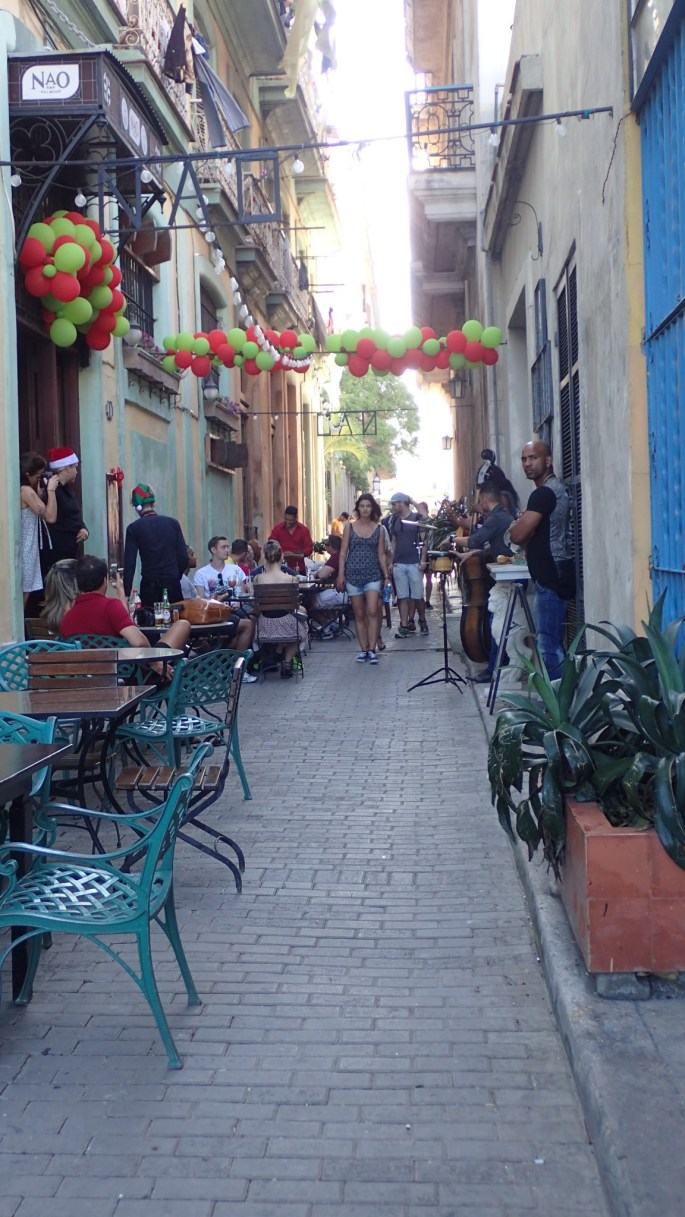
Our little corner of old Havana seems to have many restaurants and bars. An evening stroll to choose where to eat on a balmy evening is a people watching opportunity. A brief sprinkle of tropical rain is not enough to drive the diners away from their tables set out on the cobble stones.
We meet a Welsh guy who like us, has spent quite a bit of his day at the bank. Our experience, unlike his, was quite straight forward, just time consuming. His card was cancelled and with minimal cash, he was very lucky to be able to talk to his bank, at a cost of over £100, and get it restored.
Step one in our bank saga, wait for the ticket issuing operative to return from a break to her desk just inside the door. Tell me what you want, she asks in Spanish to ensure we get the correct ticket.
Ticket in hand, we join the waiting crowd.
Two people are not allowed to attend the counter at the same time. Kerri’s turn to change money so it becomes a Spanish language test as I am forced to wait 3 paces back. The teller has to relent at one point and allows me to briefly approach, then return to my spot.
One of the most fascinating parts of Havana street life is watching the giant American cars that ply the streets. Many are beautifully chromed up and lovingly cared for. Others look dull and dinged, still waiting on their owners to presumably be able to afford to render a lot more attention. Packard, Chrysler, Ford, Chevrolet, Dodge … and many more, all looking like they have rolled off a Hollywood film set.
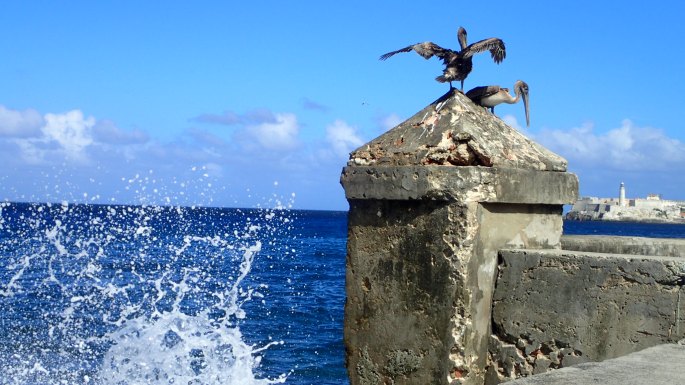
Havana Malecon is a must.
Waves crash against the retaining wall of the Malecon, splashing on to passers by. It’s a fishing spot, a place for lovers and anyone who wants to stroll.
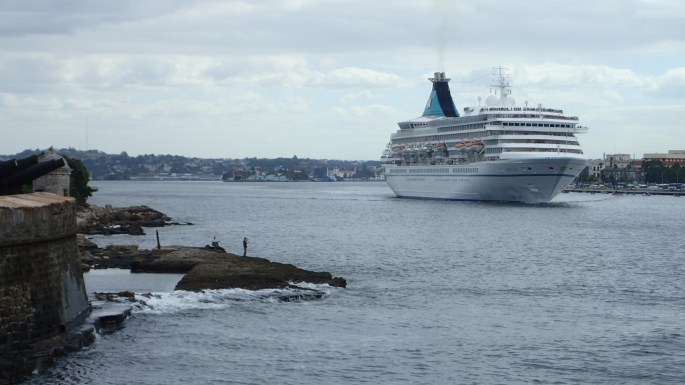
Enormous cruise ships slip almost noiselessly along the picturesque channel to the harbour, literally tying up right on the street. Looks like you could just jump into the facing building.
The channel into Havana Harbour is so beautiful
Equally beautiful by night, the sound of live music draws us to an outdoor restaurant on the Malecon where members of the band are happy to salsa with willing patrons.
The Cuban Art Museum stood out like a glistening jewel in its surrounds 10 years ago. Now it looks a little more jaded and blends in with the surrounds. The art work inside is still just as interesting though.
Mojitos, just one of the popular Cuban rum cocktails
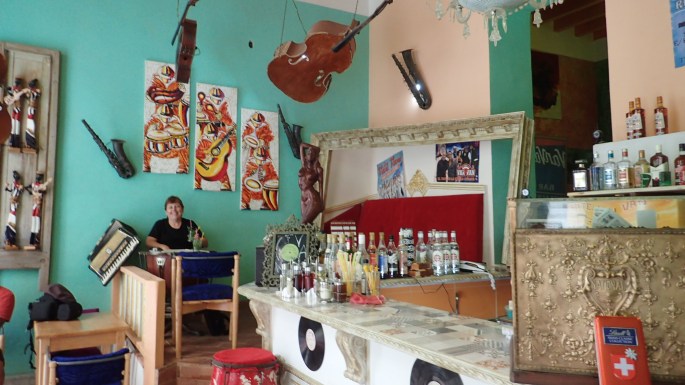
We meet some Australians who tell us about restaurant Van Van. Tapas and a A$2.70 Mojito that could put you on your ear in a venue obviously dedicated to music. We are holding out for a Christmas Eve feast at our Casa but will return one night for the full experience.
Christmas breakfast buffet. Happy restaurant owner as people crowd in.
Dinner with the family on Christmas Eve is a delight. Food is abundant and delicious. Alcohol is even more abundant. Mojitos, red wine, beer, pineapple liqueur, coconut liqueur, several types of Cuban rum or Ron as it is here. After all that, a little salsa is inevitable.
The young man from Baracoa cuts a mean dance step as he waits for his his Italian girlfriend to fly in Christmas Eve
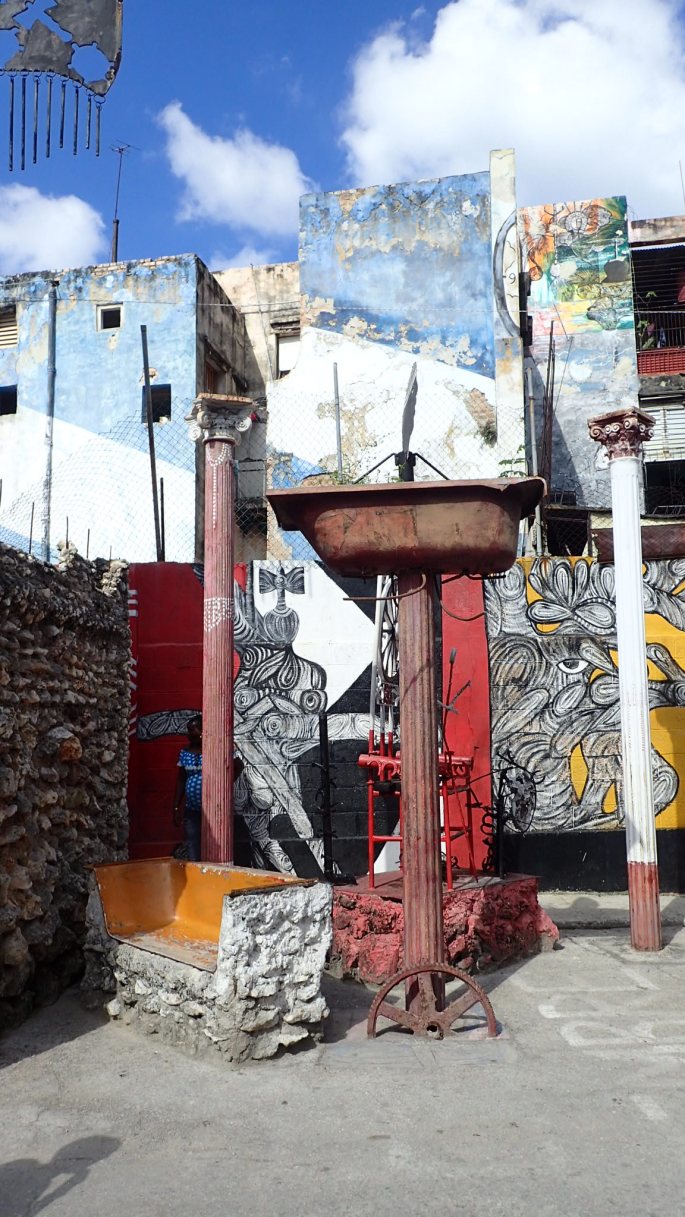
Sunday is when the rhumba drums come out in the African art street. The tiny street is worth a visit any day of the week just to absorb the amazing art. The Sunday action starts around noon, so it’s good to get there a little earlier to get a look around as the crowds build phenomenally. Drinks are not outrageously priced which makes it easy to sit and people watch.
We detour on the walk back to take in Chinatown. Precious few Chinese around, but there are some restaurants and evidence of what was before socialism scared the enterprising Chinese out of the country.
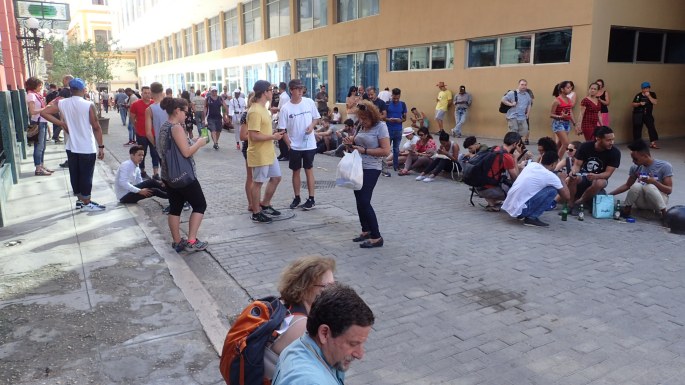
WiFi Hotspot Havana. Not free, not great.
After WiFi on tap in South America, the system here is largely unchanged over the past 10 years except you can use your own phone instead of a terminal. It’s a bitter shock for tourists who arrive expecting just to be able to do their research and book ahead as they go along. The internet system involves firstly buying a card, available only in a very limited number of places. The card has a login and a password valid for a set period of time. Slow is the key word and don’t count on being able to do anything complex, especially out of Havana where things seemed to me to be a little more difficult.
One of our last excursions is to the Museo de la Revolution. It is a little chaotic and being able to read some Spanish is a big help. My knowledge of the Bay of Pigs incident is not comprehensive, but interesting to read from the Cuban perspective.
Absolutely classic images as you exit to the tanks, other militaria including remains of a US spy plane, is the life size cutout cartoon figures of Battista and three Republican presidents, Reagan plus Bush senior and junior. The adjacent sign is slightly different for each man, but about as blatantly uncomplimentary as you can get. I wonder if mostly Democrats would ever want to visit Cuba anyway. Can someone please let me know what they do for the next US president in due course?
Six days in Havana is definitely a relaxing amount of time and we have 2 more at the end. We feel lucky, many people only have a week or maybe two for their entire trip.



















 Lorna On The Loose