Borders Never Forgotten

The man was unshaven, scruffily dressed and the large bulge in his back pocket was unmistakably a handgun. He was asking in Spanish for our passports – we had just cunningly concealed them under the mattress. The hotel room contained nothing more than a bed really, but it had seemed a good idea at the time. A lanky American with a smallish monkey perched on his shoulder strolled down the spacious corridor past the three of us:  “You’d better give them to him” he drawled, “he’s the chief of police”.

The day had started well. We arrived at the Brazilian border town of Guajará-Mirim after a fabulous journey through the Amazon basin for a few weeks. The first week took us  on a local river boat halfway along the Amazon from Belem at the mouth  over 1,500 kilometres upstream to  ex rubber boom-town Manaus. The river boat was the type where you sling your hammock on the deck and line up at the cookhouse door for meals. Each meal allocation was checked off on the boat ticket in case of greediness. The likelihood I would go back for seconds was zero; I unfailingly passed my meal on to one of the only two other gringos on the boat, it was so inedible.

Drinking water was pulled from the river in the wash of the boat, more or less in line with the toilet outflow (outflow being a generous description of the sanitary arrangements for third class deck travellers). The river water was transferred into a large clay pot, but after a few days we discovered the filter had been removed – it made it too slow for water to drip through. A much smaller river boat took us southwards for another 5 days on the Rio Madeira, the longest tributary of the Amazon, into Porto Velho. From there, it was just a hop and a skip to the Brazil/Bolivian border, which was yet another river, Rio Mamore.
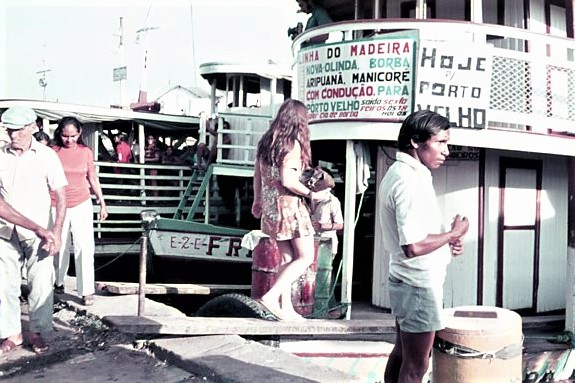
Checking out the boat to Porto Velho
Checking out the boats to Porto Velho, Amazon River, Manaus

For the princely equivalent of 20 cents, we piled into a putt-putt canoe. A combination of the small motor and the racing current took us from Brazil to Bolivia and the small town of Guayara Merin. The only transport in and out of this town was by river and apparently rare flights where the pushiest who got to the head of the crush at the ticket “office” got a ticket on the next flight. No roads in or out of town.

The motorbike taxi lads balanced our packs in front, we got on our respective pillions and roared off from the riverbank into town and to our surprisingly pleasant hotel. So, this is where, under pressure, we had no alternative but to retrieve the passports.

Multiple enquiries along the route for a month or more had each time assured us Australians did not need a visa for Bolivia. Was it one of those Austria/Australia things? The situation felt more than a little sticky when, after inspecting our passports, the gangster like policeman triumphantly advised us that indeed we did need visas. Maybe the look on our faces softened him quickly, but as we later discovered, he also enjoyed the power he had in this town. He transformed into a magnanimous benefactor who suddenly spoke excellent English. He would fix it, he told us.

After much important stamping of documents and signing of forms we became best friends for the 10 days we were there waiting for a plane out of this “wild west” town in the furthest reaches of Bolivia. He even invited us for lunch to celebrate a birthday. Very pleasant, and the reason the American farmer from further along the river had been invited as well (sans monkey) was revealed when he was the one who was left to foot the lunch bill.
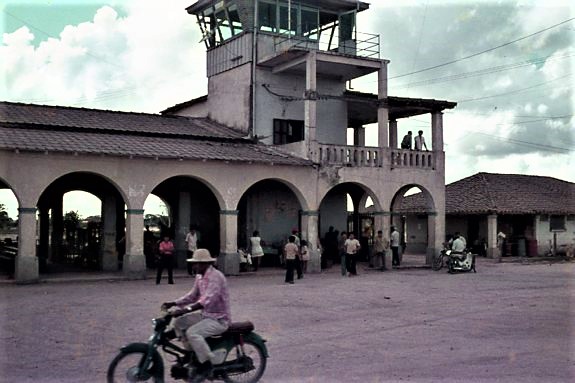
Airport and bike taxi Trinidad Bolivia
Trinidad airport and a motorbike taxi. Trinidad, Bolivia was the “big smoke” destination and next 10 day stop after Guayara Merin before we could fly on to Cochabamba

Bolivian Airways was memorable too. The fuselage was unlined so we sat observing the frame holding us all in place enjoying our half cup of cordial en route from Guayara Merin to Trinidad. As we gratefully left the plane at Trinidad airport, the sight of all the grass caught in the landing gear as it had skittered down the runway was another graphic memory that has never left me.

Over 40 years later when I next crossed the border into Bolivia, I documented my legal entry for posterity. That crossing was much more orthodox, though it did involve literally walking from the Peruvian side over to Bolivia.
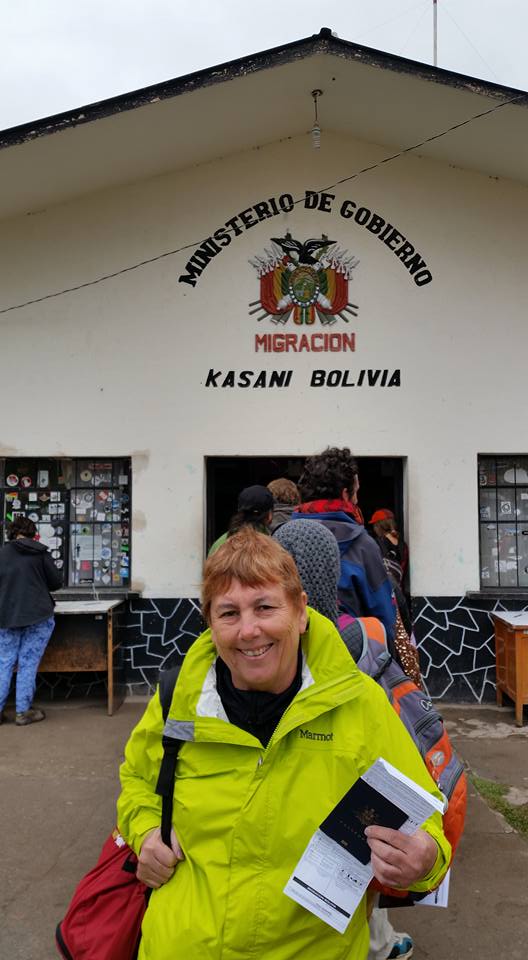
Border crossing Legally into Bolivia 2017
Entering Bolivia with a visa January 2017

Twenty cents had been a pretty cheap price to pay to go from one country to another in border crossing transportation, but there was an even cheaper one in store a couple of years further along in our travels. There are always surprises along the road, especially in pre-internet days.

One memorable surprise that ended well occurred during a long bus journey in far northern Finland. The bus pulled up in the evening at quite a nice hotel totally in the middle of nowhere; not another dwelling or person to be seen. The surprise was that, while we thought this was yet another overnight bus trip, everyone else on the bus was booked into the hotel for the night. The kindly staff took pity on the forlorn Aussie girls and allowed us to spend the night in quite comfy armchairs in the hotel lobby.

This particular border crossing surprise however, was that the bus we thought we were taking from Greece into Turkey did not in fact take us over the border, much less into Turkey. It was cold and wet and walking seemed to be the only option when we got off the bus at the end of the line on the Greek side of the border. Not a solitary soul or vehicle anywhere on the horizon. Again, we were saved by the kindness of a stranger. On this occasion, a farmer on a tractor allowed us to sit in a trailer he was pulling ever so slowly into the first Turkish town across the border. Rain drizzled down all the way but, we had arrived safely and in daylight, for the start of the Turkey leg of the journey.
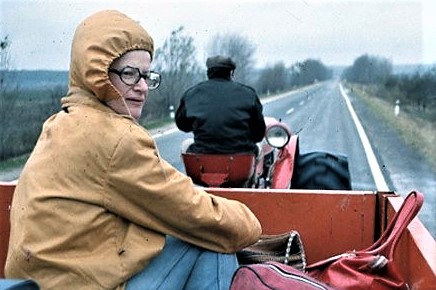
Greece to Turkey 1
A kind Turkish farmer transports us into the first town over the border.

Probably the most spectacular border crossing memory occurred heading out of Ecuador north to Colombia. Again, the bus did not actually cross the border, however this situation was so much more civilised in that taxis did the border run. The deal is for four passengers plus luggage to pile into a medium sized sedan, pay the driver and off we go. Not sure what it is about cockerels in Ecuador, but we had already sat on the street in Quito waiting for the bus with a fellow travelling companion and her feathered friend.

Quito waiting for the bus 1 fix2
Waiting for the bus on a Quito street

Her young fowl however, was but a chick compared to the majestic bird the front seat passenger in our taxi was holding on his lap. We two were crammed in the back seat with a third local, all of us pinned in soundly by luggage that did not fit in the boot. The taxi driver finally deemed it was time to depart and began to manoeuvre gradually out of the parking area jammed with taxis and travellers. This was obviously the moment for rooster man to complete his final travel preparations. He engaged in a very generous throat clearing and a gathering together of the produce of this exercise. The moment was completed by an enormous expulsion out the taxi window. Sadly, the window was closed. No-one said a word as we all watched the voluminous expectoration make its way down the inside of the window. The man and his cockerel looked straight ahead. The gringas in the back seat struggled to maintain decorum to preserve what little dignity rooster man had left while their bellies shook with suppressed laughter that threatened to explode uncontrollably.

Border exchange 1
The most important task at a border post after the Passport check is complete

Cirali, Olympos and the Chimaera, Turkey

Our breakfast waiter is from Turkmenistan so we brush up on some basic Russian. Nice to be able to say Good morning. More importantly, I want my coffe after I have finished eating. Serving tea or coffee immediately is the thing here so I learn the word for “Later” in Russian which is pretty much the lingua franca in this particular establishment, after Turkish.

Autumn leaves are falling where we have just been but here in Cirali the heat is still intense in the second half of September. We have well over two weeks now to take it easy exploring the Turquoise coast and parts of the Mediterranean.
It was hard to find too much detail on getting here from Pamukale but it all fell into place on the day. Our exceptionally helpful hotel guy in Pamukkale dropped us at the dolmus to get back into Denizli. The uphill walk would have been a killer with all our gear. From there, it was a regular bus to Antalya. Back through security at the Antalya bus station to find out how to get to Chirali. “Number 7, pay on the bus” we are told. This smaller bus operates like a local bus and heads south along the coast dropping us at the Cirali turnoff. The dolmus waiting at the junction is full once we get on so off we go on the winding narrow road down the mountain with everyone dropped off at our respective lodgings. A very civilised arrangement.

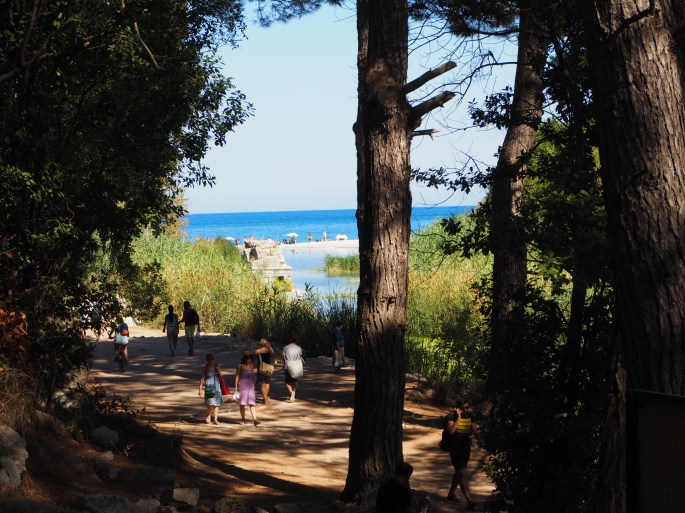
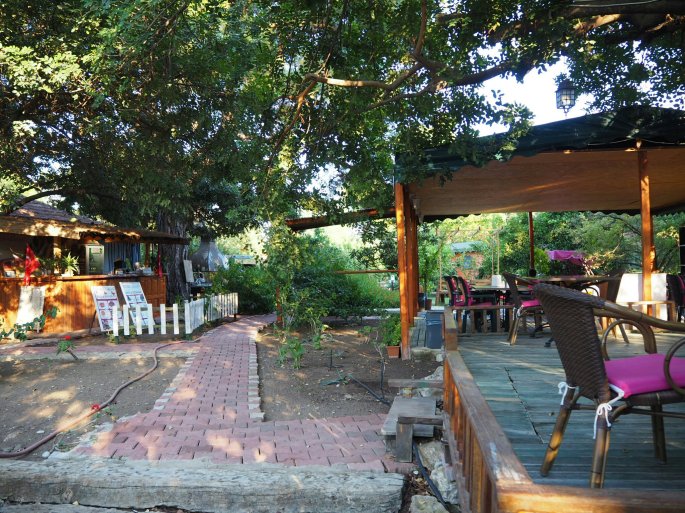
Cirali is a tiny place seemingly devoted entirely to tourists but in a pleasant, relaxed, non obnoxious atmosphere a la Bali perhaps in the 70’s. Not a high rise in sight and Pensions stretch for several kilometres along the beach with the biggest concentration of accommodation and restaurants at the Olympos end. We are about a km or so further on in a garden environment and with a quieter beach.

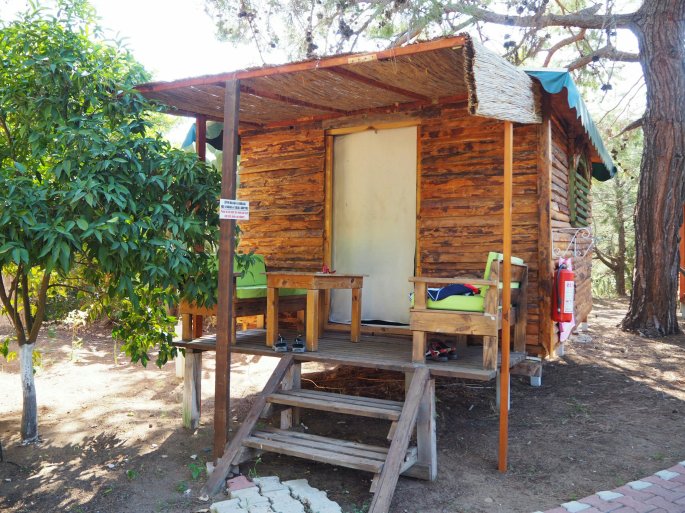
For three nights we glamp it in a tent. Being on a platform with a small balcony and air con makes it just that teeny bit more comfortable, though it is cool enough at night to not have the air con on.

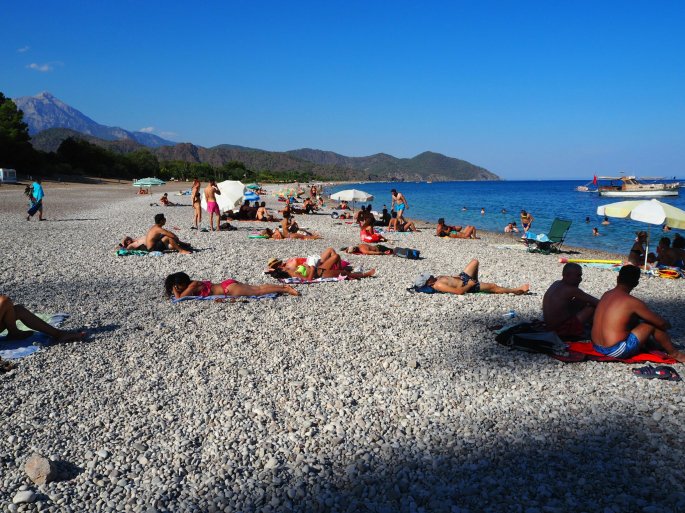
Olympos Beach – on the pebbles
Great spot to park it guys

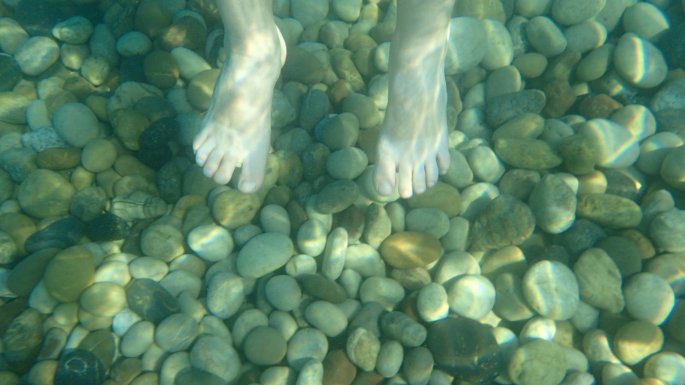
The beach is just a few steps in front of us and the ocean is not only inviting, it is beautiful. Major downside for me are the pebbles. A strip of burning sand is negotiated first, uncomfortable but normal in my world. Much less comfortable is the stretch of annoying tiny burning pebbles followed by a stretch of larger burning pebbles before you reach the water. The drill is, make a beeline for water and then directly back, no relaxing beach strolls. Many people seem to find no problem however lying on their towels on the pebbles.

Chirali Beach – Ouch
We are here to see the chimaera and the ruins of Olympos, each at opposite ends of Cirali. Apparently the number three thing to do according to the guy trying to sell us one was to go on a boat trip to explore the coast. I am sure it would be but we are looking forward to a week on a gulet coming up so will have a rest day instead.

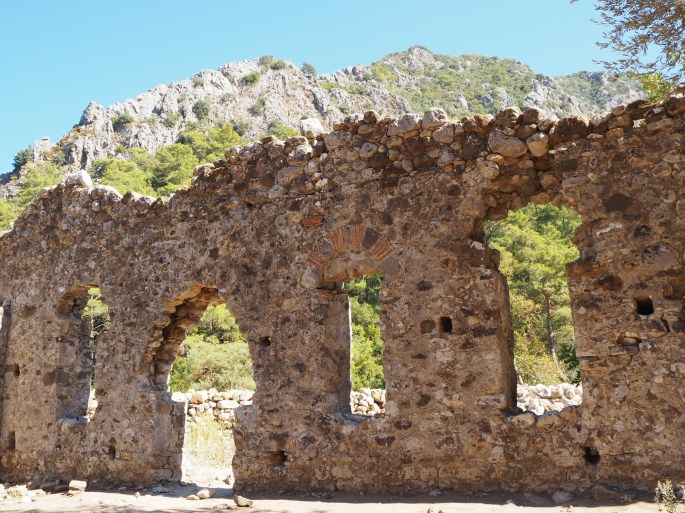
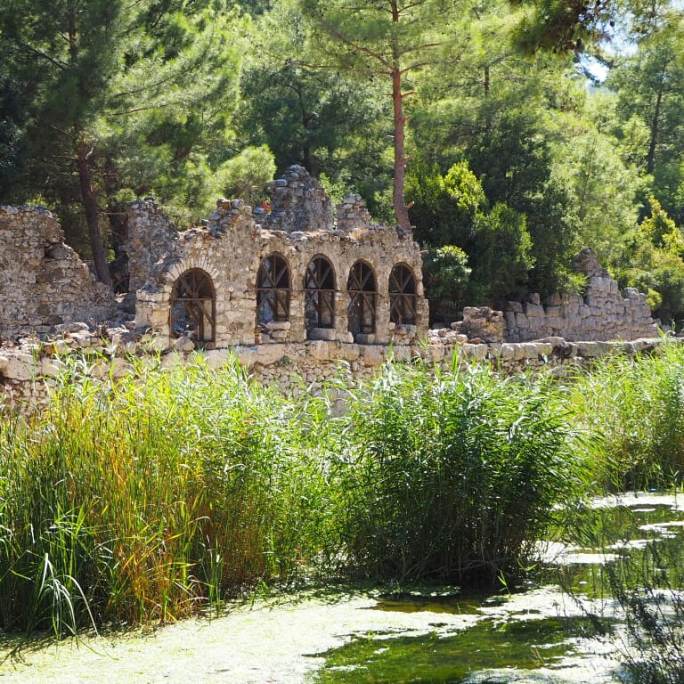
It is an exceptionally hot walk to get to Olympos from Cirali though plenty of shade once there. A modest fee is payable to get onto the site. For those staying at Olympos rather than Cirali, a beach fee is payable with a much more substantial walk all the way through the ruins every day to get to and from the beach.

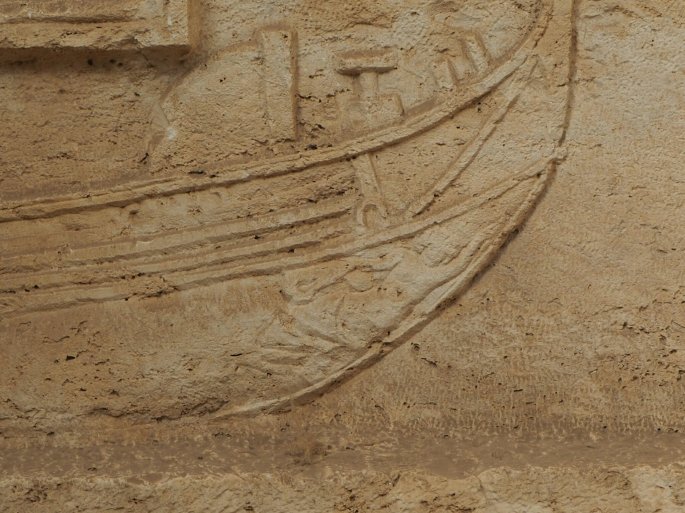
Much less excavation has gone on at Olympos than in Ephesus or Hierapolis but there were some interesting sections and I found the inscription on the sarcophagus of the sea Captain Eudemos to be quite moving.

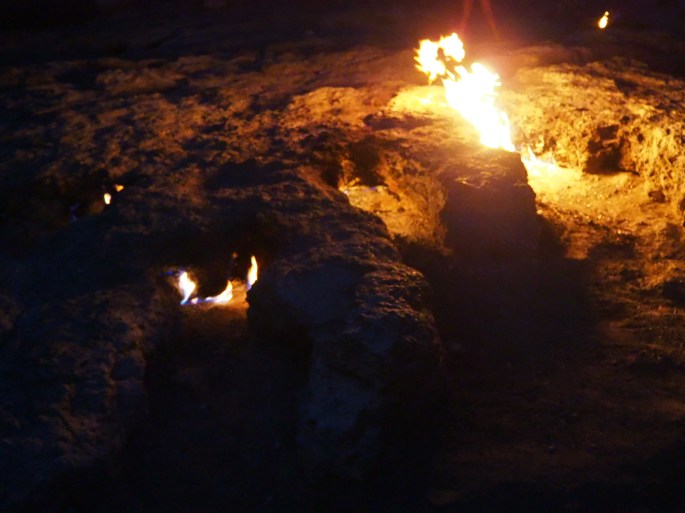
After this exertion in the heat, we pay 10 Turkish Lira each to be driven to the Chimaera for the night experience. That is for the 3.5kms to the base of the mountain and back again after 2 hours to explore. From the dropoff point it is an arduous 20 minute plus climb up the mountain to the place of the flames. Even though we are climbing at 7pm, it is still hot. But worth it in the end to see this spectacle.

It is a popular activity in spite of the climb and quite a crowd gathers to see the flames that spontaneously and mysteriously are blazing out of openings in the rock like some long forgotten barbecue site with an endless gas supply.
Note, going down the mountain in the dark is just as difficult with yet again incredibly deep steps and a basic track to follow.

For a very laid back beachy relax, good food and places of interest, Cirali has been a pleasant interlude.

Footnote on Getting out of Cirali: The dolmus winds back up the side of the mountain to the highway through pretty pine trees and craggy outcrops. The road is exceptionally steep, winding and narrow but in good condition and not at all a cliff hanger. The main road is maybe 750 metres above sea level. At the top, we join fellow travellers sitting on small stools under shade at a tea stand. Part of the deal includes the dolmus driver flagging down the Kas bus for us.

The bus sails past in spite of the drivers frenzied arm waving. He directs us back into the dolmus and we go about a km or so up the road where the bus has stopped. He gives the driver a serve (we assume), then for good measure passes on his advice to the driver going in the other direction back to Antalya.

We’re pretty grateful for the good service.

Pamukkale and Hierapolis, Turkey

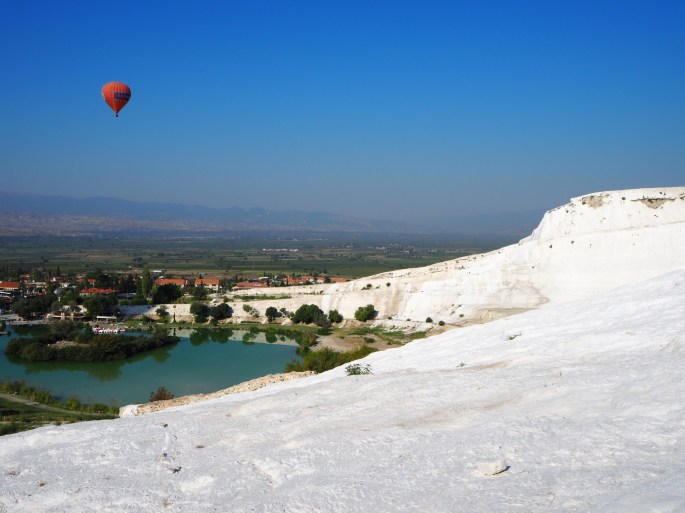
Lavendar, rosemary and occasionally subtle rose perfumes waft from the gardens that link the Pamukkale travertines and the ancient ruins of Hierapolis. It’s another stunning day in Turkey and my fears that this amazing place would be spoilt by masses of people or worse, no water at all, have not materialised.
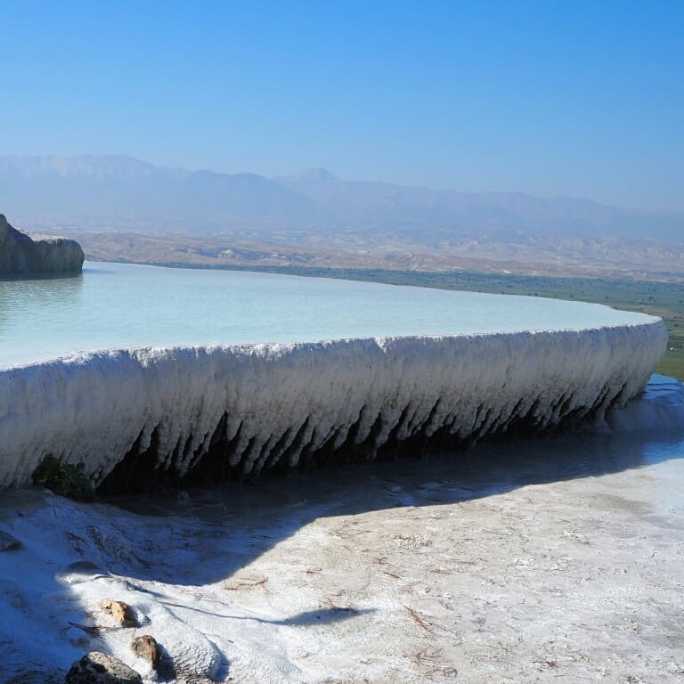
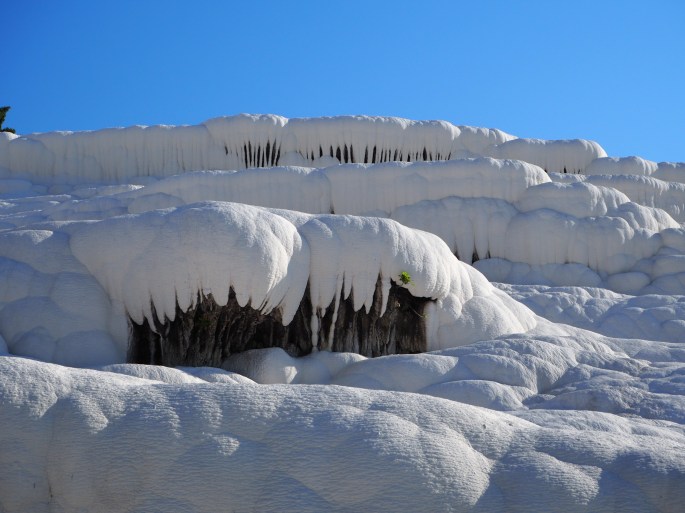
The attraction of Pamukkale is the spectacular platforms, travertines that have been formed from the mineral springs that gush, full of calcium and magnesium, depositing layers over the centuries. They are initially soft and gooey underfoot in the platforms, eventually solidifying into the calcite we all walk on barefoot to protect the site.

Patterns are formed, some just gentle marks, others in sharp ridges that test tender feet. Large pools in platforms extend the length of the site and short walks in either direction away from the main area reveal other pools worth a look. Overflows create stalactyte like formations,

We enter early by the centre gate just a short walk from our hotel thus avoiding the tour groups who enter at higher gates and so are massing at the pools well after we have moved on.
At the top, it’s shoes back on and we move around the boardwalks and gardens that seem only to be inhabited by people not on a schedule – a benefit of allowing a full day to explore the site. Unlike Ephesus, there is plenty of shade to be found, with picnic tables in many places under trees or vine covered small pergolas. It’s over 30degC out in the sun but a cool breeze when you take a break is so pleasant.

Above the travertines are the ruins of Hierapolis, a Roman spa town. This is definitely worth the price of admission, all part of the Pamukkale ticket, a modest A$8 approx and stay as long as you like.
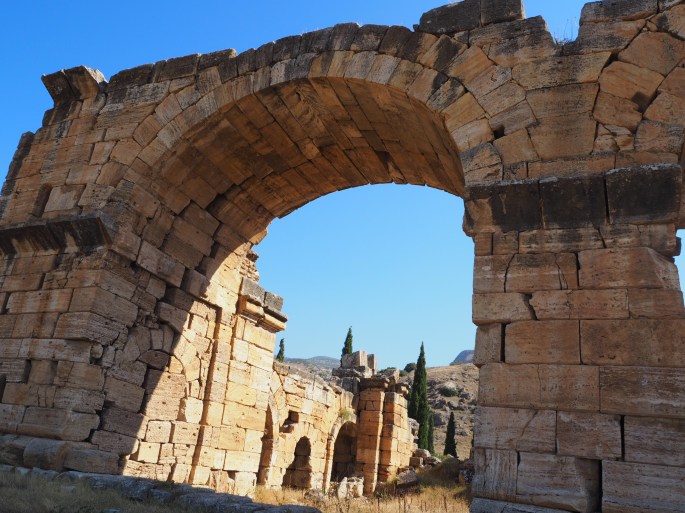
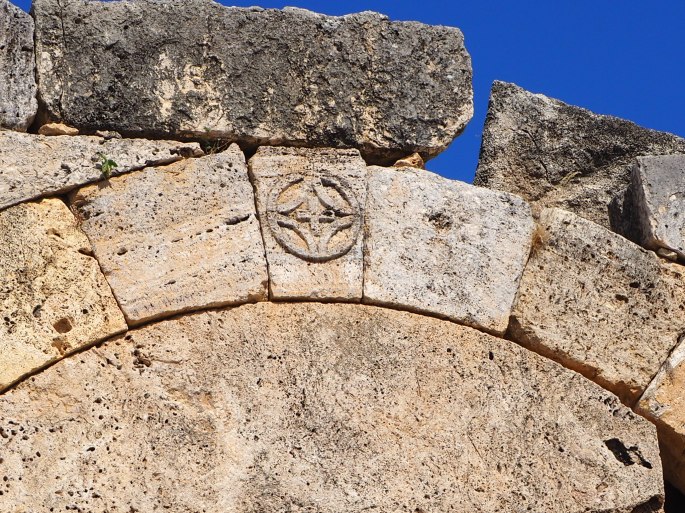
We head to the north gate. Just outside the gates, as in many ancient towns, are the remains of the baths. It was customary to clean up prior to entering the city, an early health management strategy for the citizens. Possibly even more important here as this is a town where the sick came for the cure. The size of the necropolis is testament to the fact that the waters did not always cure.

Through the grand gates and we walk along the generously sized road about 14 metres across. Two metres of calcite was apparently jack hammered away to reveal the original road. Excavations continue in various parts of the site.

Walking along this ancient road into the city, once lined with houses and shops, and having it almost to ourselves is just a bit awesome.

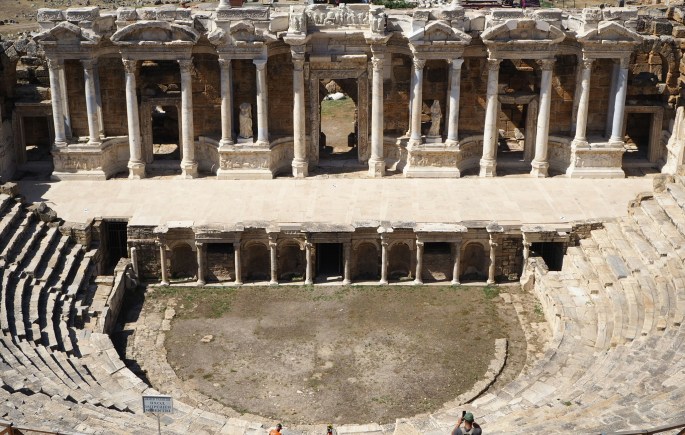
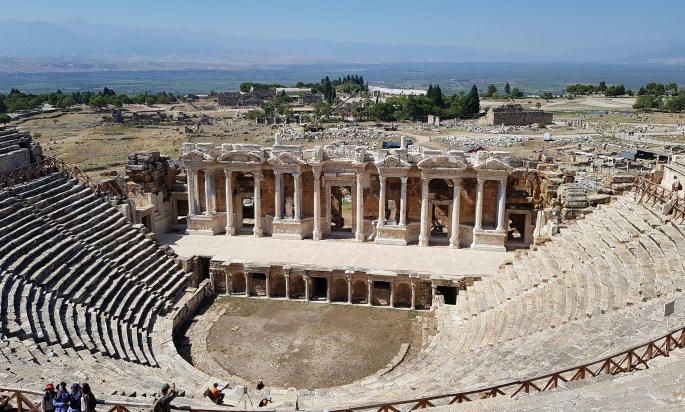
Far and away the most spectacular thing to see in Hierapolis, in my opinion, is the Theatre, about 1800 years old. Not as big as the theatre at Ephesus, but somehow more spectacular because of its completeness. Definitely worth coming here for this alone.

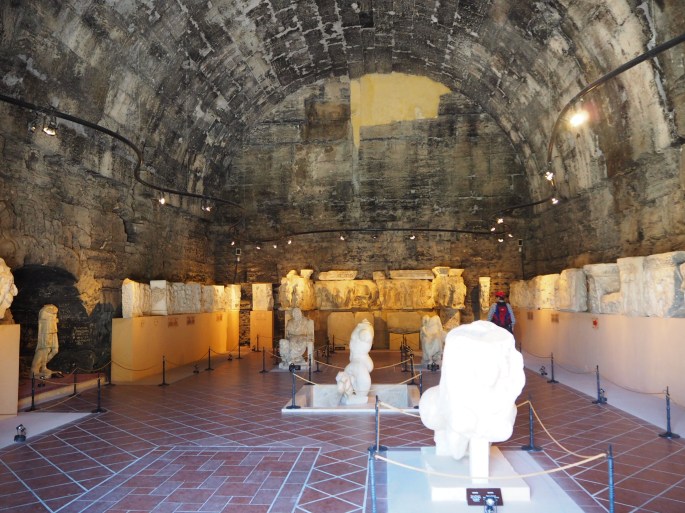
A museum is now housed in what were the town baths, a monumental building. An extra 5Turkish Lira (A$1) to go in but interesting and rather nicely done.

In all we probably spent 5 or 6 hours on the entire site just cruising at a relaxed pace. The benefit of using the entry from Pamukkale town itself is we not only go up through the calcite deposits but get to experience it all over again on the way home. By this time, many people are gathered around the top pools, some in fairly skimpy bathing gear risking the suns rays reflecting off all that water and whiteness of the calcite. It soon thins out again as we progress down.

Top tip, go early and allow plenty of time to explore the entire site, taking a snack and plenty of water to avoid the massive markups on site.
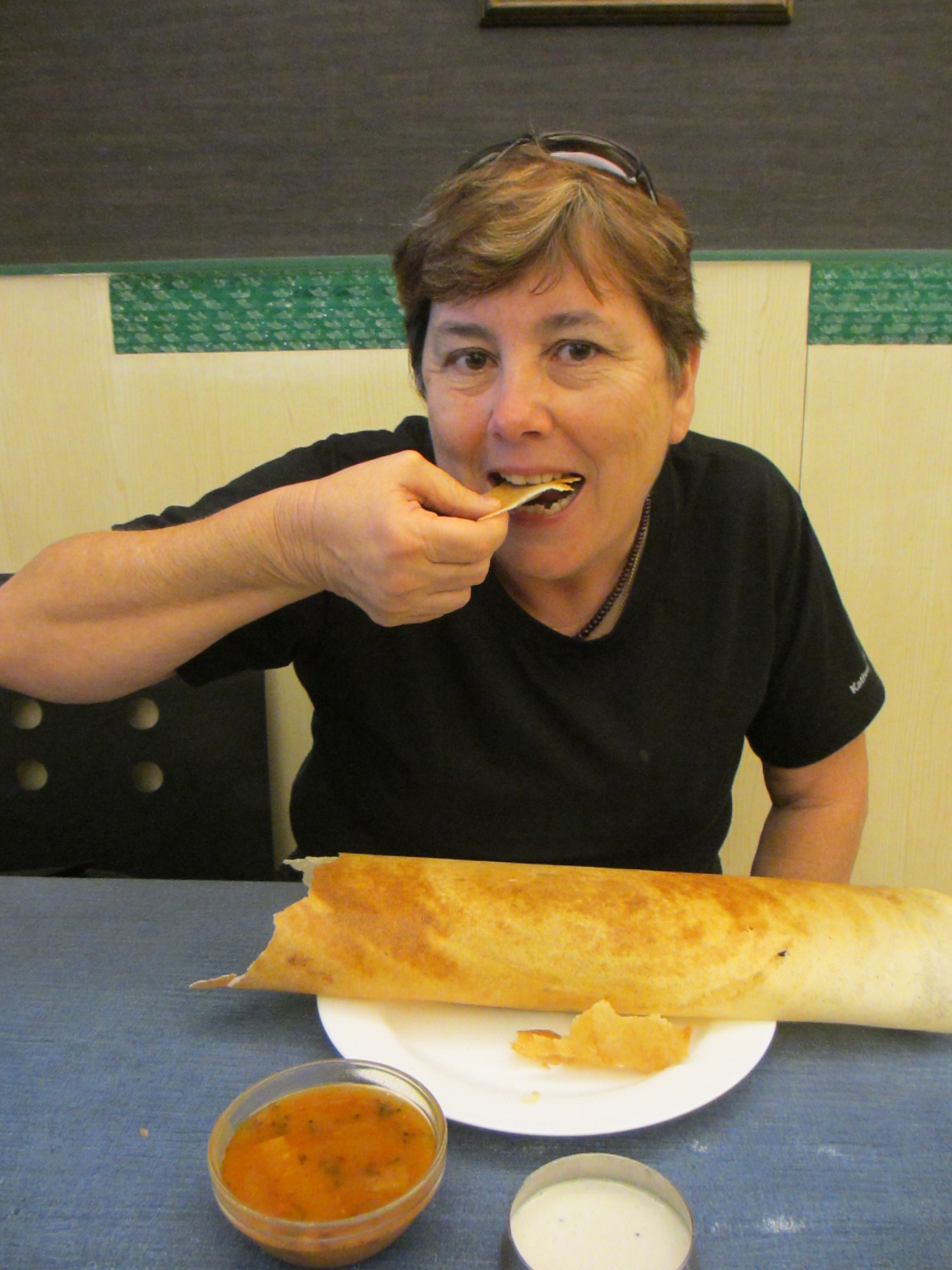
Yet another excellent breakfast at Bellamaritimo. Everywhere in Turkey we have enjoyed breakfasts of the freshest tomato, cucumber, capsicum, black olives, green olives, egg usually in omelet form, turkish sausage, bread galore, pastry or similar sometimes crepes, often yoghurt and this place is the creamiest yet, fresh fruit, sometimes dried apricots and figs as well, coffee, tea – a veritable smorgasbord that can satisfy even a coeliac like me.

A few days in Bursa, Turkey

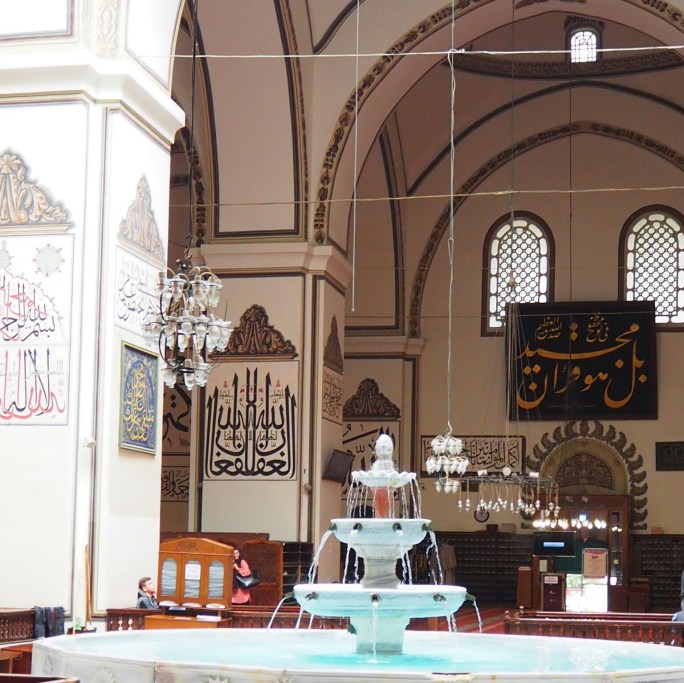
Ulu Cami
The Bursa otogar is enormous, like a stadium. Men are loudly touting imminent destinations for their particular bus company, of which there is an untold number, going to places we have not heard of. Thankfully it is a smoke free zone. A solitary and very tiny ginger kitten is treated kindly as it tiptoes along. Rain falls steadily outside. It’s been three very pleasant days but now is an excellent day to be leaving.
After a week in Istanbul, the choice was to head north east to a village on the Black Sea or south to Bursa nearly 2 hours on the ferry from Yenikapi across the Sea of Marmara. Bursa won mainly on the grounds of logistics, plus we could visit an alternate picturesque village.

Camulikizik, an old Ottoman village, had many glowing reports on the web and is on the UNESCO World Heritage list, usually a winner recommendation.

Have to say it didn’t really do it for me. The welcoming party of masses of stalls and competing sales pitches probably put me off from the beginning. But what is it with all those little tractors littering the streets? That was intriguing.

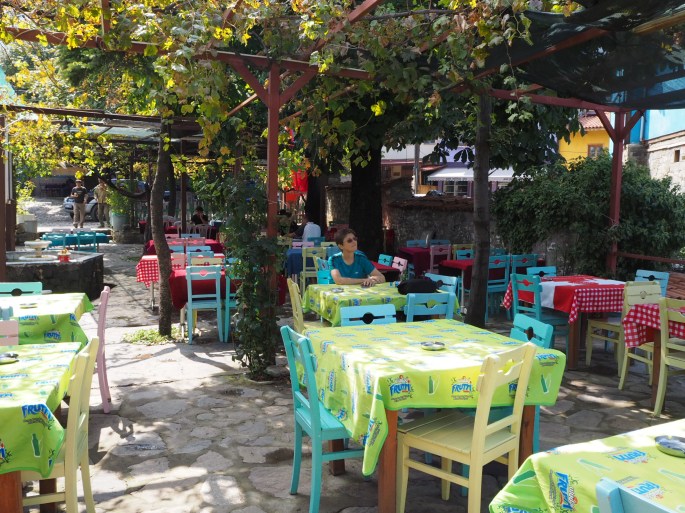
We did find our way out of the melee though and met a charming young women in a pleasant garden restaurant for the first Turkish coffee hit of the day. If you are after a knick knack with your picturesque, this could be the place, but for us it was a dolmus back to Bursa.

It has become rapidly clear after leaving Istanbul that a few words of Turkish is an imperative. Got the one for “no sugar” in my Turkish coffee down pat (sade) but how many languages in the world have a 5 or is it 6 syllable word for thankyou? Bahasa has 5 but so easy to pronounce. After 10 days I’m still trying to get my tongue around saying something as important as Thankyou in Turkish. A kind waiter gave us a handy guide for inflexible Anglo tongues – tea sugar dream – quite a substantial bit more to it than that but a helpful start!!

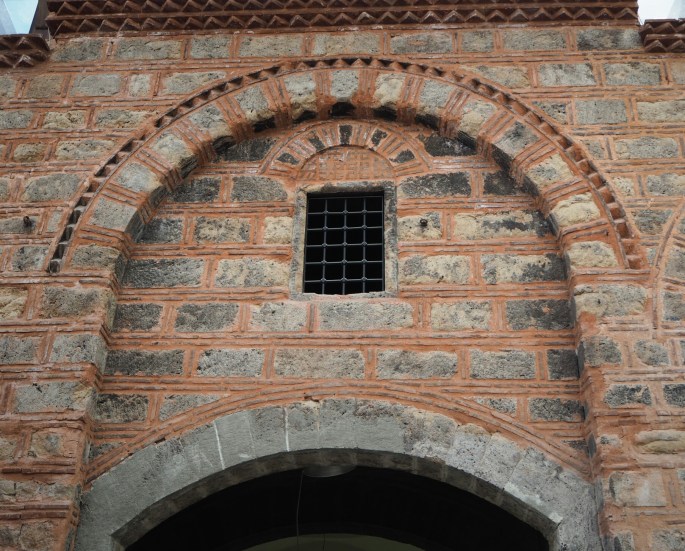
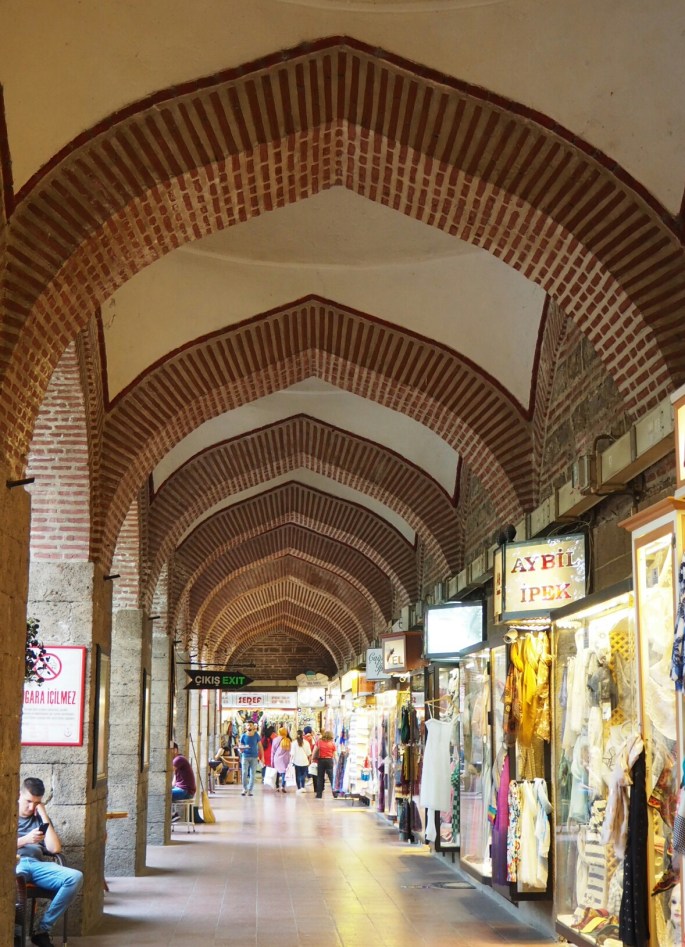
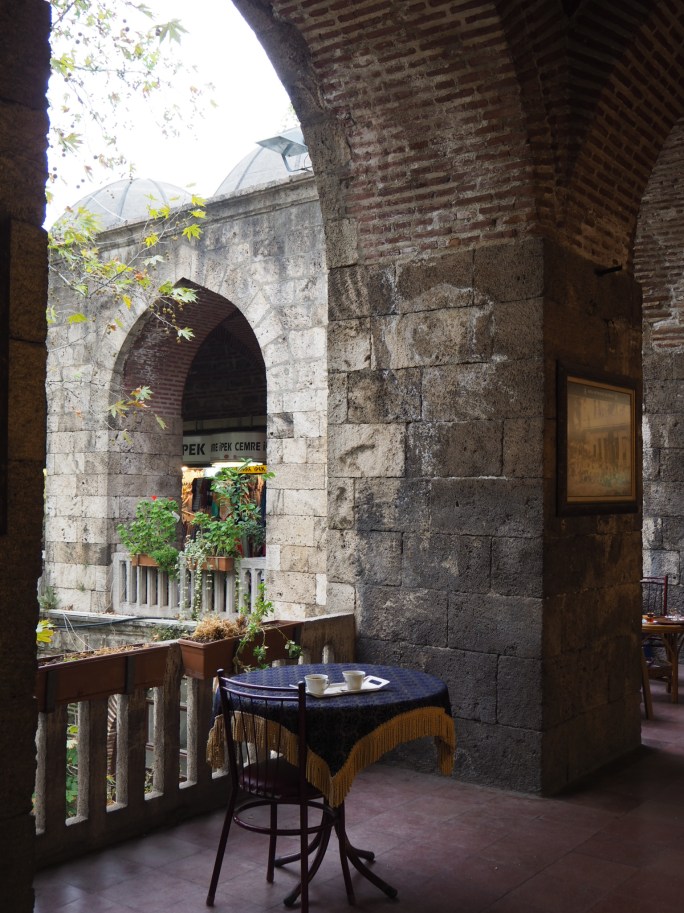
The ancient and historical is ever present in Turkey and for me the pleasure in Bursa was wandering and exploring the beautiful 15th century market buildings. Loved the vintage photographs of market activity back to 1890 and early 20th century. Furniture to finest silks is available in the maze and as always the challenge of finding the spot with the most ambience for a coffee.

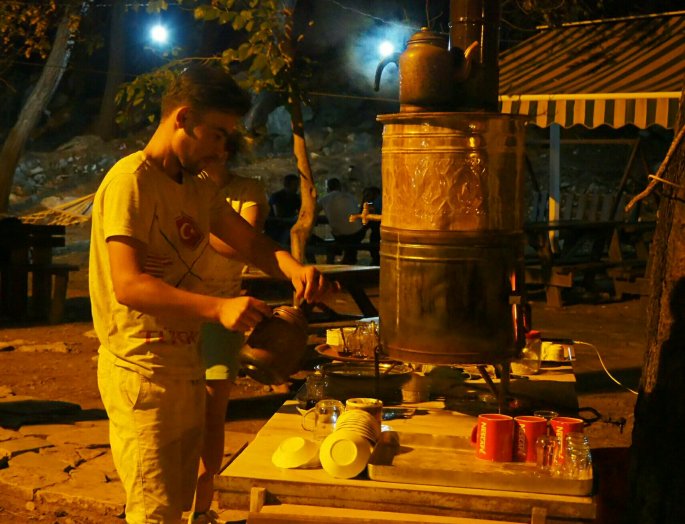
In fact the Turks are avid tea drinkers rather than coffee. There seems never to be a moment in the day when waiters are not wandering around with a tray of the distinctive glasses of tea delivering to all and sundry.

We are staying high up in the ramparts, the city wall, which means an uphill walk at the end of every day, temperature in the mid to high 20’s, finishing with some serious stairs just to check how the fitness is progressing. It is a lovely old ex bookshop complete with creaking wooden floors, books scattered in many spots and an inviting enclosed garden courtyard where we enjoyed delicious breakfasts with exquisite service and attention to detail.

I produced my coeliac gluten free digital card on the first night for dinner. The head waiter took a photo and made it his business to see that all was organised for breakfast next morning, no more explanation required. Seriously impressive.

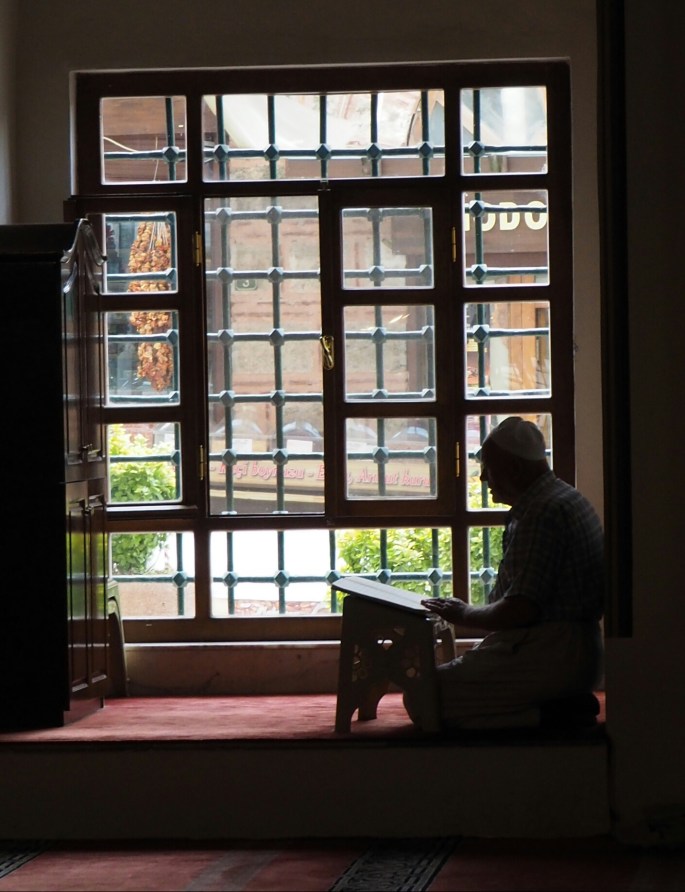
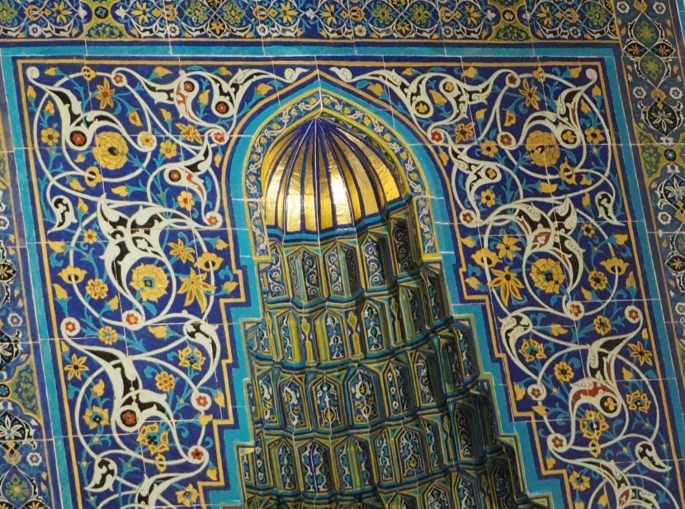
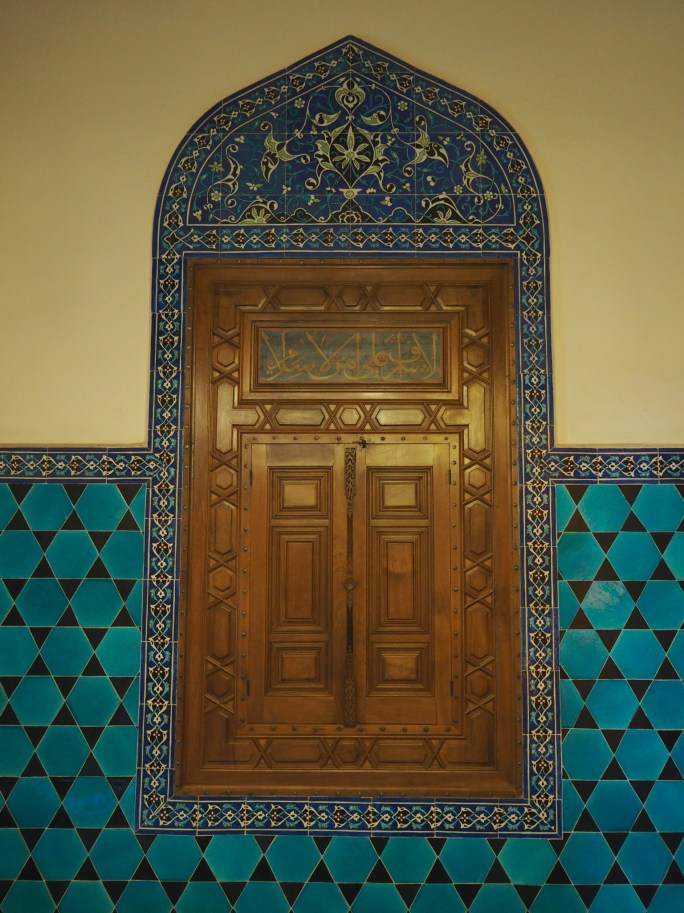
The big ticket items in Bursa though are the Ulu Cami, the Grand Mosque, and the Green Mosque. Calligraphy and tiles, design and layout, as always a high point. With scores of tile photos already in the camera, the green tiles are iresistable.

So here we are at the bus station, bodies a little weary after 14 very full days on the go, looking forward to a rest on the road to Selcuk and Ephesus.